


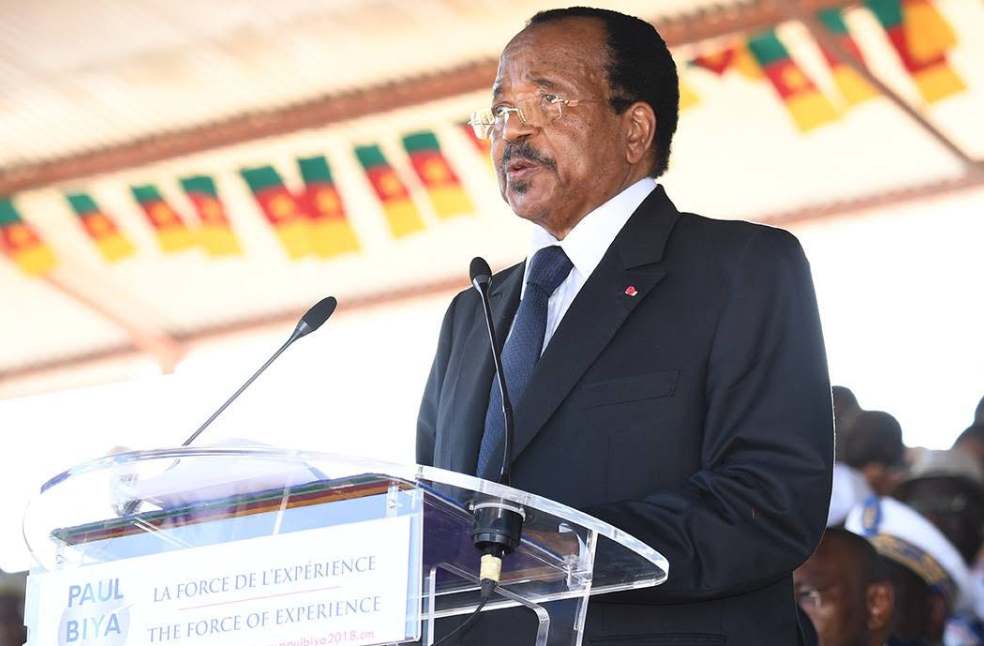
Yaoundé: Cameroon’s President Paul Biya has announced that the country will hold legislative and local elections on February 7, 2027, as political tensions continue following last year’s disputed presidential election and a crackdown on opposition groups.
The announcement was made through a presidential decree read on public radio, setting the date for elections that have already been postponed twice. The decision comes with growing political uncertainty, with opposition parties facing restrictions and questions continuing over the country’s political leadership.
Biya, 93, has governed Cameroon since 1982 and remains the world’s oldest serving head of state. His re-election in October 2025 triggered widespread protests, with opposition supporters challenging the results and alleging electoral irregularities. Security forces responded with a crackdown, leading to mass detentions across the country.
Décret portant convocation du corps électoral en vue de l’élection des Députés à l’Assemblée Nationale et des Conseillers Municipaux.
#PaulBiya
#Cameroun https://t.co/4PwhFMnJ39— President Paul BIYA (@PR_Paul_BIYA) November 9, 2026
According to lawyers cited by Human Rights Watch, security forces detained as many as 2,000 people following the protests, with some reportedly still in custody. The repeated postponements of the legislative and local elections have also extended the terms of elected representatives. The mandates of lawmakers were extended until December 20, while municipal councillors are due to remain in office until February 28, 2027.
Meanwhile, Cameroon is awaiting a government reshuffle announced nearly a year ago, along with the appointment of a vice president. A constitutional reform introduced in April 2026 reinstated the position, with the vice president expected to succeed Biya should he die in office.
Concerns about the president’s health have also remained a subject of public discussion, particularly due to his frequent stays abroad. However, authorities have prohibited media coverage and debate surrounding his health since 2024, following widespread rumours about his death.
In late August 2026, Biya returned to the capital, Yaounde, after spending more than two months in Geneva. His prolonged absence drew criticism from opposition figures, who questioned his ability to effectively govern the country.
Political tensions have intensified further following the authorities’ decision last month to suspend the Cameroon National Salvation Front (FSNC), the party of defeated opposition presidential candidate Issa Tchiroma Bakary. Bakary left the country for exile in The Gambia after declaring himself the winner of the presidential election and urging supporters to defend what he described as his electoral victory.
The February 2027 elections are expected to be a significant political test for Cameroon as the country navigates opposition challenges, questions over leadership succession and growing demands for political accountability.
MOST READ | 2026 set to become hottest year on record; Scientists warn
