



Antalya: The world is heading towards another record-breaking year of global temperatures, with scientists warning that 2026 is highly likely to become the hottest year ever recorded.
The combined effects of human-induced climate change and a strengthening El Niño weather pattern are accelerating global warming, raising concerns about increasingly severe weather events and their impact on communities worldwide.
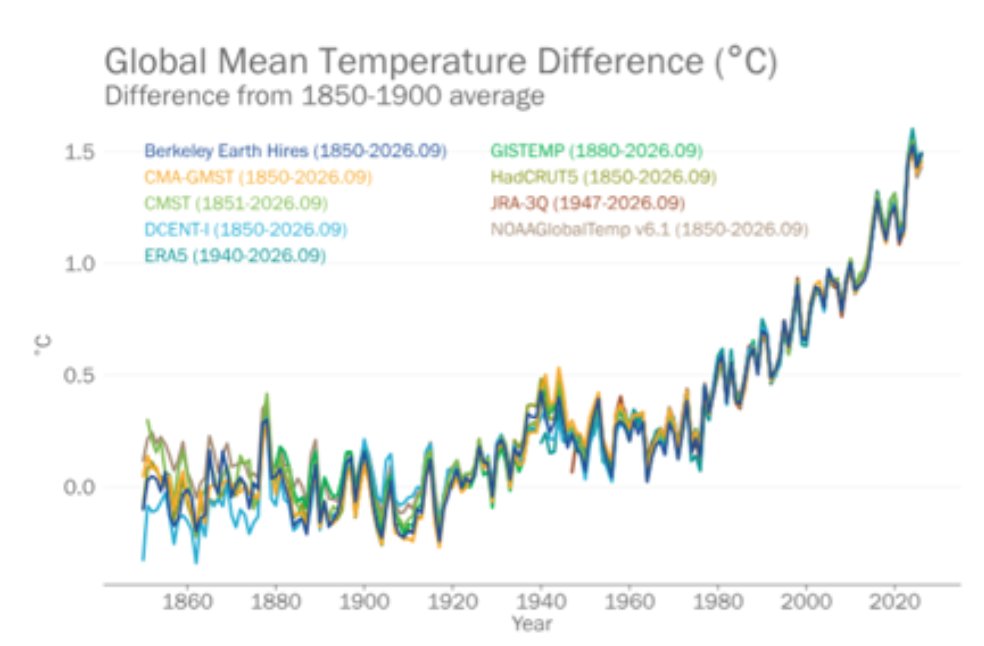
According to Berkeley Earth, an independent US-based climate research organisation, there is a 95 percent probability that 2026 will surpass the previous temperature record set in 2024. The warning comes as world leaders and climate negotiators gather in Antalya, Turkey, for the opening of the 31st United Nations Climate Change Conference (COP31).
2026 is on track to be one of 4 warmest years on record, marked by exceptional global temperatures, melting ice, rising sea levels, and a very strong El Niño that will unleash more heat & extreme weather into 2027.
New WMO #StateOfClimate #COP31 Update
↪️ https://t.co/KCbuZ6IYmg https://t.co/walJ7nZWh7— World Meteorological Organization (@WMO) November 9, 2026
The United Nations World Meteorological Organization (WMO) has also identified 2026 as likely to rank among the four warmest years on record. Its latest climate assessment further warned that temperatures could rise again in 2027 as an unusually strong El Niño continues to influence global weather patterns.
WMO Secretary-General Celeste Saulo described the emerging conditions as unprecedented, highlighting the growing intensity of global warming. Meanwhile, Berkeley Earth scientist Dr. Robert Rohde warned that repeated temperature records reflect the continuing consequences of climate change, including extreme heatwaves, prolonged droughts and glacier collapses.
The effects of rising temperatures have already been evident in several parts of the world. Extensive wildfires have affected Europe, while a sudden glacier collapse in Nepal has highlighted the growing risks associated with changing climatic conditions. October 2026 was also confirmed as the hottest October on record by the European Union’s Copernicus Climate Change Service.
Scientists identify increasing concentrations of carbon dioxide in the atmosphere, primarily resulting from the continued burning of fossil fuels, as the main driver of global warming. Around 90 percent of the additional heat trapped by greenhouse gases has been absorbed by the oceans, contributing to rising ocean temperatures.
The developing El Niño phenomenon is expected to intensify the situation by releasing additional heat stored in the oceans into the atmosphere. Although it does not create new heat, it contributes to higher global temperatures through natural climate variability.
Current projections indicate that the world remains on course for approximately 2.8°C of warming above pre-industrial levels by the end of the century, significantly exceeding the 1.5°C threshold established under the Paris Agreement.
COP31 faces growing pressure to deliver climate action
Against this backdrop, COP31 negotiations are expected to focus on strengthening international climate commitments, expanding renewable energy, improving climate adaptation measures and increasing financial assistance for developing countries.
UN climate chief Simon Stiell is expected to urge governments to turn existing commitments into meaningful action, warning that climate change is already imposing high costs on the global economy and environment.
Although global greenhouse gas emissions continue to rise, renewable energy development has recorded considerable progress. The International Energy Agency (IEA) expects renewable energy capacity growth over the next six years to be 57 percent higher than during the previous period. China remains the largest contributor to the expansion, although other developing economies are increasingly increasing their renewable energy capacity.
The Turkish presidency of COP31 is also seeking discussions on electrification, which involves shifting energy systems away from fossil fuels towards electricity, alongside measures to reduce waste. However, differences remain over whether natural gas should be considered an acceptable transition fuel.
Financial support for developing countries is another major issue expected to dominate the negotiations. Wealthier nations had previously committed to increasing climate finance to at least $85 billion by 2035 to help vulnerable countries adapt to the effects of global warming. However, the latest available figures indicate that only around one-third of the target has been achieved.
Governments are also expected to discuss the environmental impact of artificial intelligence, particularly the growing electricity and water requirements of data centres supporting the rapid expansion of AI technologies.
As climate-related disasters become increasingly severe, COP31 faces mounting pressure to translate international agreements into practical measures that can limit global warming, strengthen resilience and protect vulnerable communities.
MOST READ | More than 2.2mn Australians face excessive specialist consultation fees