


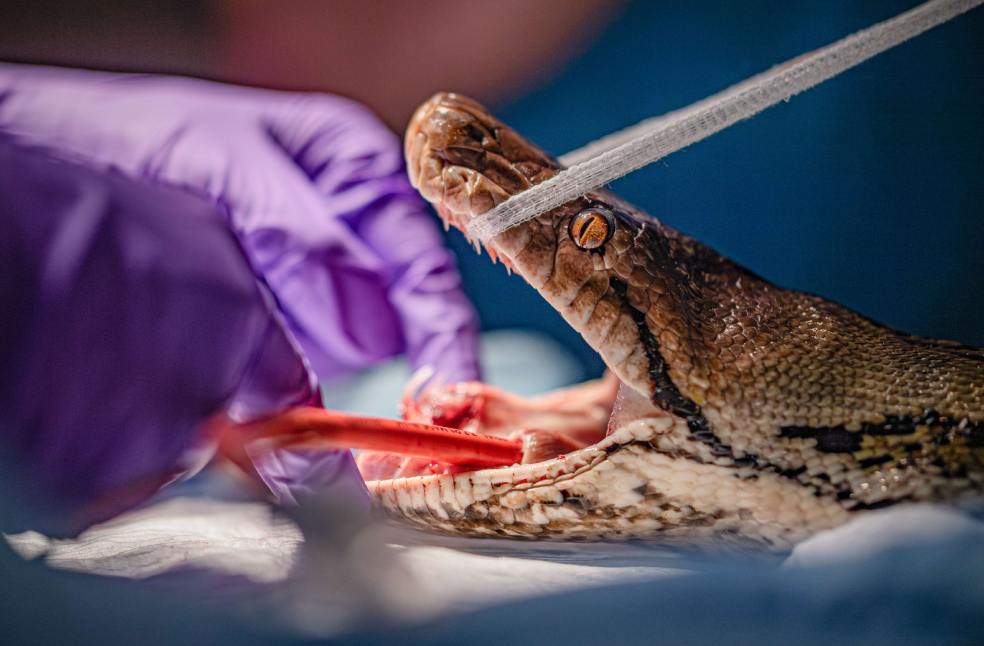
United Kingdom: A 15ft (4.5-metre) reticulated python at Chester Zoo has become the first snake believed to have received electrochemotherapy, a pioneering cancer treatment commonly used in human medicine.
The 50kg python, named Jodie Foster, was diagnosed with fibrosarcoma, a malignant tumour that developed in her jaw. Zoo keepers became concerned after noticing that the 23-year-old snake was eating less and spending more time inactive in her habitat.
Although surgeons initially removed the tumour, it later returned and began invading Jodie’s jawbone, putting her ability to eat and her life at risk. Veterinary experts then worked with cancer specialists to adapt electrochemotherapy for use on the snake. The procedure combines the cancer drug bleomycin with controlled electrical pulses delivered directly to the affected area.
The electrical pulses temporarily increase the permeability of cancer cells, allowing the drug to penetrate them more effectively. Jodie underwent the 90-minute procedure at the zoo’s veterinary centre after being anaesthetised in her habitat. Due to her size, two operating tables had to be pushed together to create a platform large enough to accommodate her.
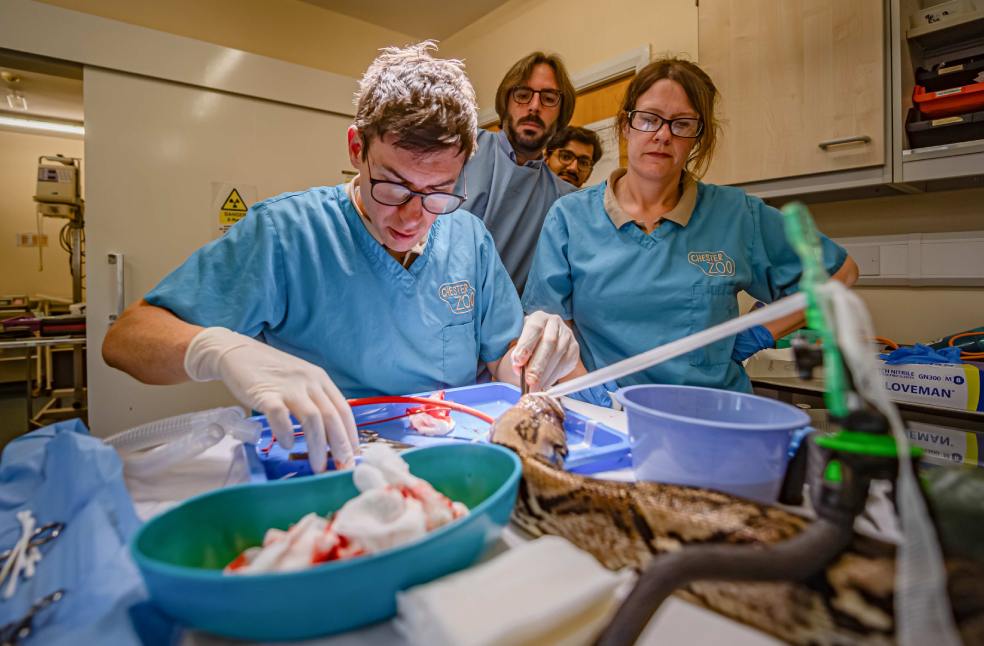
Veterinary officer Ian Ashpole first removed the tumour and part of the diseased jawbone before administering electrochemotherapy to target any remaining cancer cells. Months after the treatment, Jodie is reportedly eating normally and has returned to her usual active behaviour. Zoo staff have observed her striking, gripping and swallowing food without difficulty, despite the complexity of the surgery. A final examination this week found no signs of the cancer returning.
Jose Alvarez Picornell from the University of Liverpool said the procedure marked the first known use of electrochemotherapy in a snake. Alvarez Picornell said the successful treatment demonstrated the value of collaboration between veterinary professionals and cancer specialists.
The veterinary team plans to formally publish details of the procedure so that specialists worldwide can learn from the approach and explore its potential applications in veterinary medicine. Jodie’s case could provide valuable insights into the treatment of cancer in reptiles and potentially contribute to the development of new veterinary cancer-care techniques.
POPULAR | 7 killed in safari helicopter crash in Northern Kenya
