


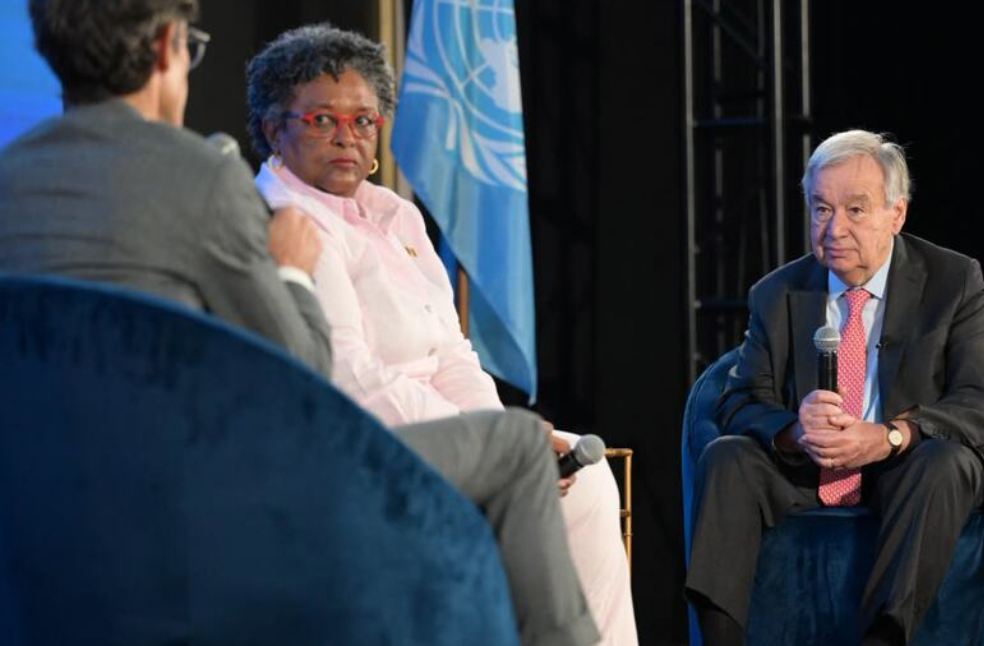
New York: United Nations Secretary-General Antonio Guterres has urged countries to strengthen international cooperation and establish a global framework to manage the risks associated with artificial intelligence (AI), warning that the rapid advancement of the technology requires coordinated safety measures and independent oversight.
Speaking at the Bridgetown Special Summit on AI Safety in Barbados, Guterres called on UN member states to develop a globally inclusive, principles-based multilateral framework for AI risk management within the next year. He emphasised the importance of credible independent oversight to ensure that AI development remains safe and accountable.
Guterres highlighted the need for international institutions to adapt to the changing realities of the modern world. He noted that several global governance structures were established based on the political and economic conditions of 1945 and require reforms to address today’s challenges. This includes the United Nations, the international financial architecture and the global trade system.
The risks & opportunities of AI don’t stop at borders.
Neither can our response.
Monday’s Special Summit on AI Safety is bringing together scientists & representatives from governments, technology & civil society to discuss international cooperation. https://t.co/jwX0Y0mmON
— United Nations (@UN) November 23, 2026
As he approaches the end of his term in December, Guterres stated that he would advise his successor, who is expected to take office in the new year, to make effective AI governance a priority. He stressed that maintaining proper control over artificial intelligence would be essential for humanity to retain control over its future.
Growing concerns over the global AI race
The call for stronger AI regulation comes as competition between the United States and China intensifies, with both countries seeking leadership in research, innovation and advanced AI development. Differences among technology leaders over the pace of AI advancement have also highlighted the challenges of reaching a common international approach.
Guterres suggested that countries could begin by agreeing on shared AI safety standards, common testing procedures and minimum requirements for independent oversight. Such measures could provide an initial foundation for broader international cooperation, even as comprehensive global regulation remains difficult to achieve.
The debate has also drawn contrasting views from major technology executives. In September, Anthropic CEO Dario Amodei, OpenAI CEO Sam Altman and SpaceX chief Elon Musk called for a slowdown in AI development, highlighting concerns about the potential risks of increasingly powerful systems.
However, Nvidia CEO Jensen Huang and Meta CEO Mark Zuckerberg have supported continued rapid advancement in the technology, reflecting differences within the industry over how AI development should be managed.
Meanwhile, regulatory intervention in the United States remains uncertain despite growing discussions around AI safety. In September, US President Donald Trump hosted a meeting with leading technology executives, who agreed to follow a voluntary code of conduct focused on AI safety.
As artificial intelligence continues to advance, Guterres’ appeal underscores the growing need for international cooperation, common safety principles and effective oversight to address emerging risks while supporting responsible technological innovation.
MOST READ | WHO Chief calls for peace as fighting disrupts ebola response in DR Congo