


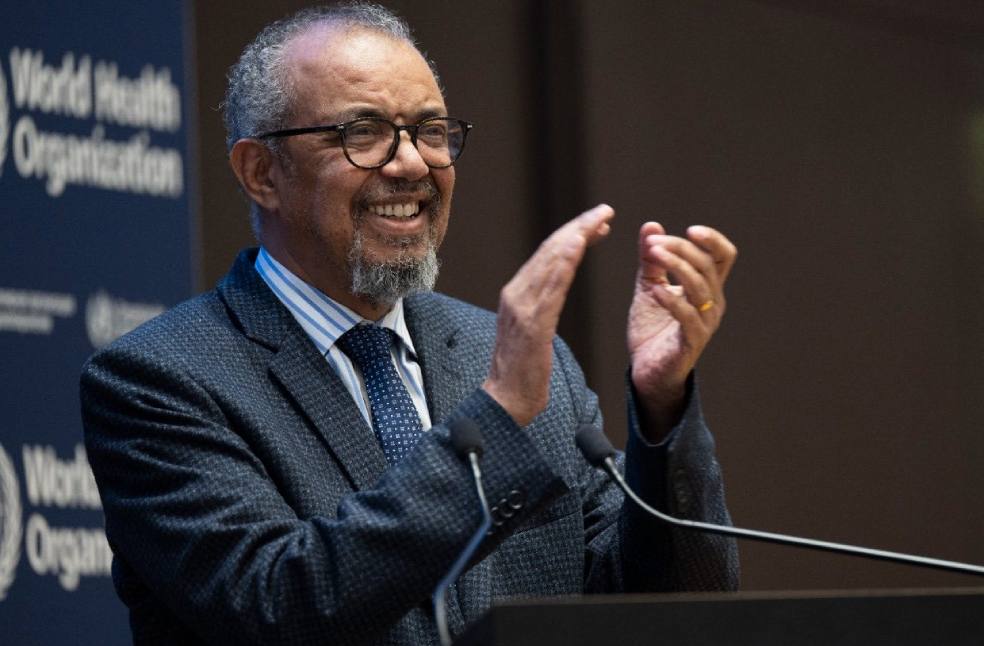
Congo: World Health Organisation (WHO) Director-General Tedros Adhanom Ghebreyesus has called for peace following intense fighting near a hospital in the Democratic Republic of the Congo (DRC), warning that the violence is disrupting efforts to contain the country’s deadly Ebola outbreak.
The clashes in Ituri province, one of the regions most affected by the outbreak, forced healthcare workers and aid partners to take shelter inside a maternity ward for more than 24 hours. The fighting also disrupted hospital operations, placing patients, their families and medical staff at serious risk.
In a statement shared on social media platform X, Tedros stated that heavy fighting had been reported near a hospital in an area close to where the Ebola outbreak first emerged. He added that the WHO was working to arrange a safe exit for the medical team and called for the protection of hospital facilities, staff, and patients.
Tedros further added that,“The best medicine is peace,” stressing the urgent need to protect healthcare workers and ensure that essential medical services can continue without interruption.
Heavy fighting has been ongoing since yesterday in the vicinity of a hospital in Ituri — in an area close to where the #Ebola outbreak first emerged. As a result, colleagues and response partners have been sheltering for their lives in a maternity ward of the facility for over 24 hours.
The situation has disrupted the work of the hospital and the wider Ebola response, putting patients, families and health workers at grave risk. Across Eastern DRC, frequency of attacks has increased since the end of October, seriously affecting the Ebola response.
@WHO is working with humanitarian partners in touch with the parties in the conflict to arrange a safe exit for the team. We call for their immediate safe passage, and for the hospital facilities, staff and patients to be protected.
The best medicine is peace.
— Tedros Adhanom Ghebreyesus (@DrTedros) November 22, 2026
Ebola transmission remains high
The WHO reported 11,613 Ebola cases and 5,678 deaths in the DRC as of November 17, making the outbreak the largest and deadliest recorded in the country. Although some areas have experienced a slight decline in infections, the organisation warned on Saturday that sustained, high-level transmission continues across the country.
Ituri and North Kivu provinces in eastern DRC remain among the worst-affected regions. The outbreak has spread across large parts of the country’s east and northeast, where decades of armed conflict and insecurity have created major challenges for healthcare delivery.
The situation has been further complicated by attacks on villages and ongoing clashes between armed groups. Earlier in November, armed men believed to be linked to an ISIL-affiliated group attacked villages in North Kivu, killing dozens of people. The violence also forced patients with confirmed and suspected Ebola infections to flee their locations.
Meanwhile, fighting between government forces and the Rwanda-backed M23 armed group continues to affect eastern DRC. The group has seized several key cities, making it increasingly difficult to transport medical supplies, healthcare personnel and other essential resources to remote communities.
The continuing insecurity poses a serious challenge to Ebola containment efforts, as disruptions to healthcare facilities and the movement of patients can undermine disease surveillance, treatment and infection prevention measures. The WHO has emphasised the importance of protecting healthcare facilities and ensuring safe access for humanitarian teams as the country continues to battle the outbreak.
POPULAR | 3 killed, 36 missing after fire at confectionery factory in Indonesia