


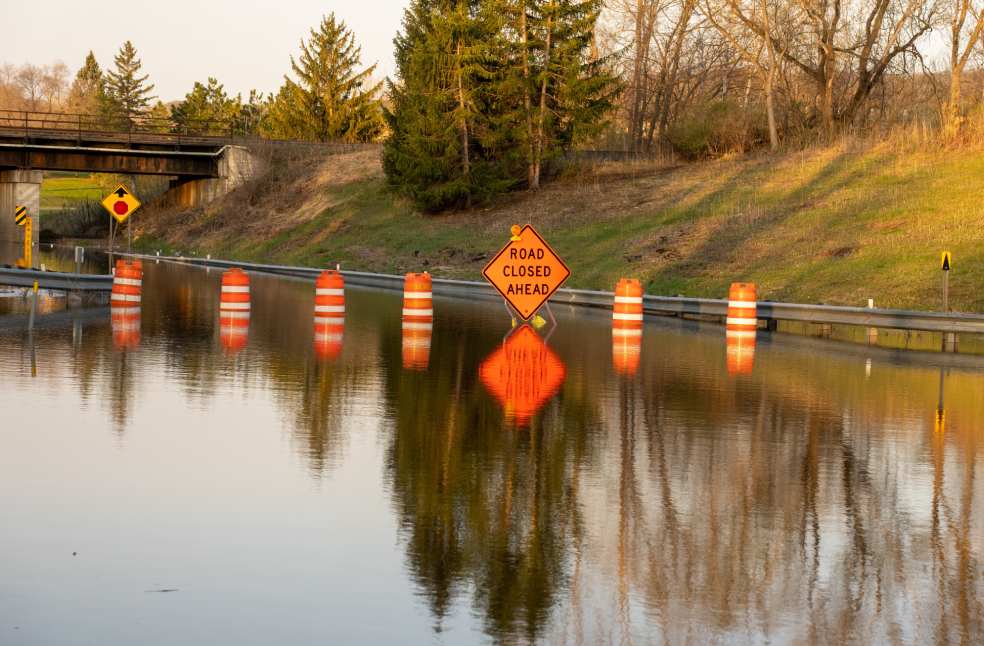
Washington: A powerful Thanksgiving storm sweeping across the US Midwest and Northeast has caused widespread travel disruptions, severe flooding and power outages, as millions of Americans prepare to travel for the holiday.
Heavy rain, damaging winds and coastal flooding have affected several states, while high tides and Pacific storms have also raised concerns along the West Coast. More than 80 million Americans are expected to travel during the Thanksgiving holiday week.
According to flight-tracking website FlightAware, more than 400 flights across the US were cancelled on November 26, while another 2,200 flights into, out of and within the country were delayed. The Federal Aviation Administration (FAA) had earlier warned that weather-related delays could continue throughout the week due to forecast rain and strong winds.
If you’re traveling this Thanksgiving, please take extra precautions as strong winds, heavy rain, and significant coastal flooding impact New Jersey.
Check your route, local forecast, and any road closures or transit advisories before heading out. Give yourself extra time, drive carefully, and never drive through flooded roadways.
I urge those in our coastal communities to avoid unnecessary travel, particularly during high tide this morning.
Stay safe, New Jersey.
— Governor Mikie Sherrill (@GovSherrillNJ) November 26, 2026
The storm brought winds upto 70 mph, torrential rainfall, and significant coastal flooding across the eastern US. New Jersey Governor Mikie Sherrill declared a state of emergency after several communities along the Jersey Shore experienced widespread flooding. New York Governor Kathy Hochul also announced a state of emergency covering New York City, Long Island and Westchester County.
In New York City, organisers postponed the annual Macy’s Thanksgiving Day Parade until November 28 due to severe weather conditions. Strong winds also forced bridge closures in Maryland, while powerful waves battered Delaware beaches and flooded sections of coastal boardwalks.
The impact extended to essential services, with Maryland’s water utility advising nearly two million customers to restrict water use to essential needs because of intermittent power disruptions. Washington DC also experienced its wettest Thanksgiving on record, with rising tidal waters reaching runways at Reagan Washington National Airport.
More than 980,000 households were without electricity by November 26 evening, particularly in Pennsylvania, Virginia, Maryland and New Jersey. Pennsylvania Governor Josh Shapiro stated that utility companies were working to restore power, while energy providers in Virginia and New Jersey warned that outages could continue for several days as repair crews waited for safer conditions to access damaged areas.
US President Donald Trump remarked that that he would consider releasing emergency funding to support communities affected by the storm along the East Coast. Meanwhile, severe weather conditions are also affecting the West Coast. The National Weather Service (NWS) warned that a series of Pacific storms would bring heavy rain, mountain snowfall and strong winds, raising the risk of flooding in coastal communities.
King tides along California’s coastline have further increased concerns, with water levels expected to exceed 8 feet (2.4 metres) in some areas. San Diego and Los Angeles had already recorded tides above 8 feet earlier in the week, prompting warnings for beachgoers to stay away from vulnerable coastal areas. Amtrak also cancelled several Pacific Surfliner services due to track washout conditions caused by high tides.
Travel disruptions were also reported in Miami after a FedEx cargo aircraft overshot the runway, forcing the temporary closure of all but one runway. The company confirmed that the aircraft experienced an issue during landing and stated that its crew members were safe, with no injuries reported.
The Miami incident occurred 11 weeks after another cargo aircraft crashed while landing at the same airport, killing five people and injuring five others on the ground.
According to the American Automobile Association (AAA), an estimated 81.5 million Americans are expected to travel at least 50 miles from home during the seven-day Thanksgiving holiday period, highlighting the scale of travel affected by the severe weather.
MOST READ | Indonesia mine disaster leaves 13 dead as rescue efforts continue