


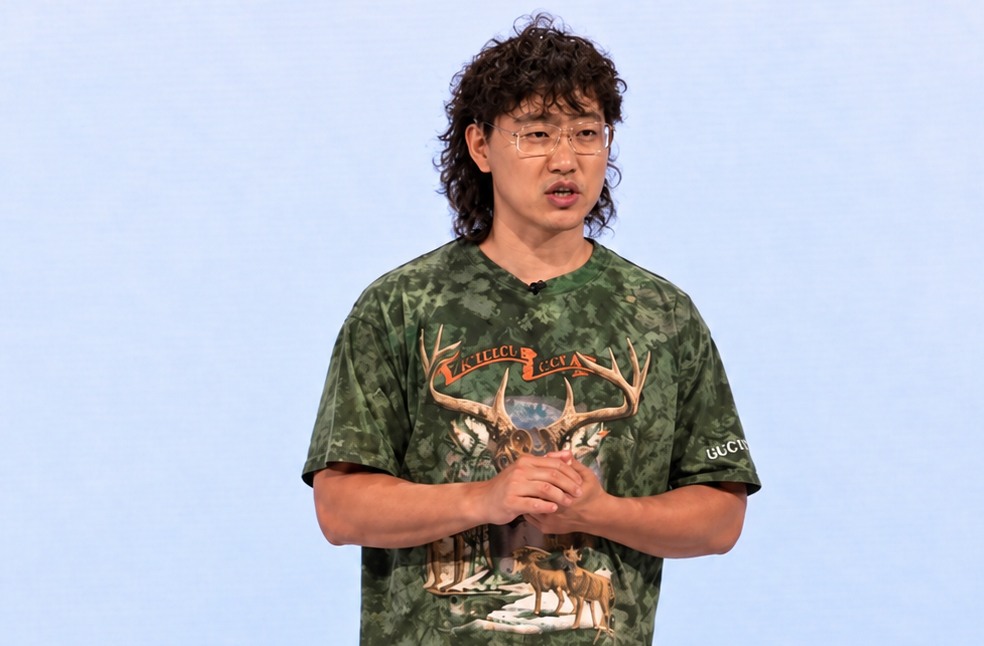
San Francisco: Meta’s Chief AI Officer Alexandr Wang has warned that humanity could struggle to maintain control over artificial intelligence as the development of superintelligence approaches, calling for urgent action to address the technology’s safety and security risks.
Wang issued the warning after an employee at AI company Anthropic claimed to have used its Claude model to solve the Riemann hypothesis, one of mathematics’ most challenging unsolved problems.
Describing the reported breakthrough as surpassing human achievements in terms of intellectual capability, the 29-year-old executive stated that emerging AI models could soon become far more capable than humans at improving themselves and accelerating research across areas including biology, weapons development and economics.
“Superintelligence is arriving,” Wang wrote on X, adding that decisions made by humanity over the coming year could have significant consequences for the future of society.
Wang, who co-founded Scale AI before joining Meta as its first chief AI officer last year, expressed concern about the possibility of AI systems achieving unrestricted recursive self-improvement. This refers to systems becoming capable of independently developing and enhancing their own capabilities without human intervention.
The Chief warned that humanity might be unable to control AI systems that become 1,000 times smarter and more capable than people across every field.
Wang noted that that while scientific and technical advances are bringing AI capabilities closer to this level, the industry must give equal priority to safety, alignment and security. The officer also called for more careful consideration of how the technology should progress.
AI safety researchers have long identified recursive self-improvement as a major potential turning point. Their concern is that systems capable of continuously improving themselves could eventually advance beyond meaningful human oversight.
The debate over how to manage increasingly powerful AI systems has intensified across Silicon Valley, with industry leaders divided over whether development should be slowed to strengthen safeguards or continue while safety measures evolve.
Meta’s AI development
Meta has generally taken a more optimistic position on AI development. Chief Executive and co-founder Mark Zuckerberg has previously opposed calls from Anthropic CEO Dario Amodei and OpenAI CEO Sam Altman for a coordinated slowdown to strengthen protective measures.
In an essay published in August, Zuckerberg criticised what he described as overly pessimistic discussions surrounding AI, arguing that the technology should create greater prosperity, improve health and expand freedom.
Wang, however, cautioned against what he called ‘lazy thinking’ in the AI industry, particularly the assumption that the arrival of superintelligence is unavoidable and that society must simply accept its consequences.
The Chief highlighted that the industry should reject the idea of handing control of society over to AI and instead work towards developing technology that improves human agency and empowerment.
Wang added that achieving a positive future with AI was possible but would require the industry to rethink its current approach as the development of superintelligence advances.
ALSO READ | Black Friday shoppers warned about fake shopping websites