


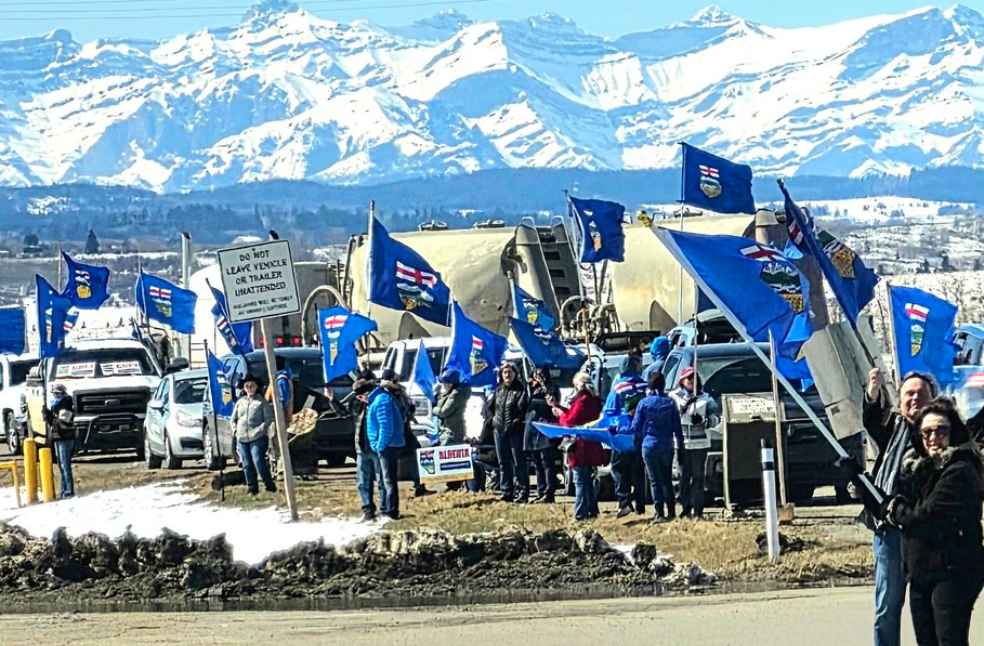
Alberta: An Alberta court has halted a citizen-led push for the province to separate from Canada, ruling that the government failed to consult Indigenous First Nations groups whose treaty rights could be affected by secession.
The decision was delivered in Edmonton by Justice Shaina Leonard, who issued a 37-page ruling that pauses the verification of signatures collected by separatist group Stay Free Alberta. The group claims it gathered more than 300,000 signatures in support of a referendum on Alberta independence, enough to trigger a province-wide vote under provincial rules potentially.
However, the court sided with several First Nations communities, including Athabasca Chipewyan First Nation, Blood Tribe, Piikani Nation, and Siksika Nation, which argued that Alberta independence would directly affect treaty rights protected under Canadian law.
In her ruling, Justice Leonard wrote that Alberta’s separation from Canada would clearly impact historic treaties signed between Indigenous peoples and the Crown in the 19th century. The court found that Alberta breached its legal duty to consult with Indigenous communities before proceeding with the referendum process.
Stay free Alberta vows appeal
Jeff Rath, legal counsel for Stay Free Alberta, criticised the ruling and said the group plans to appeal. Jeff Rath stated that, “We disagree fundamentally with the decision which appears on its face to violate principles of natural justice and contain numerous errors of law.”
Jeff Rath also indicated the group may seek a court order to temporarily suspend the ruling while the appeal proceeds. Meanwhile, lawyer Kevin Hille welcomed the decision, describing it as a significant victory for the rule of law and the protection of constitutional rights in Alberta.
Hille said the ruling confirms that governments must engage in meaningful consultation before taking steps as significant as an independence referendum.

Alberta government reviewing ruling
Alberta Premier Danielle Smith said her government believes the ruling contains legal errors and is considering an appeal. Speaking to reporters, Smith defended recent changes to Alberta’s referendum laws, which removed a requirement that citizen-led referendum questions must first be deemed constitutional.
The province is already planning a vote in October on issues related to immigration and provincial powers, though it is now unclear whether an independence question will appear on the ballot.
Rising separatist sentiment in Alberta
Frustration with the federal government in Alberta has been growing for years, particularly around energy policy and natural resource development. Many Albertans argue that Ottawa has restricted the province’s oil and gas industry through climate-focused legislation while Alberta contributes more economically to Canada than it receives in return.
Political and cultural divisions between Western Canada and the federal government have also fuelled separatist sentiment. While Alberta’s separatist movement remains fragmented, many supporters are calling for greater provincial autonomy over natural resources, taxation, and political decision-making rather than full independence.
The court ruling now places the future of the referendum effort in uncertainty, setting up a potentially major constitutional and political battle in Canada.
POPULAR | US waives $15,000 visa bond for World Cup fans from 50 countries
