


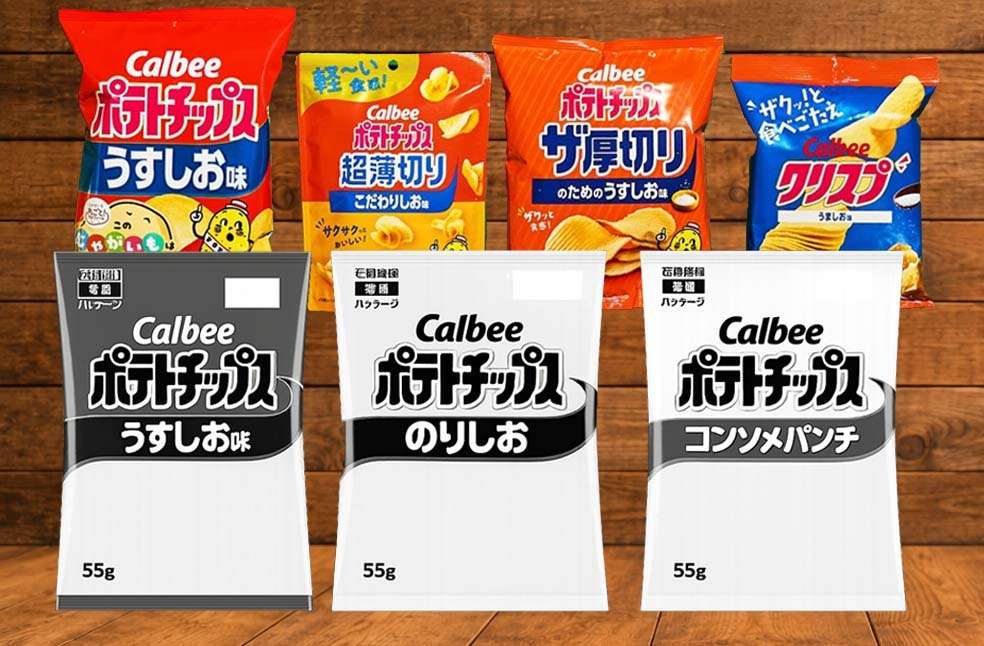
Tokyo: Calbee has announced that it will temporarily replace the colourful packaging of some of its most popular snack products with black-and-white designs after supply disruptions linked to the Iran conflict affected materials used in printing ink.
The Japanese snack manufacturer noted that the updated packaging will begin appearing in stores across Japan from May 25 and will affect 14 products, including potato crisps and prawn crackers.
The move is the latest example of how the ongoing conflict involving Iran, the United States, and Israel is impacting global supply chains and everyday consumer goods.
According to Calbee, the decision was made because of “supply instability affecting raw materials during the ongoing tensions in the Middle East.” The company said that the temporary packaging redesign is intended to ensure stable product availability despite shortages in essential materials.
The disruptions stem from the effective closure of the Strait of Hormuz after Iran responded to US and Israeli military strikes by restricting shipping through the strategically important waterway.
Since the conflict began on February 28, global oil and gas prices have risen sharply as shipments through the Strait of Hormuz slowed or halted. Supplies of naphtha, a petroleum byproduct widely used in the production of ink and plastics, have also been severely affected.
Naphtha prices across Asia have nearly doubled since the start of the conflict, increasing operational costs for businesses throughout the region. Japanese officials stated that the country had previously relied heavily on Middle Eastern imports for naphtha supplies.
Kei Sato stated that around 40 percent of Japan’s naphtha imports came from the Middle East before the conflict escalated. Sato added that the government is working to stabilise supply chains and address shortages and bottlenecks.

Earlier in April, Sanae Takaichi announced that Japan was seeking to diversify its naphtha imports by increasing supplies from regions outside the Middle East, including the United States. The impact of the conflict has extended beyond Calbee.
On May 1, Japanese food company Mizkan suspended sales of some fermented soybean products and raised prices on others because of shortages in polystyrene containers. Major automotive companies, including Toyota and Hyundai, have also reported that higher material costs and weaker sales linked to the crisis have affected profits.
The aviation sector has also felt the impact, with airlines worldwide suspending routes and grounding some aircraft as jet fuel prices surged following the conflict.
Meanwhile, UK fashion retailer Next recently increased prices by up to 8 percent in several markets outside Europe due to rising fuel costs and continuing disruptions to international supply chains caused by the war.
MOST READ | Netflix’s Adolescence sweeps Bafta TV Awards with four wins
