


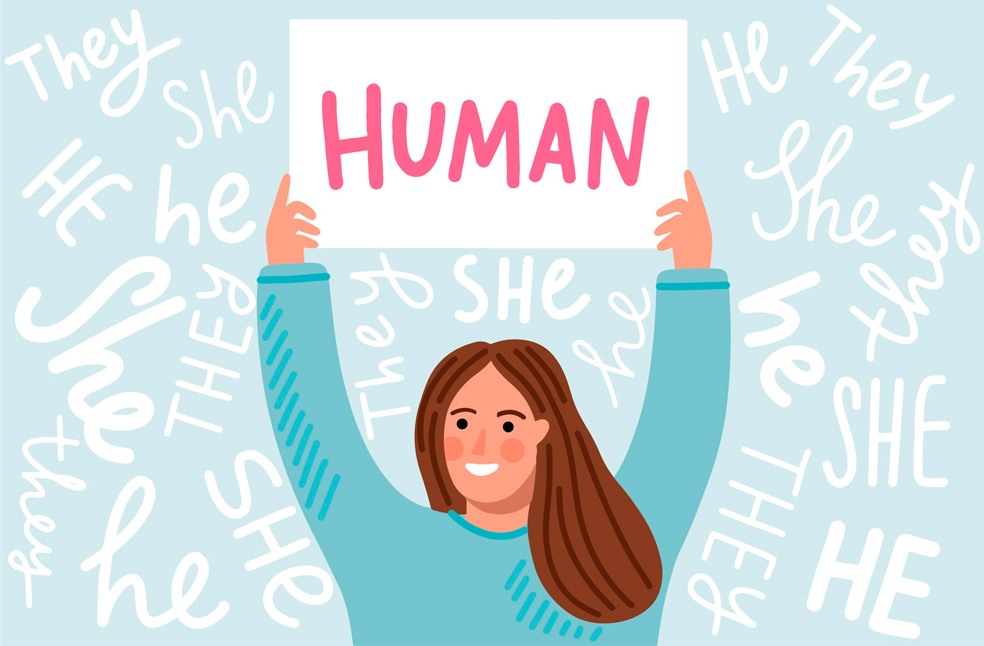
London: Cambridge Dictionary has named ‘human’ its Word of the Year for 2026, highlighting growing interest in human identity and the qualities that distinguish people from artificial intelligence as technology continues to advance.
The dictionary defines ‘human’ as having the characteristics, imperfections and emotions associated with people, rather than gods, animals or machines. The selection reflects wider discussions about what it means to be human as artificial intelligence becomes increasingly integrated into everyday life.
The rapid development of AI, particularly following the launch of ChatGPT three years ago, has intensified debates about whether machines could develop consciousness and how closely their capabilities might eventually resemble human intelligence.
While evolutionary biologist Richard Dawkins has expressed the view that AI systems could display human-like qualities, critics maintain that human brain development and machine construction are fundamentally different processes.

Colin McIntosh, an editor at Cambridge Dictionary, stated that artificial intelligence was changing how people discuss human identity and had made the word increasingly important in distinguishing human contributions from the work of computer systems.
McIntosh noted that concerns about outsourcing human thinking to AI had encouraged people, including mathematicians and teachers, to reconsider their reliance on the technology. The growing use of expressions such as ‘human-made’ also reflects the need to distinguish work created by people from AI-generated output.
Professor Rachel Adams, an expert in AI governance and human rights at the University of Cambridge, stated that the advances in artificial intelligence had revived longstanding questions about human identity and the meaning of being human.
Adams added that although answers to these questions have evolved over time, questioning human existence remains a shared experience.
Other technology-related terms featured on the dictionary’s shortlist included ‘agent’, referring to AI systems capable of performing tasks with limited human intervention, and ‘analogues’, which describes activities or things that are not digital.
The word ‘wholesome’, referring to something that benefits people physically, morally or emotionally, was also considered. Earlier in November, Collins English Dictionary selected ‘mogging’, a slang term describing outperforming or outshining another person, as its Word of the Year.
Cambridge Dictionary has also added several technology and social media-related expressions to its vocabulary. These include ‘looksmaxxing’, which describes efforts to maximise physical attractiveness and is associated with online manosphere communities, and ‘aura farming’, referring to deliberately displaying personality traits that others find attractive, interesting or admirable.
The selection of ‘human’ reflects how the growing influence of artificial intelligence is reshaping conversations about identity, creativity and the qualities that distinguish people from machines.
MOST READ | GTA 6 launch sparks unusual plans among eager gamers