


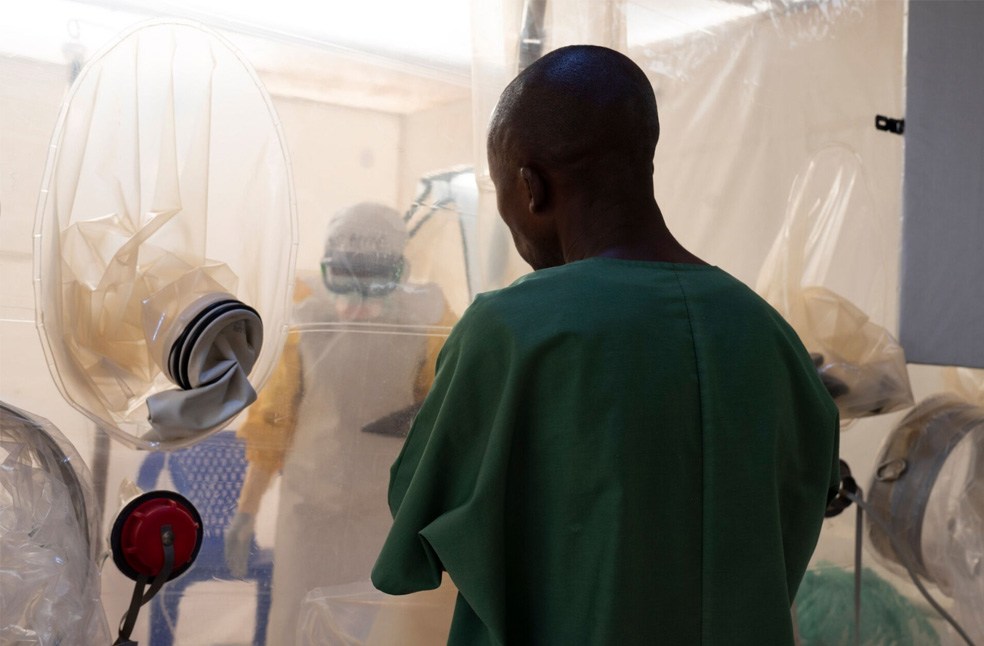
DR Congo: The Democratic Republic of the Congo (DRC) has begun its first clinical trial of experimental Ebola treatments, offering fresh hope as the country battles an outbreak of the Bundibugyo strain, for which there is currently no approved vaccine or treatment.
The trial has started at an unprecedented pace, with the first patients enrolled just six weeks after the World Health Organization (WHO) declared the outbreak a Public Health Emergency of International Concern on May 17.
Researchers say the rapid launch reflects lessons learned from previous Ebola outbreaks and demonstrates stronger preparedness in responding to emerging health crises. As of July 9, the outbreak had resulted in 1,792 confirmed cases and 625 deaths, with the WHO warning that the epidemic remains in its expansion phase.
Since the start of the Ebola outbreak in the Democratic Republic of the Congo, 112 health workers have been infected with the Bundibugyo virus, 35 of whom have tragically lost their lives in the line of duty.
The recent infection of a U.S. humanitarian worker in Bunia is a… pic.twitter.com/hVbiwhs91s
— Africa CDC (@AfricaCDC) July 12, 2026
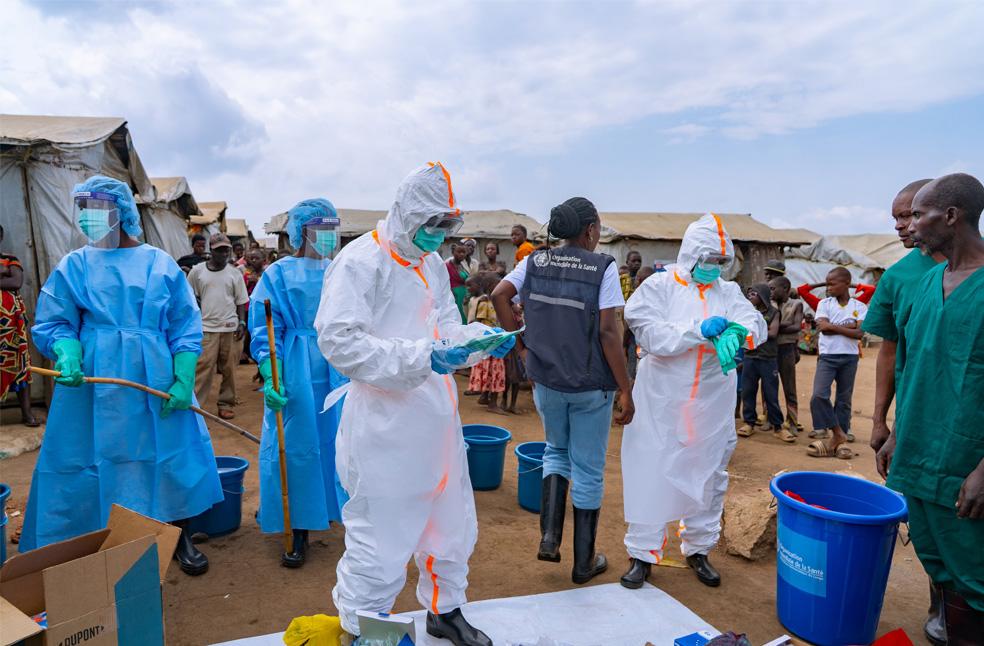
Health authorities continue to rely on case detection, patient isolation, contact tracing, and safe burials to contain the spread. However, these efforts have been challenged by community mistrust, a highly mobile population, and disruptions caused by delayed payments to frontline workers.
Many healthcare personnel and burial teams have reported working under difficult conditions, citing shortages of protective equipment, unpaid wages, and security threats. Some workers said they had faced hostility from local communities while carrying out essential burial operations, underscoring the challenges confronting the outbreak response.
The Partners clinical trial is evaluating two promising treatments:
- Remdesivir, an antiviral drug developed by Gilead Sciences.
- MBP134, a monoclonal antibody therapy designed to neutralise the Ebola virus.
Participants will be randomly assigned to receive one of the drugs, a combination of both, or standard supportive care. Scientists hope the study will determine whether these treatments can significantly reduce Ebola-related deaths in humans after showing encouraging results in animal studies.
Researchers estimate that 700 to 1,000 patients will need to participate before meaningful conclusions can be drawn. The WHO said sufficient supplies of both medicines have been donated to enrol up to 1,200 patients, while discussions are underway to ensure continued availability if the treatments prove safe and effective.
Unlike many previous medical studies, the trial is open to patients of all ages, including pregnant and breastfeeding women, recognising that they are among the most vulnerable groups affected by Ebola.
Scientists say the simplified trial design, modelled on successful studies conducted during the COVID-19 pandemic, is expected to speed up the evaluation process. Additional treatment centres are also expected to join the study in the coming months.
Alongside the treatment trial, another study is set to begin investigating whether obeldesivir, an antiviral medicine, can prevent Ebola infection among people who have been in close contact with confirmed cases. According to the Africa CDC, the preventive trial requires approximately $18 million in funding, with $6 million secured so far.
ALSO READ | Congo reports 1,708 confirmed Ebola cases, 580 deaths
