


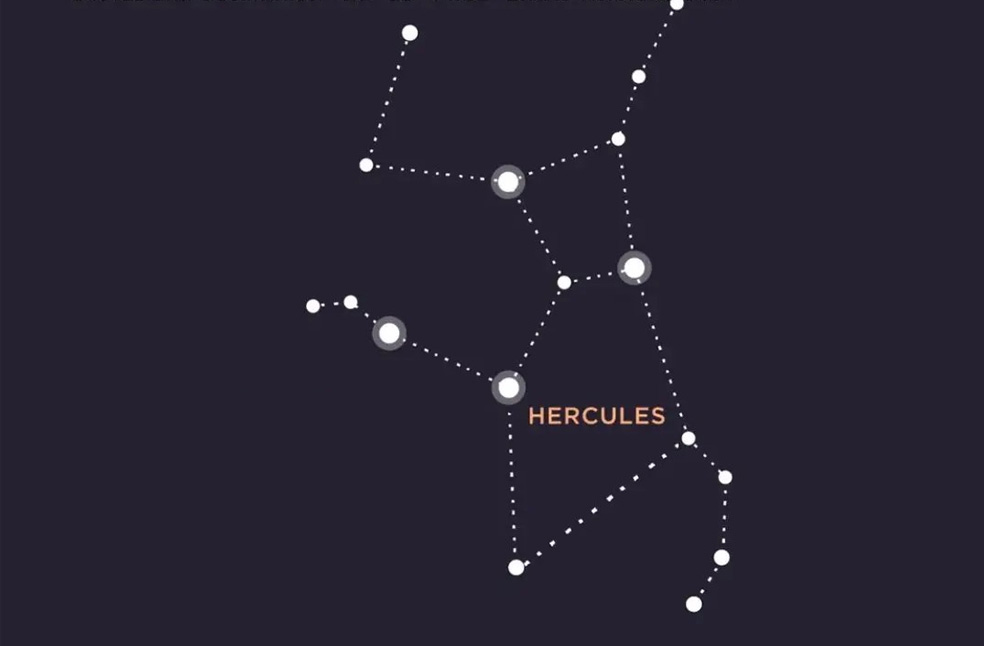
London: The constellation Hercules, one of the most prominent features of the summer night sky, is currently visible high in the southern sky and offers stargazers an exciting celestial target.
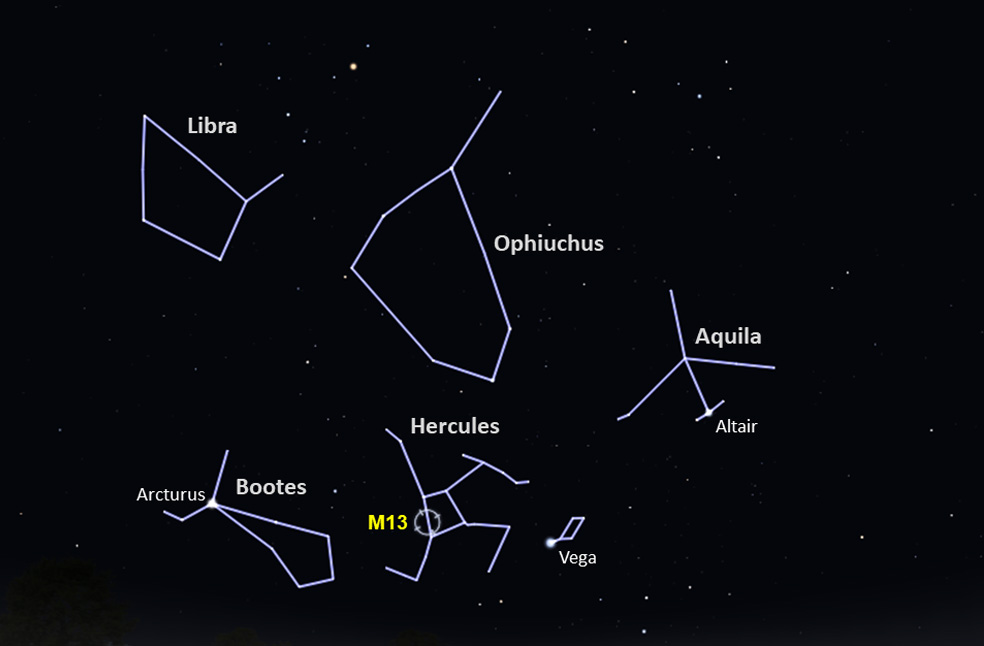
Although not immediately easy to identify, the constellation can be located with the help of two bright guide stars, making it a rewarding object for skywatchers. Observers can begin their search by locating Vega, the brilliant star in the constellation Lyra, and the orange-hued Arcturus in Boötes.
Hercules lies between these two bright stars. The easiest identifying feature is a group of four relatively faint stars forming an uneven quadrilateral known as the Keystone asterism, which represents the torso of the legendary hero.
Once the Keystone is identified, the rest of the constellation gradually becomes visible, revealing the outline of Hercules’ arms and legs. The constellation covers a vast area of the sky and ranks as the fifth-largest of the 88 modern constellations officially recognised by the International Astronomical Union.
The constellation is rooted in ancient mythology. In Greek legend, Heracles, known as Hercules in Roman mythology, was the son of the god Zeus and the mortal woman Alcmene.
Renowned for his extraordinary strength, Heracles was assigned 12 labours by King Eurystheus in an effort to control his fierce and unpredictable nature. These legendary tasks took him across distant lands and even into the underworld.
Hercules has been recognised for centuries and was among the 48 constellations catalogued by the astronomer Ptolemy in the second century.
While it appears high in the evening sky for observers in the Northern Hemisphere, those in the Southern Hemisphere can also view it, although it remains lower above the northern horizon.
MOST READ | France restricts alcohol at Fête de la Musique as heat soars
