


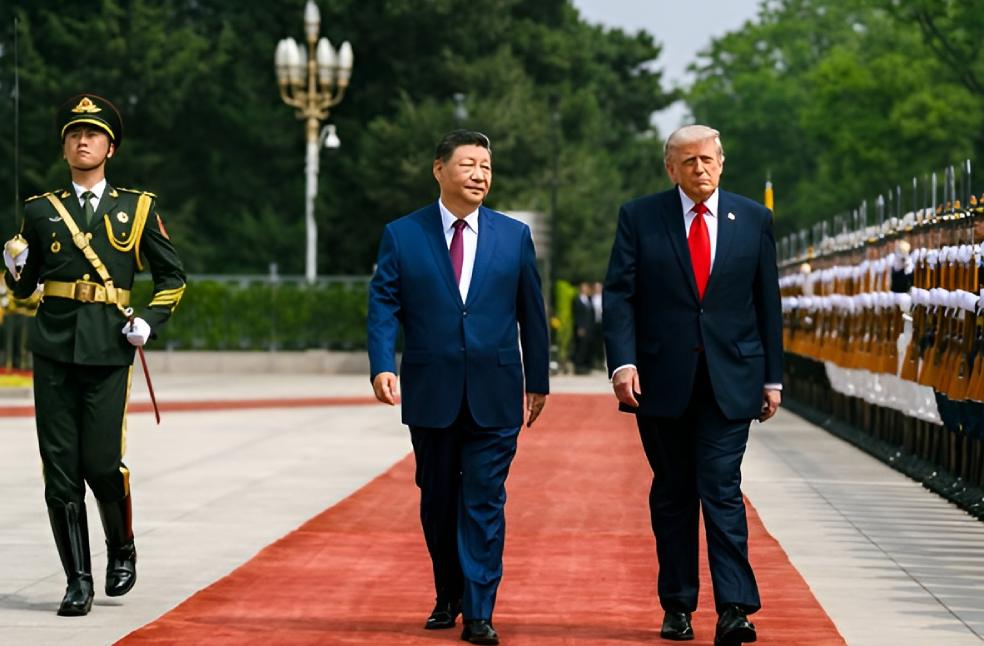
Beijing: US President Donald Trump has cautioned Taiwan against formally declaring independence from China, reaffirming Washington’s longstanding ‘One China’ policy during high-level talks with Chinese President Xi Jinping in Beijing.
At the conclusion of his two-day summit with Xi, Trump stated that the United States was not seeking conflict over Taiwan and urged both sides to de-escalate the rising regional tensions. The remarks come as relations between Washington and Beijing remain strained over trade, military activity, and Taiwan’s political future. China considers Taiwan part of its territory and has repeatedly warned against any move toward formal independence, while Taiwan maintains its self-governing democratic system.
Taiwanese President Lai Ching-te has previously argued that Taiwan already functions as a sovereign nation and therefore does not need to formally declare independence.
President Trump meets with President Xi in Zhongnanhai.
“I want to thank you very much. This has been an incredible visit. I think a lot of good has come of it. We’ve made some fantastic trade deals—great for both countries…” pic.twitter.com/cdt3H9jeOB
— The White House (@WhiteHouse) May 15, 2026
Trump says US policy remains unchanged
Trump reiterated that Washington’s position on Taiwan had not shifted, despite ongoing US support for the island’s self-defence capabilities. Trump stated that, “We’re not looking to have wars, and if you kept it the way it is, I think China’s going to be OK with that.”
Trump also declined to clarify whether the US would militarily defend Taiwan in the event of a Chinese attack, saying only that he and Xi had discussed the issue ‘a lot’ during their meetings.
According to Chinese state media, Xi described Taiwan as the most important issue in China-US relations and warned that mishandling the matter could lead to conflict between the two powers.
China-Taiwan tensions continue to rise
Beijing has intensified military drills around Taiwan in recent years, increasing pressure on the island and raising concerns among regional allies and Western governments. The Trump administration last year announced an $11 billion weapons package for Taiwan, including missile systems and advanced rocket launchers, a move strongly condemned by Beijing.
Trump said a final decision on whether the sale would proceed would be made soon, adding that discussions with Xi covered the issue in great detail.
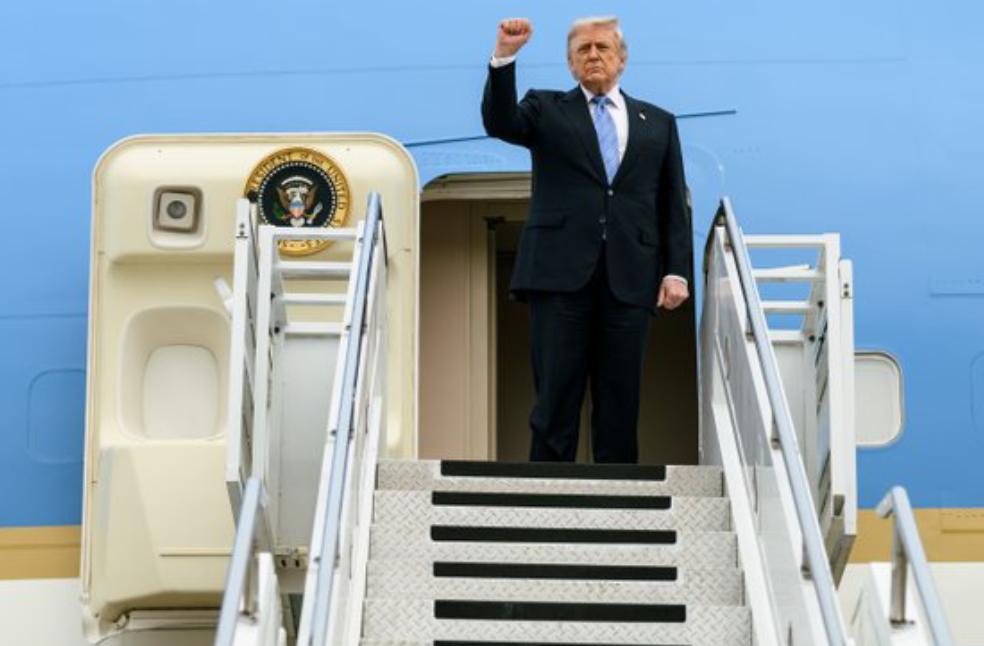
Diplomatic sensitivity over Taiwan leadership
Trump also drew attention after referencing Taiwan’s leadership while discussing future communication. The United States does not maintain formal diplomatic relations with Taiwan, and direct engagement between US presidents and Taiwanese leaders is considered highly sensitive by Beijing.
China has frequently criticised President Lai, calling him a troublemaker and accusing him of promoting separatism.
Taiwan responds
Taiwan Foreign Minister Lin Chia-lung said Taipei had closely monitored the US-China summit and remained in communication with Washington and other allies to protect Taiwan’s interests. Lin described Taiwan as a guardian of peace and stability in the region and accused China of increasing tensions through aggressive military actions and authoritarian oppression.
Most people in Taiwan support maintaining the current status quo, where the island governs itself independently without formally declaring independence or unifying with China.
MOST READ | Alberta judge blocks independence referendum over 1st nations rights
