


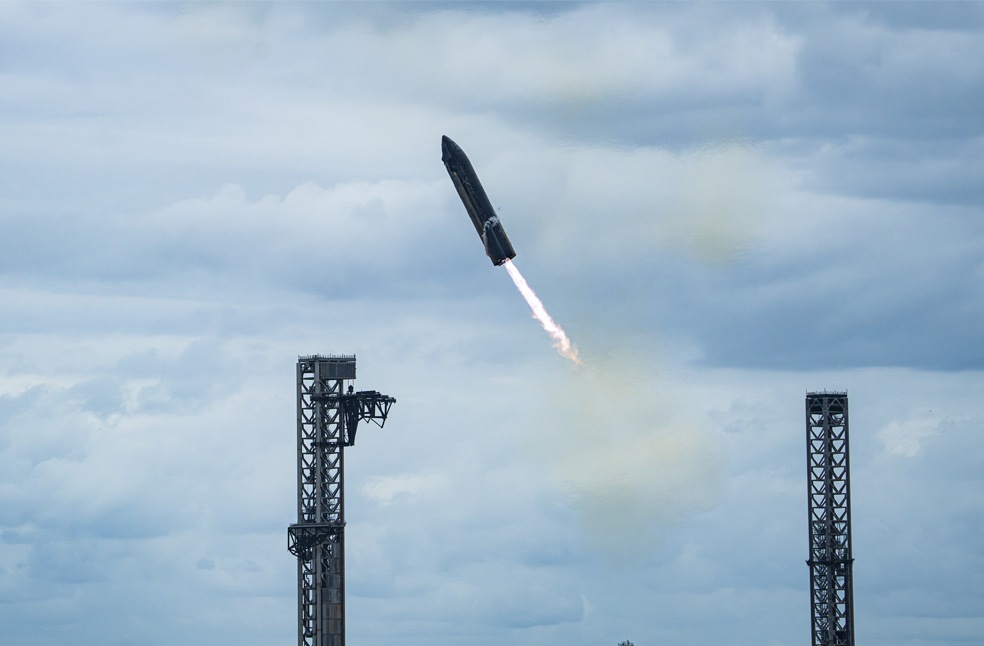
Texas: SpaceX’s Starship megarocket has returned to its Texas launch tower, marking a major milestone in the company’s efforts to develop a fully reusable spacecraft capable of carrying humans into space.
The 171-foot (52-metre) upper stage descended into the mechanical arms of the launch tower on November 14, completing a 22-hour mission during which it orbited Earth 14 times.
The 15th Starship test flight was intended to achieve a historic double catch, with both sections of the rocket returning intact to the launch site instead of being recovered from the ocean, as happened during some previous tests.
Mechazilla catches Starship! Congratulations to the entire SpaceX team on this incredible achievement! https://t.co/YJzmGUZb2B
— SpaceX (@SpaceX) November 14, 2026
Starship consists of two main components: the Super Heavy booster, whose Raptor engines power the rocket during its initial ascent, and the upper spacecraft stage, also known as Starship.
However, the double-catch attempt was unsuccessful on Friday when the Super Heavy booster diverted from its planned trajectory shortly after liftoff and exploded in the Gulf of Mexico.
SpaceX stated that its guidance, navigation and control (GNC) system had triggered a no-go decision. Company spokesperson Dan Huot explained on Saturday that the system had detected the booster was not in the correct position to proceed with the catch.
SpaceX Chief Executive Elon Musk also noted that the booster was slightly low on fuel, contributing to the unsuccessful recovery attempt.
Despite losing the booster, the test flight marked a significant achievement for the company, as it successfully caught the Starship upper stage for the first time. It was also only the second occasion on which the spacecraft had reached Earth orbit.
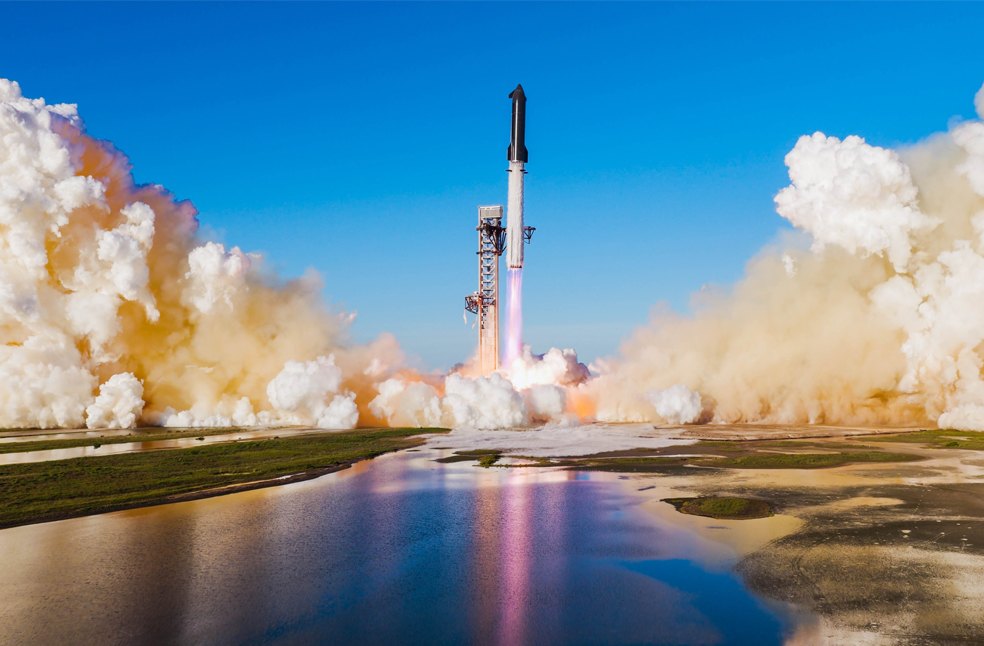
The achievement comes as NASA prepares for its planned return of astronauts to the lunar surface in 2028. The agency has contracted SpaceX and Jeff Bezos-owned Blue Origin to support the mission.
NASA Administrator Jared Isaacman praised the latest test flight in a post on X, saying the achievement was bringing the agency closer to its lunar ambitions.
SpaceX plans to increase Starship launch frequency to once a week and eventually twice a week, Musk said during a recent earnings call. The company aims to make the spacecraft rapidly reusable, allowing it to land and launch again in a manner similar to commercial aircraft.
Musk has promoted reusability as a way to significantly reduce the high costs associated with space travel. In addition to supporting future lunar missions, he has also outlined plans to transport humans to Mars.
The latest Starship flight also supported the expansion of SpaceX’s satellite internet network, deploying 26 Starlink V3 satellites during the mission.
ALSO READ | Delhi faces hazardous air pollution as smog blankets city
