


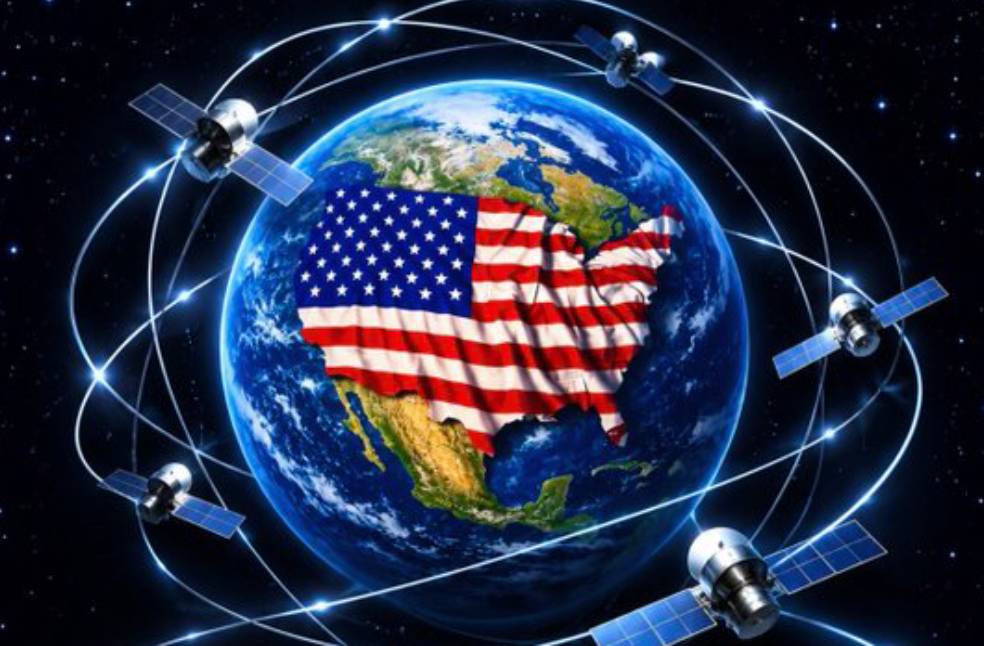
United States: US regulators have approved SpaceX’s ambitious plan to launch up to one million satellites into Earth’s orbit to establish space-based data centres designed to support the growing demand for artificial intelligence (AI) computing.
The Federal Communications Commission (FCC) approval marks a first and paves the way for a new approach to developing computing infrastructure beyond Earth. Owned by Elon Musk, SpaceX plans to use solar-powered satellites to process data for AI applications and transmit the results back to Earth. The project, named Starmind, aims to harness sunlight as an energy source for orbital data centres, which the company believes could offer a more cost-effective and energy-efficient alternative to traditional facilities on the ground.
Announcing the approval, the FCC stated that the project would support America’s booming super intelligence economy. FCC Chairman Brendan Carr described the initiative as a significant step towards strengthening the country’s computing infrastructure and technological leadership.
Carr stated that the project would open a new frontier for the advanced computing capabilities needed to support economic growth. Responding to the announcement, Musk expressed his appreciation on X, describing the initiative as a major asset for the United States and the wider world.
Under the FCC’s licence conditions, SpaceX must begin deploying the satellites no later than November 2033. The company is required to have launched at least 10 percent of the approved constellation by November 2035 and 50 percent by November 2038. SpaceX has previously indicated that it aims to launch its first Starmind satellite as early as next year. However, it remains unclear whether the company intends to deploy the full one million satellites or has sought approval for a larger number than it ultimately expects to use.
Similar to SpaceX’s existing Starlink network, Starmind satellites will operate in low-Earth orbit at altitudes ranging from 500 to 2,000 kilometres. They will communicate with Starlink satellites, which will help relay processed data back to Earth. Starlink currently operates a network of more than 10,000 satellites, providing high-speed internet connectivity across different regions.
The FCC remarked that the solar-powered system could bring humanity closer to becoming a Kardashev Type II civilisation, a theoretical stage at which a society can harness the entire energy output of its host star.
The initiative comes with increasing global demand for AI computing power and growing challenges associated with constructing conventional data centres. These facilities require substantial electricity to operate and large quantities of water for cooling. Their expansion has also faced opposition from communities across the United States concerned about environmental impacts, energy consumption and local infrastructure demands.
The construction of new data centres has become a significant political issue in the country, with several Democratic candidates calling for stricter regulations during the November midterm elections. SpaceX is not the only company exploring the possibility of moving data centre infrastructure into orbit. Technology companies such as Google and aerospace firm Blue Origin are also examining the concept as a potential alternative to energy-intensive terrestrial facilities.
However, the technology faces considerable challenges. Experts have warned that launching equipment into orbit remains expensive, while protecting, powering and cooling computing hardware in space presents complex engineering difficulties. The growing amount of space debris and the increasing number of satellites in low Earth orbit also raise concerns about collisions, equipment damage and long term orbital congestion.
SpaceX’s expanding Starlink network has previously faced criticism over its potential impact on orbital traffic and competition for space. Musk has rejected claims that the satellites are occupying excessive orbital space or restricting access for other operators.
Despite these concerns, the FCC’s approval represents a significant development in the emerging space based computing sector, as companies explore new ways to meet the rapidly increasing demands of artificial intelligence.
MOST READ | Six killed in Cessna crash off Mississippi Coast