


New Delhi: The National Payments Corporation of India (NPCI) has postponed the implementation of Merchant Discount Rate (MDR) charges on select Person-to-Merchant (P2M) Unified Payments Interface (UPI) transactions until after Diwali, which falls in the second week of November.
The organisation announced the decision in a media statement on October 13, citing the festive season and challenges associated with introducing the charges this week.
The UPI Steering Committee decided that MDR charges would be introduced immediately after Diwali, with the exact date to be announced separately. NPCI operates UPI, India’s leading digital payments platform.
UPI MDR on Select Merchant Transactions Shall be Implemented Post Diwali
Press Release Link: https://t.co/5KMjOP0tHd https://t.co/pD8IKfN6sR
— NPCI (@NPCI_NPCI) October 13, 2026
Latest reports say that NPCI was considering proposals to defer the rollout until January 2027. The latest decision follows requests from merchant bodies, fintech companies and payment service providers to postpone the implementation.
They raised concerns about its potential impact on consumer sentiment during the festive shopping season, as well as differences in MDR rates, policies and their applicability across various UPI transactions.
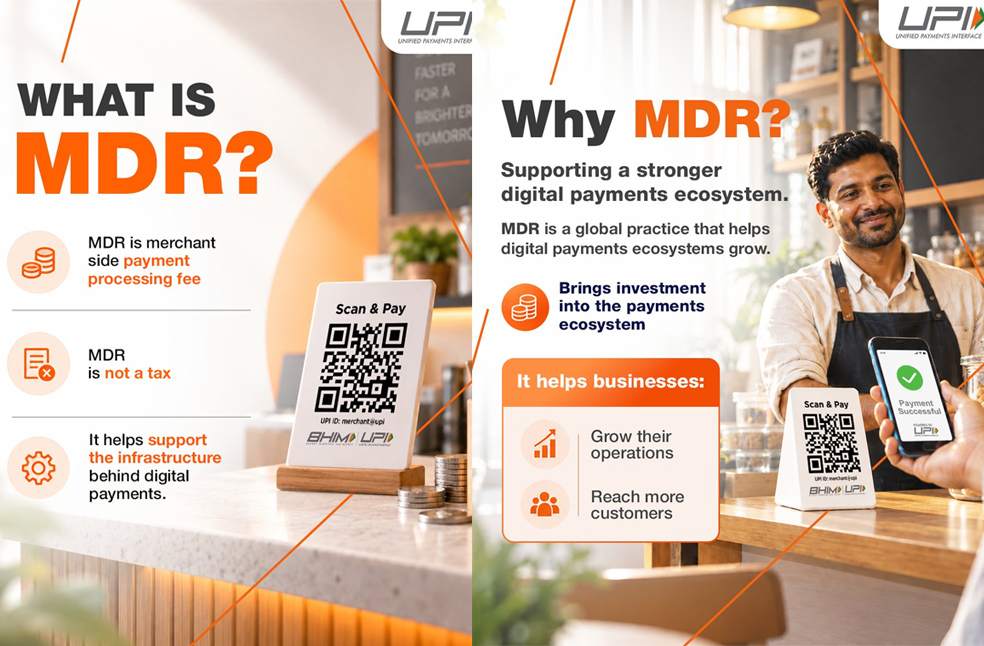
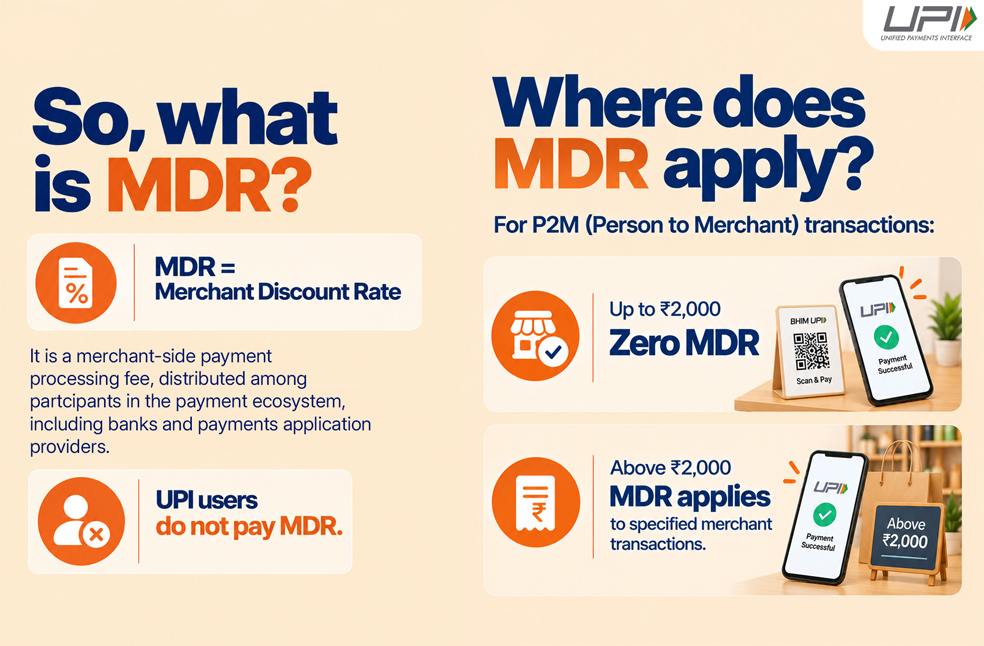
Last month, the UPI Steering Committee set the MDR at 0.4 percent, or 40 basis points, for transactions exceeding Rs 2,000. MDR is a fee charged to merchants for processing digital payments. At the proposed rate, the charge would amount to Rs 8 on a transaction of Rs 2,000 and Rs 40 on a payment of Rs 10,000.
The proposed charges have also raised concerns within the government about the possibility of increasing business costs during festive sales, particularly as inflation continues to rise. There are fears that merchants could pass on some or all of the additional costs to consumers.
On October 8, the Finance Minister noted that the the issue of MDR on UPI transactions would be handled by stakeholders, leaving the timing of implementation to the payments ecosystem.
Why UPI MDR is more complex
The proposed MDR framework has faced strong opposition from merchant groups and political circles since it was announced. One major difference between card payments and UPI is their reach.
While cards are accepted at around 11 million terminals, UPI is used by approximately 100 million merchants, including businesses in small towns and villages. Several merchant segments have called for flat fees or lower rates, pointing to UPI’s popularity, convenience and importance to consumers.
Another challenge is the way transactions are classified and charged. Merchants accepting card payments are assigned category codes, which card networks use to process and verify transactions. Card payments generally follow relatively uniform MDR rates.
UPI, however, has introduced different rates for categories such as utility payments, loan repayments and capital market transactions. Some of these payment types cannot be completed using cards. For example, the Reserve Bank of India (RBI) does not permit credit cards to be used for loan repayments or capital market transactions.
Before UPI became widely used, many such transactions were conducted through net banking, the Immediate Payment Service (IMPS), the National Electronic Funds Transfer (NEFT) system and the Real Time Gross Settlement (RTGS) system.
Although these channels also involved transaction charges, they did not follow the same MDR structure used for card payments. Banks also charged both the sender and receiver for certain transactions.
The postponement gives the payments industry additional time before MDR charges are introduced on the selected UPI transactions, while questions remain over the final implementation date and the impact on merchants and consumers.
MOST READ | Experts highlight key warning signs of childhood cancer
