


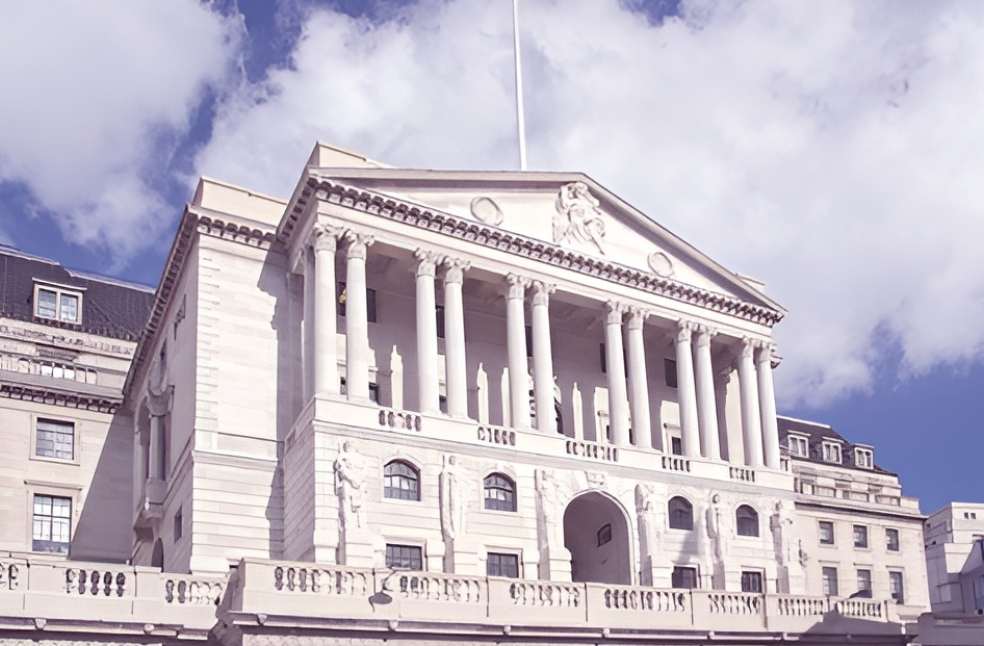
England: Policymakers at the Bank of England are widely expected to increase interest rates, marking the first rise in more than three years as persistent inflationary pressures continue to challenge the UK economy.
Most analysts anticipate a 0.25 percentage point increase in the benchmark interest rate, taking it from 3.75 percent to 4 percent. The move would raise borrowing costs for individuals and businesses while potentially offering better returns for savers.
The Bank of England last increased its base rate in August 2023. Since reaching a peak of 5.25 percent during 2023–24, the rate has gradually declined, with the Monetary Policy Committee (MPC) keeping it unchanged at its last six meetings.
However, rising inflation, driven largely by higher petrol and diesel prices and the wider impact of the Iran war on energy costs, is increasing pressure on policymakers to tighten monetary policy. The Bank is scheduled to announce its latest interest rate decision at 12:00 GMT on November 5.
Investors and financial markets will also be closely watching the MPC’s comments for indications of future interest rate movements, particularly as inflation remains elevated while economic growth prospects weaken.
Chris Cheverall, head of UK at trading platform CMC Markets, stated that the focus was increasingly shifting from whether interest rates would reach 4 percent to what the Bank might do next. He noted that policymakers must balance persistent inflation against a weakening economic outlook.
UK inflation raises pressure on policymakers
The UK’s Consumer Prices Index (CPI) inflation rate stood at 3.5 percent in the year to September 2026, rising from 3.1 percent in the previous month and remaining significantly above the Bank of England’s 2 percent target.
Although inflation remains below the peak recorded a few years ago, its recent upward trend has raised concerns about the cost of living and the country’s economic outlook.
The continuing effects of the Iran war have contributed to higher international energy and fuel prices, with the impact gradually feeding into the UK’s inflation figures. Millions of households are also facing the prospect of higher domestic energy bills in January.
How an interest rate rise could affect borrowers and savers
An increase in the Bank of England’s base rate would have different implications for mortgage holders, borrowers and savers.
The immediate impact would be felt by approximately 510,000 homeowners with tracker mortgages, whose repayments are directly linked to changes in the Bank rate. According to UK Finance, a 0.25 percentage point increase could add around £31 ($41.8) to the monthly repayments of someone with a typical tracker mortgage.

Another 470,000 homeowners with variable-rate mortgages could also face higher payments, depending on how their lenders respond. A similar increase could add approximately £14 ($18.8) to monthly repayments.
Those on fixed-rate mortgage deals would not experience an immediate change in their monthly payments. However, future mortgage agreements could become more expensive as lenders factor expected interest rate movements into their offers.
According to Moneyfacts, the average two-year fixed residential mortgage rate stood at 5.96 percent on November 4, 2026, while the average five-year rate reached 5.99 percent.
Mortgage borrowers coming to the end of older fixed-rate agreements could face significantly higher costs when refinancing. Mortgage broker L&C estimates that some homeowners could pay nearly £5,000 ($6,747) more annually on a £200,000 ($2,69,913) mortgage over 25 years compared with borrowers who secured remortgage deals in 2021.
At that time, the average five-year fixed remortgage rate among the UK’s 10 largest lenders was approximately 1.30 percent.
Savers could benefit from higher interest rates
While higher borrowing costs could put additional pressure on households and businesses, savers may benefit from improved returns if banks and building societies increase the interest rates offered on savings accounts.
Some borrowers are also considering tracker mortgages instead of fixed-rate deals, hoping to benefit if interest rates decline in the future. However, financial experts caution that such decisions carry risks if rates continue to rise.
Rachel Springall of Moneyfacts highlighted the importance of borrowers assessing their ability to manage potential future increases before choosing a mortgage product.
The Bank of England’s latest decision will therefore be closely watched across financial markets, as policymakers seek to control inflation without placing further pressure on an economy already facing uncertain growth prospects.
MOST READ | Delhi air quality deteriorates as AQI crosses 300 ahead of Diwali