



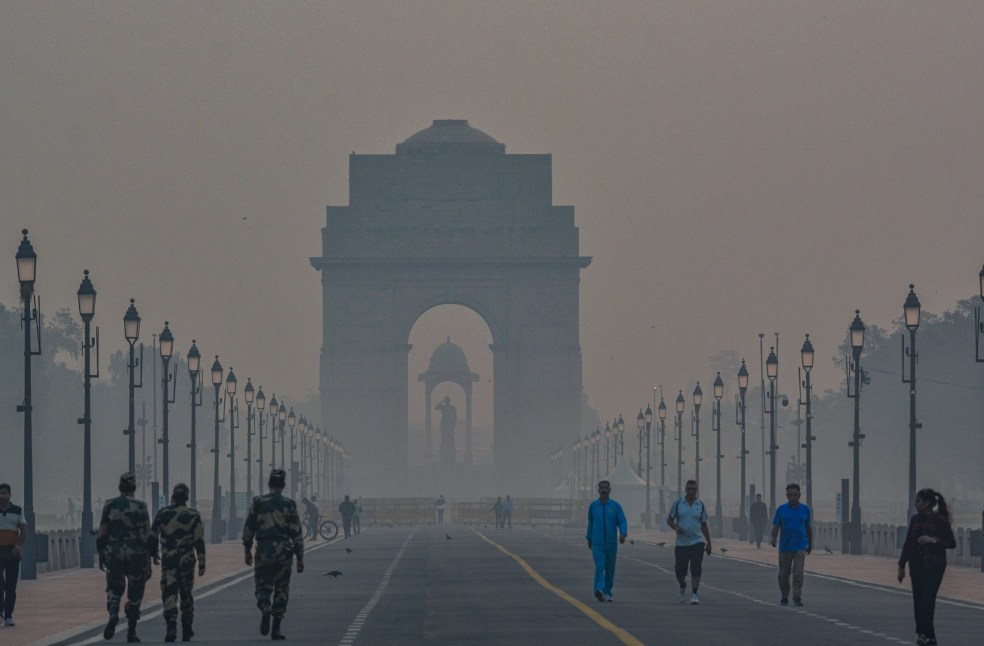
New Delhi: Delhi is witnessing a fresh deterioration in air quality as winter conditions set in, with pollution levels rising to the ‘very poor’ category and prompting authorities to introduce additional measures to control emissions. The national capital’s Air Quality Index (AQI) reached 377, crossing the 300 mark and raising concerns over the health and safety of millions of residents.
Prolonged exposure to polluted air, particularly fine particulate matter such as PM2.5, can lead to respiratory complications and aggravate existing health conditions. Children, older adults and people with respiratory illnesses are among the most vulnerable to the effects of deteriorating air quality.
Authorities activate stage II of GRAP
In response to the worsening conditions, authorities have implemented Stage II of the Graded Response Action Plan (GRAP), introducing stricter measures to address dust pollution, vehicle emissions and traffic congestion. The measures include intensified road cleaning, increased public transport services and higher parking charges to discourage the use of private vehicles.
The Delhi Metro has added 20 additional train trips on weekdays to encourage commuters to use public transportation. Government departments have also been directed to stagger office timings to reduce traffic congestion and vehicle-related emissions. Officials stated that the measures were introduced following forecasts indicating that air quality could remain in the ‘very poor’ category over the coming days.
Multiple factors contribute to rising pollution
Delhi’s annual winter pollution crisis is driven by several factors, including vehicle emissions, industrial activities, construction dust, falling temperatures, low wind speeds and agricultural stubble burning in neighbouring states such as Punjab and Haryana.
The latest deterioration comes after the capital recorded its lowest average AQI for October in eight years. Experts have linked the recent increase in pollution to changing weather conditions and a rise in crop-residue burning. Although recent rainfall and stronger winds temporarily helped clear pollutants from the atmosphere, the return of northwesterly winds has carried smoke from agricultural fires towards Delhi.
According to India’s pollution monitoring standards, AQI readings between 301 and 400 fall under the ‘very poor’ category, while readings above 400 are classified as ‘severe’. The AQI measures eight major pollutants, including PM2.5, which consists of extremely fine particles capable of penetrating deep into the lungs.
Diwali fireworks raise further concerns
With Diwali approaching, concerns are growing that firecracker emissions could further worsen the capital’s air quality. Fireworks release fine particulate matter and harmful gases, adding to the existing pollution burden.
India’s Supreme Court has permitted the manufacture, sale and use of certified green firecrackers in Delhi and neighbouring areas for a limited period. Under the order, fireworks are allowed only between 6 am and 7 am and from 8 pm to 10 pm on 7 and 8 November. The court has also prohibited their use within 300 metres of hospitals, care homes, schools and designated silence zones.
Green firecrackers are designed with modified chemical formulations to reduce emissions compared with conventional fireworks. They must carry QR codes enabling consumers and authorities to verify their manufacturers and certification. However, enforcing restrictions remains a challenge, with concerns that conventional firecrackers could be sold under the label of approved green alternatives.
The Supreme Court has directed police to conduct patrols in designated sales areas, carry out random QR-code inspections and seize unauthorised products.
Pollution concerns extend beyond Delhi
The air pollution situation is not limited to the national capital. Mumbai has also experienced elevated pollution levels in recent weeks, with its AQI reaching 322 on 24 October, placing it in the ‘very poor’ category. Low wind speeds, construction dust, waste burning, firecracker emissions and pollutants transported from neighbouring regions contributed to the deterioration.
However, Mumbai’s air quality has improved in recent days, with the city recording an AQI of 89, classified as ‘satisfactory’. Nearby Navi Mumbai reported an AQI of 118, placing it in the ‘moderate’ category.
As northern India enters the winter season, authorities face renewed pressure to control pollution through stricter enforcement and coordinated measures, particularly as the upcoming Diwali celebrations could add to the region’s existing air quality challenges.
RELATED | Delhi air pollution forces online classes and halts construction
