


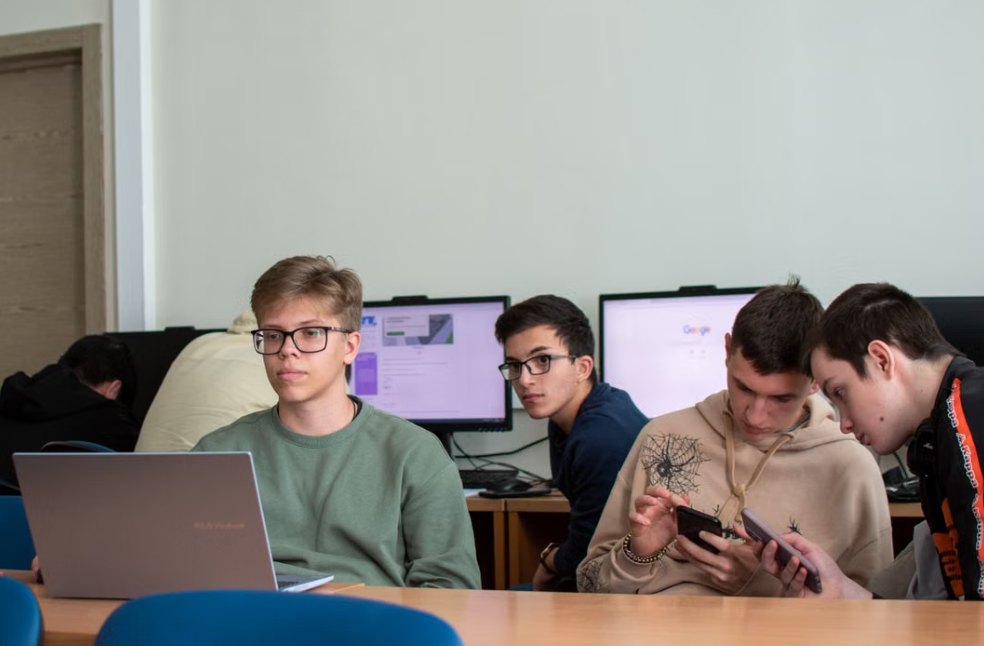
London: More than 150 clinicians have urged the UK government to reduce children’s screen time in classrooms, warning that prolonged use of tablets and laptops could affect their eyesight, hearing and overall development.
General practitioners, pediatricians and other medical specialists raised their concerns in an open letter to Education Secretary Lucy Powell and Health Secretary Yvette Cooper. The clinicians argued that increasing screen time in classrooms, driven by the growing use of tablets and laptops, could have long-term effects on children’s physical and developmental health that are not yet fully understood.
The letter highlighted concerns about rising rates of short-sightedness, also known as myopia, among children and adolescents. According to research cited by the clinicians, an analysis of 276 studies involving 5.4 million participants worldwide found that the prevalence of myopia increased from around 24 percent in 1990 to nearly 36 percent in 2023.
The clinicians warned that prolonged screen exposure could contribute to problems with eye health and called for schools to reassess how frequently digital devices are used during lessons. They also expressed concern that some children may spend more time using screens in classrooms than recommended for a full 24-hour period.

The group stated that healthcare professionals are increasingly providing support for children who need glasses, hearing aids and speech therapy, arguing that excessive reliance on classroom technology could worsen some existing difficulties. However, the extent to which classroom screen use directly causes these problems remains an important consideration.
The Department for Education stated that it was developing new screen-time guidance for children aged five to 18. The government also plans to consult on the safety of artificial intelligence and educational technology in schools.
The debate comes after restrictions on smartphones in schools in England took effect in June, making individual schools and trusts responsible for ensuring that school environments remain phone-free throughout the day.
The clinicians are calling for clearer limits on screen time in classrooms, arguing that digital learning should be balanced with activities that support children’s physical health, development and face-to-face interaction.
IMPORTANT | Philippines moves to bar under-18s from high-risk social media
