


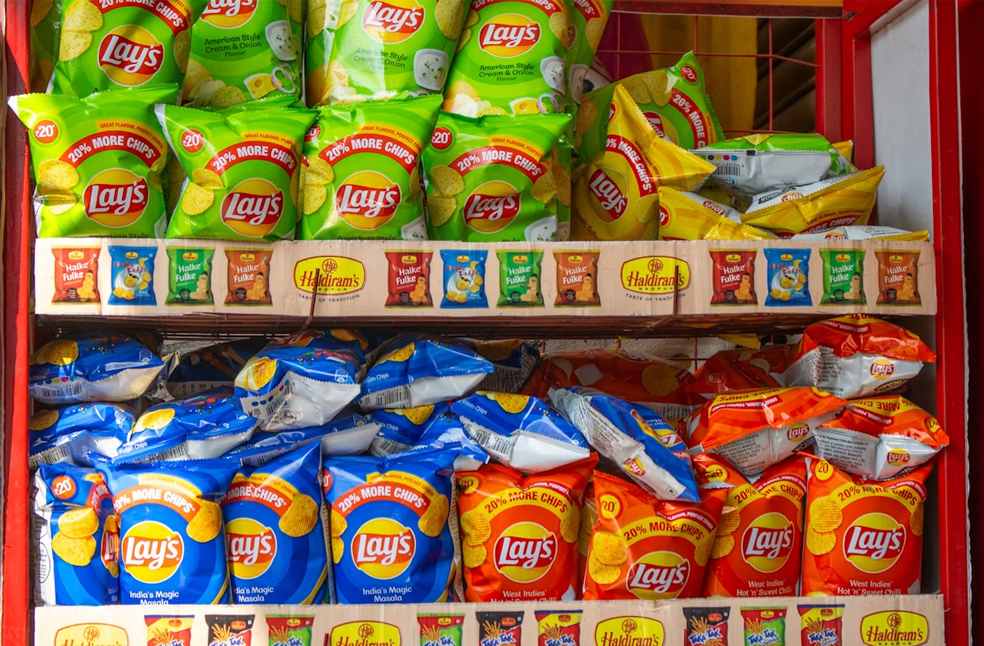
Bhubaneswar, India: India is moving closer to introducing regulations that would restrict the sale of foods high in fat, salt, and sugar (HFSS) within 50 metres of schools, as authorities seek to reduce junk food consumption amid rising obesity rates, particularly among children.
The proposed rules would affect family-run shops, restaurants and food stalls selling products such as sugary soft drinks, salty snacks, samosas, pizzas and burgers near the country’s 1.5 million schools.
The move could create another challenge for multinational food companies including PepsiCo, Coca-Cola, Mondelez and Nestle, which are also facing proposed regulations requiring red warning labels on products high in fat, salt and sugar. The measures would bring India closer to countries such as Chile and Mexico, which have introduced stricter food regulations.
Shopkeepers and small businesses operating near schools are concerned about the potential impact, with some expecting sales to fall significantly if the restrictions are introduced.
The proposed regulations are being driven by the Food Safety and Standards Authority of India (FSSAI), which aims to encourage healthier eating habits among children from an early age. The authority has also said businesses would continue to be able to sell foods that do not fall under the HFSS category.
The measures are also intended to encourage food companies to reformulate products to reduce their levels of fat, salt and sugar.
There is currently no fixed timeline for introducing the law, which was first proposed in 2020. As part of a wider food safety drive, FSSAI published HFSS thresholds in August that would determine which products face restrictions on sales near and inside schools. Public feedback on the proposal is open until October 6.
India has seen growing demand for packaged foods such as Lay’s chips, Cadbury chocolates and Maggi noodles. For some lower-income consumers, foreign brands are associated with rising living standards, while their relatively low prices have also helped increase their popularity. In 2023, Domino’s introduced what it described as its cheapest pizza globally in India, priced at 49 rupees, or around 50 US cents.

The shift in eating habits has coincided with a sharp increase in the number of Indian children aged between five and 19 classified as overweight or obese. World Obesity Federation data shows the number rose from 28 million in 2015 to 41 million in 2025, an increase of nearly 50 percent. The figure is projected to reach 56 million by 2040.
India’s proposed federal rules would restrict the sale and advertising of HFSS products near schools specifically to schoolchildren. Maharashtra, however, has adopted a stricter approach. The western state, which includes Mumbai, prohibits shops within 50 metres of schools from stocking such products.
State data shows that inspectors have identified violations at 133 shops located within 50 metres of schools and ordered 51 of them to stop operating.
The proposed restrictions have also raised concerns within the food industry. The Confederation of Indian Food Trade and Industry has warned that compliance could be difficult because many schools are located near crowded markets that serve the wider public. The group has argued that restrictions should instead be limited to food sales inside schools.
PepsiCo, which owns Lay’s, follows a global policy governing the products it permits to be sold in schools. Nestle, which produces Maggi noodles, also follows a global policy allowing products that meet specific nutritional standards to be sold in primary and secondary schools.
Globally, five countries have proposed or introduced restrictions on food sales around schools, while 48 countries have limited junk food sales inside schools, according to researchers at the University of North Carolina.
Chile introduced stricter warning-label rules in 2016 and banned the sale and promotion of junk food in schools. A Lancet study published this year found that after 18 months of exposure to the law, girls had a 2.85 percent lower probability of excess weight, while the reduction was 2.4 percent among boys.
The Chilean measures also encouraged manufacturers to reformulate many of their products.
MOST READ | Met Police warns of changing trends in spiking cases
