


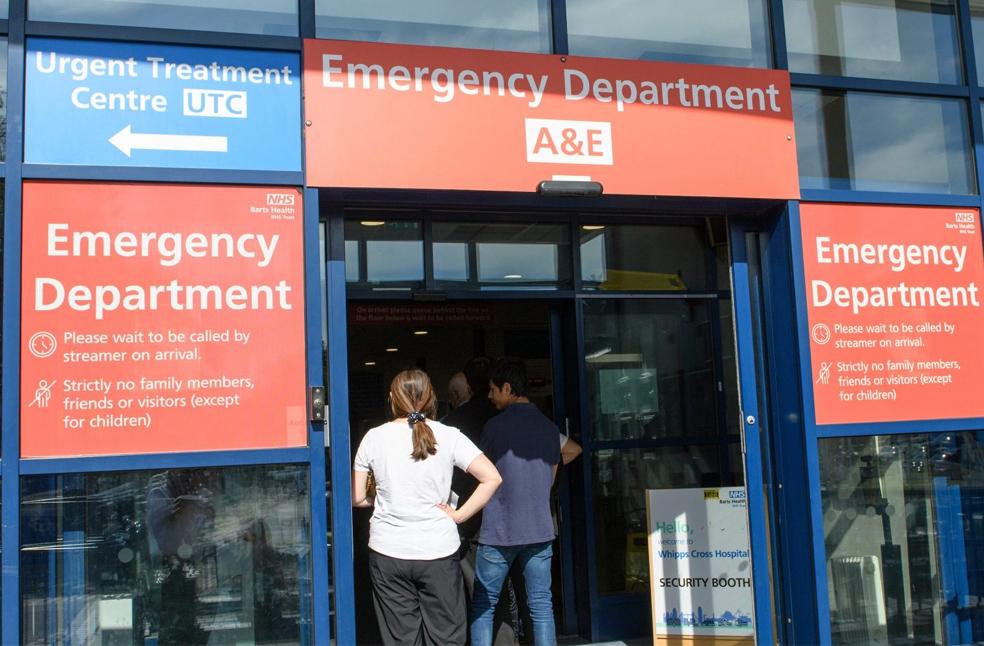
London: Overcrowding in accident and emergency (A&E) departments and treating patients in corridors have been linked to an increased risk of death, with researchers estimating that overcrowding may be associated with around 550 deaths a week across England, Wales and Northern Ireland.
The study reviewed more than 19,000 adult patients treated at 134 emergency departments in England, Wales and Northern Ireland. The research covered around 70 percent of emergency departments and examined data from March 2025.
Researchers found that for every 10 percent increase in emergency department occupancy, the risk of a patient dying within the following 28 days increased by 1 percent. Emergency departments were operating at an average occupancy of 175 percent, indicating significant overcrowding.
Dr. Ryan McHenry of the University of Glasgow, who presented the findings at the European Emergency Medicine Congress in France, said that the research showed an association between increased emergency department crowding and mortality among patients admitted to hospital.
McHenry added that reducing overcrowding could have the potential to save lives, given the pressure currently faced by emergency departments.
McHenry estimated that around 550 deaths a week across England, Wales and Northern Ireland could be associated with emergency department overcrowding. However, he stressed that the study was relatively small and that the possible range of excess deaths was wide, with estimates ranging from 33 to 1,083 deaths.
The researchers also examined ‘corridor care,’ where patients receive treatment in non-standard clinical areas such as hospital corridors. This was similarly associated with an increased risk of death, although the researchers noted that emergency department occupancy was easier to measure and record.
Dr. Felix Lorang, a member of the emergency medicine congress abstract selection committee, said overcrowding and corridor care were occurring in emergency departments operating beyond their capacity. Lorang also pointed to ‘exit block,’ where patients remain in emergency departments because inpatient beds are unavailable, as an additional pressure on staff and services.

Dr. Ian Higginson, President of the Royal College of Emergency Medicine, noted that deaths associated with emergency department overcrowding should prompt concern among policymakers.
The Department of Health and Social Care remarked that overcrowding can affect patients’ experience and safety and that the government is taking action to reduce pressure on emergency departments and end corridor care.
The department highlighted that 75 percent of people in A&E were seen within four hours in August, while more than £1.5 billion is being invested in hospital buildings and facilities. It also said expert teams are being deployed to trusts facing the greatest challenges and that shifting more care into community settings would help reduce pressure on emergency departments.
The findings highlight the potential safety risks associated with overcrowded A&E departments and corridor care, while researchers stressed the need for further study. The UK government said it is taking steps to reduce pressure on emergency services and improve patient care.
MOST READ | England plans new vocational GCSEs for students from 2029
