


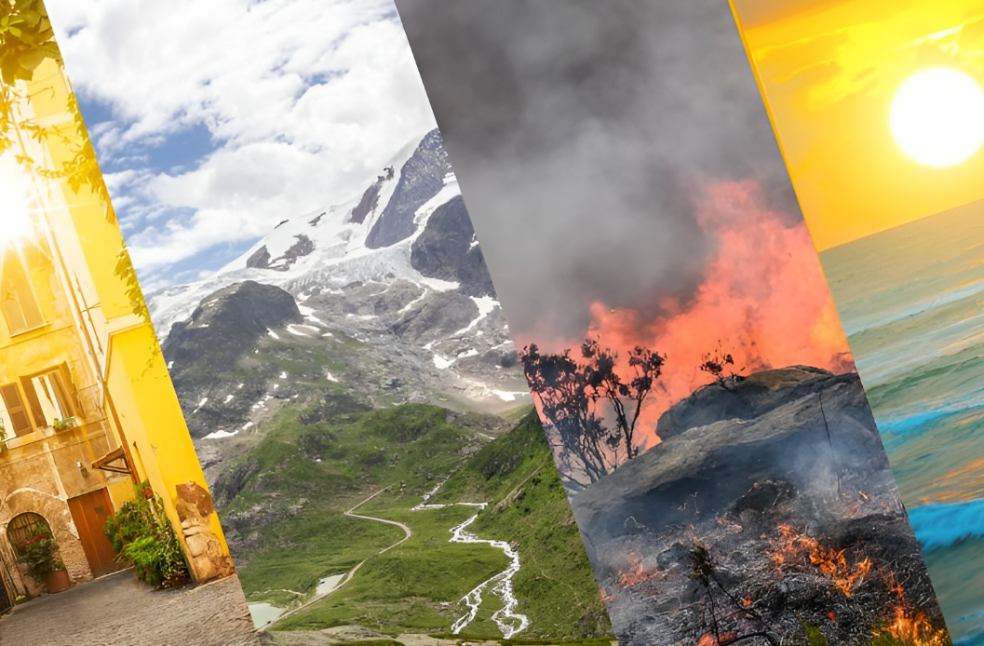
Geneva: Europe have experienced widespread above-average temperatures in 2025, alongside record-breaking marine heatwaves and extensive wildfires, according to a new report by the World Meteorological Organisation.
The findings, released in collaboration with the European Centre for Medium-Range Weather Forecasts (ECMWF), highlight the accelerating pace of climate change across the continent, describing the situation as increasingly severe and urgent.
Florian Pappenberger, director-general of the ECMWF, stated that, “Europe is the fastest-warming continent, and the impacts are already severe. Almost the whole region has seen above-average annual temperatures.”
Europe is warming >2x as fast as the global average, reducing snow & ice cover. High air temperatures, drought, heatwaves & record ocean temperatures affect regions from the Arctic to the Mediterranean.
European State of Climate #ESOTC2025 out now. ➡️https://t.co/ZpuYXBirKi pic.twitter.com/cEtm651YDg
— World Meteorological Organization (@WMO) April 29, 2026
Hot and dry weather conditions played a major role in fuelling wildfires that burned more than 1 million hectares of land, an area roughly equivalent to Cyprus. The report also found that nearly 70 percent of European rivers recorded below-average annual flow levels.
Marine ecosystems were also heavily impacted, with strong heatwaves recorded across the Atlantic waters near the United Kingdom, Ireland and Iceland, as well as in parts of the Mediterranean Sea.
Northern Europe saw some of the most dramatic changes. Sub-Arctic regions of Norway, Sweden and Finland endured a record 21-day heatwave in July 2025, with temperatures exceeding 30°C near the Arctic Circle.
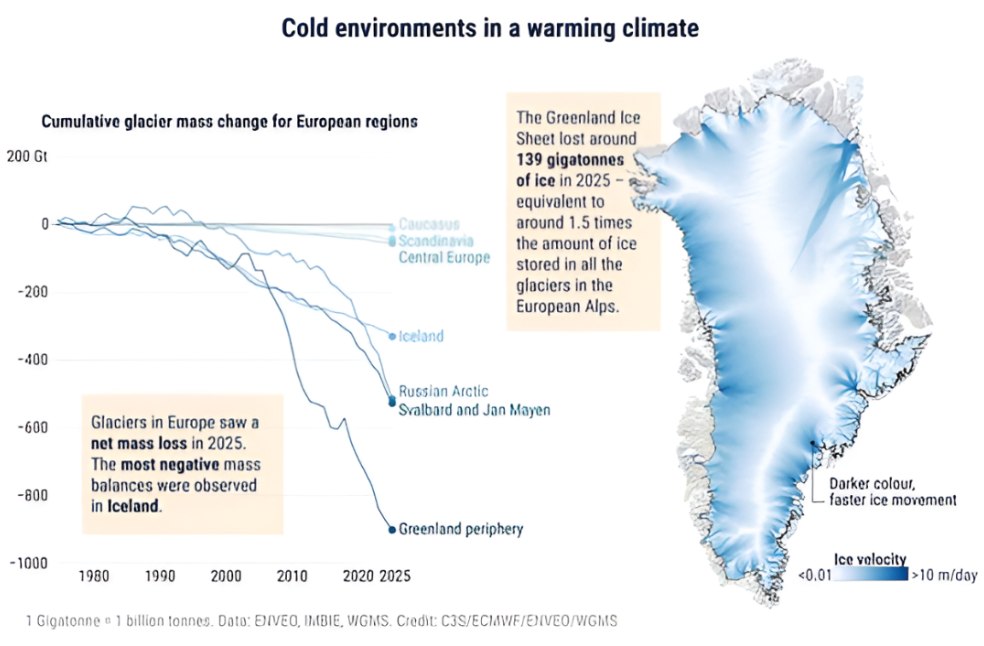
Snow cover across Europe declined sharply, dropping nearly 30 percent to 1.32 million square kilometres in March 2025. The loss is equivalent to the combined land area of France, Italy, Germany, Switzerland and Austria. Glaciers across the continent also continued to shrink, with Iceland recording its second-largest glacier loss on record.
Samantha Burgess, strategic lead for climate at ECMWF remarked that, “The report paints a stark picture: the pace of climate change demands more urgent action. With rising temperatures, widespread wildfires and drought, the evidence is unequivocal: climate change is not a future threat, it is our present reality.”
The report underscores the growing environmental and economic risks facing Europe, as policymakers are urged to accelerate climate adaptation and mitigation efforts across the region.
MOST READ | US to issue Trump-themed passports for 250th anniversary
