


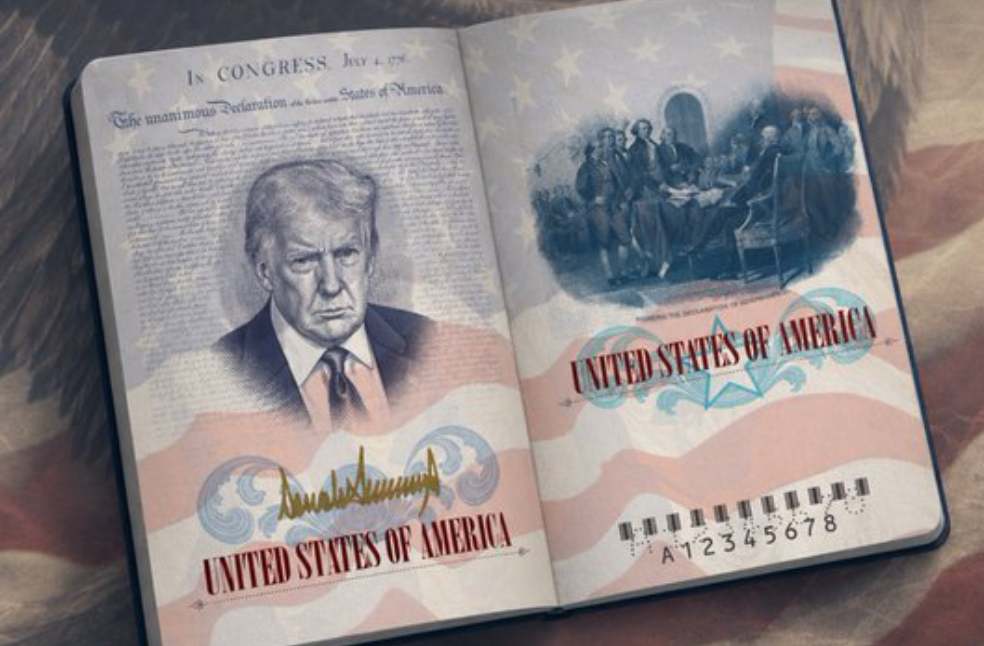
Washington: The United States government is set to introduce a limited-edition passport featuring a portrait of President Donald Trump, marking a symbolic addition to the country’s celebrations for the 250th anniversary of the United States Declaration of Independence.
According to the White House, the commemorative passport will be made available starting in July 2026, coinciding with nationwide festivities surrounding the historic milestone. Administration officials have since confirmed the initiative.
Limited rollout and availability
Officials stated that the redesigned passport will be issued to any American citizen applying for a passport during the rollout period, subject to availability. However, distribution will be limited to the Washington Passport Agency, making access geographically restricted.
🇺🇸 https://t.co/BkbO8DAhFz pic.twitter.com/QY4tGjmJLu
— The White House (@WhiteHouse) April 28, 2026
Renderings released by the US State Department show Trump’s portrait framed by excerpts from the Declaration of Independence, alongside the American flag and a gold-embossed presidential signature.
A White House spokesperson described the design as a ‘patriotic tribute,’ adding that it offers Americans ‘another way to participate in the country’s semiquincentennial celebrations.’
Part of wider patriotic campaign
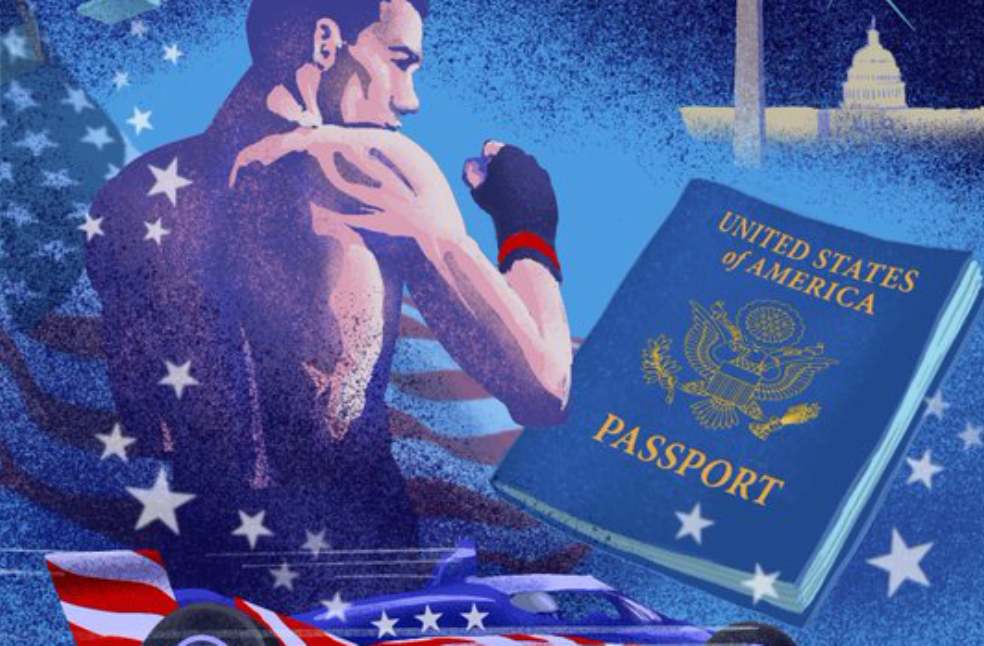
The passport initiative is one of several efforts by the administration to commemorate the anniversary. Events such as the ‘UFC250 Fight,’ ‘Great American State Fair,’ and ‘Freedom250 Grand Prix’ have been highlighted as key elements of the broader national celebration campaign.
Beyond events, the administration has also introduced symbolic projects tied to Trump’s image and legacy. The US Mint recently announced plans for a commemorative gold coin bearing the president’s likeness, while proposals are underway to feature his signature on US banknotes, an unprecedented move for a sitting president.
Cultural and political reactions
The administration’s broader initiative has sparked debate. The governing board of the John F. Kennedy Center for the Performing Arts recently voted to rename the venue the ‘Trump-Kennedy Center,’ a decision that drew criticism from members of the John F. Kennedy family.
Meanwhile, plans for a large-scale monument dubbed the ‘Arc de Trump’, a proposed 250-foot structure in Washington D.C., have received preliminary federal approval despite opposition from preservation groups and sections of the public.
Legal challenges and infrastructure changes
Changes to the White House complex have also drawn scrutiny. The demolition of the East Wing to make way for a new ballroom has prompted legal action from the National Trust for Historic Preservation, which alleges that construction began without proper approvals from the National Capital Planning Commission.
Uncertainty over opt-out
It remains unclear whether applicants will have the option to opt out of receiving the commemorative passport design or if it will be issued by default during the rollout period.
Current US passports typically feature historical imagery such as the moon landing and national landmarks like the Statue of Liberty, making this proposed design a notable departure that places a sitting president at the centre of an official travel document.
As preparations continue for the country’s 250th anniversary, the commemorative passport is likely to remain a focal point in discussions around national identity, symbolism, and the evolving role of political imagery in public institutions.
POPULAR | The power of voice assistants in modern smart homes
