


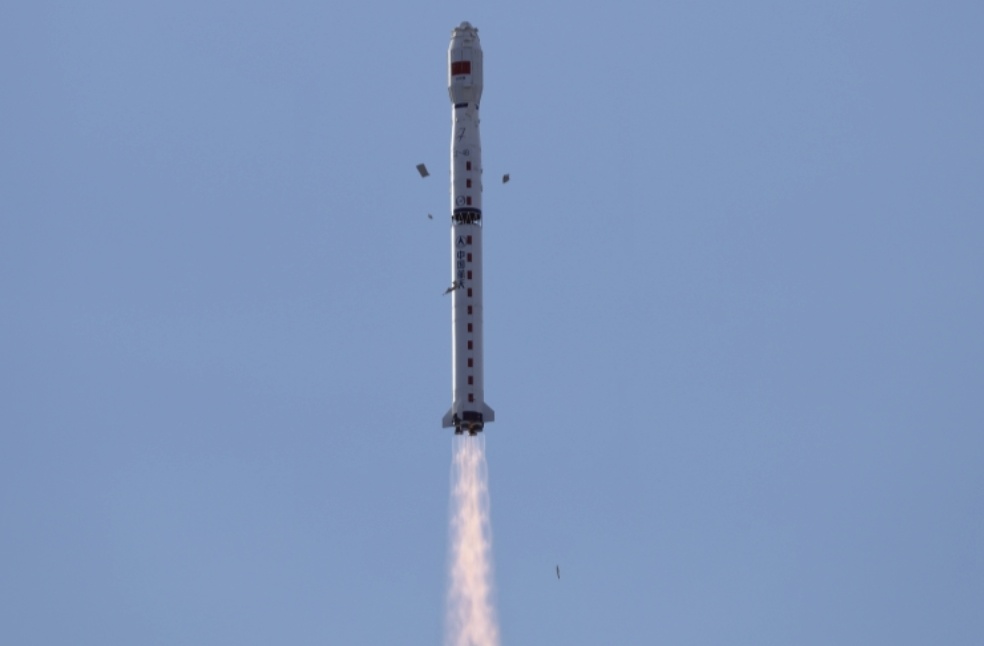
Hainan: China has achieved a significant breakthrough in its space programme after successfully landing a reusable rocket for the first time, marking a major advancement in its efforts to develop cost-effective space launch technology.
According to state media, the China Aerospace Science and Technology Corporation (CASC) launched the Long March 10B rocket from Hainan in southern China at 12:15 local time (04:15 GMT). Approximately six minutes after separating from the rocket’s upper stage, the booster executed a controlled vertical descent and was successfully recovered on a floating platform.
The achievement places China among a small group of nations capable of recovering and reusing rocket boosters, a technology that has transformed the global space industry by significantly reducing launch costs. Reusable rockets eliminate the need to discard expensive booster stages after every launch, making satellite deployment and deep-space missions more economical.
Unlike conventional rockets that are destroyed after use, reusable launch systems allow the most valuable components to be flown multiple times. The innovation has been pioneered by SpaceX, which successfully landed its Falcon 9 rocket after an orbital mission in December 2015. Blue Origin also demonstrated similar capabilities with its New Glenn rocket in November 2025.
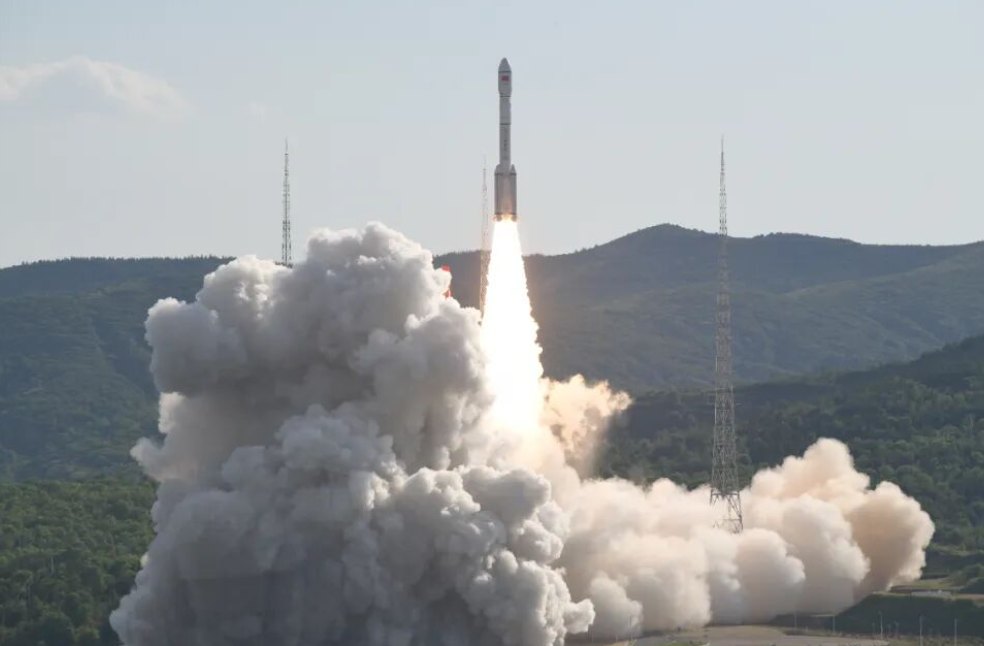
China’s latest success follows an earlier attempt in February, when the Long March 10A completed a controlled descent and splashed down near a recovery platform. The Long March 10B mission marks the country’s first full recovery of a reusable booster.
The Long March 10B is capable of carrying payloads of at least 16 metric tonnes to low-Earth orbit, making it comparable to SpaceX’s Falcon 9 in terms of lifting capacity. However, its recovery system differs from its American counterpart. Instead of landing autonomously on a drone ship or landing pad, the Chinese rocket uses specially designed landing hooks that latch onto a net mounted on a floating recovery platform.
Industry observers say the successful recovery represents an important step in China’s long-term ambitions to strengthen its commercial launch capabilities, support future lunar missions, and compete more directly with leading private space companies in the United States.
The announcement also boosted investor confidence in China’s growing space sector. Shares of China Spacesat and China Satellite Communications surged by the maximum daily limit of 10 percent following the news, reflecting optimism over the country’s expanding aerospace capabilities and commercial space ambitions.
POPULAR | Australia, India finalise uranium export deal to boost nuclear cooperation
