


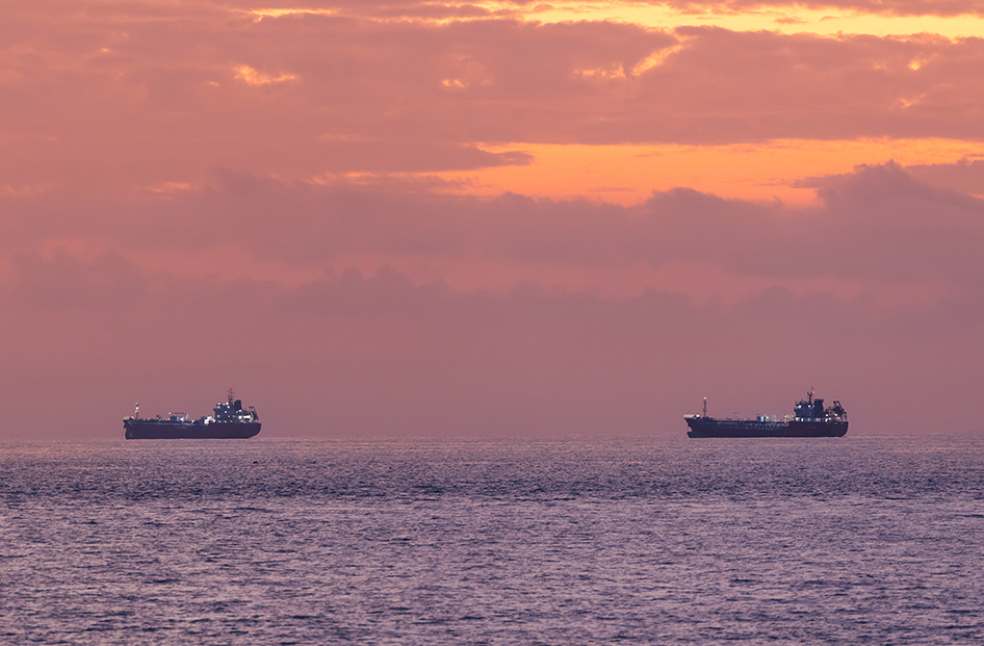
Oman: The United Nations’ International Maritime Organisation (IMO) has temporarily suspended its planned evacuation of more than 11,000 stranded seafarers from the Strait of Hormuz after a cargo vessel was struck by an unknown projectile while transiting the strategic waterway.
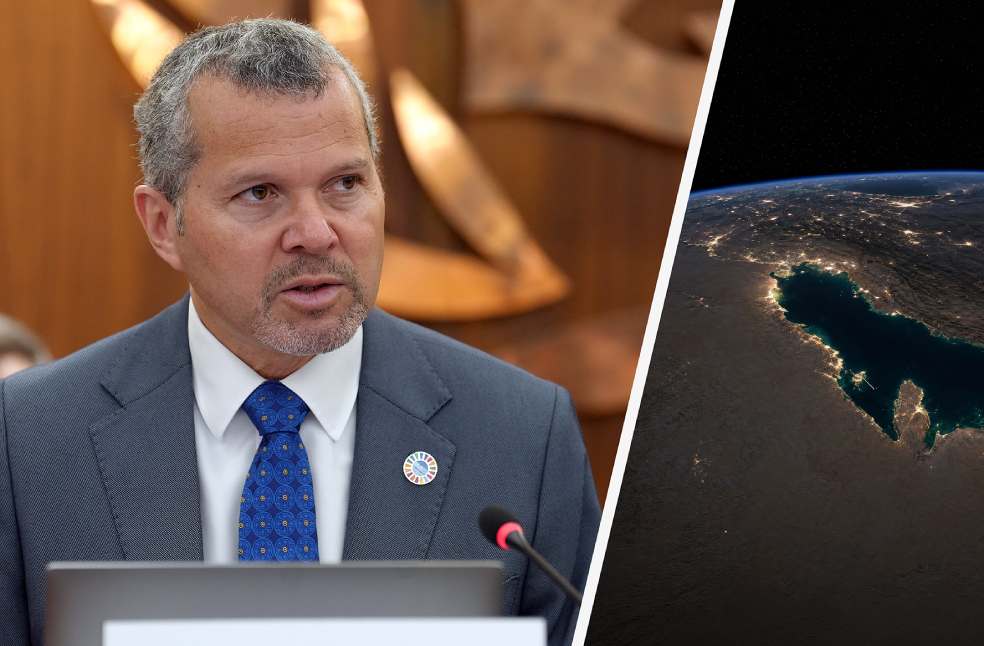
IMO Secretary-General Arsenio Dominguez announced that although several vessels had already been evacuated under the humanitarian operation, the organisation decided to pause the large-scale mission until adequate safety guarantees can be secured for all participating ships and crews.
The decision follows an attack on the Singapore-flagged cargo ship Ever Lovely, which was hit approximately 7.5 nautical miles southeast of Oman’s Port of Dahit. According to the UK Maritime Trade Operations (UKMTO), no casualties or major damage were reported, and the vessel continued its journey through the strait despite the incident.
US officials, cited by American media, alleged that Iran was responsible for the attack. Maritime risk management firm Vanguard also confirmed that the Ever Lovely remained underway after the strike. The incident comes with heightened tensions in one of the world’s busiest shipping corridors.
Earlier, Iran’s Islamic Revolutionary Guard Corps (IRGC) warned that vessels using routes designated by the IMO without coordinating with Iranian authorities would face significant risks. Tehran also stated that ships travelling outside approved navigation corridors would not be guaranteed safe passage.
The Ever Lovely reportedly sailed along a southern route near the Omani coastline, which has become a preferred passage for several commercial vessels attempting to avoid areas of heightened military activity. The ship was reportedly leading a convoy of four merchant vessels when it was attacked.
Despite the attack, IMO clarified that the vessel was not operating under the UN agency’s official evacuation framework. The evacuation initiative was launched earlier this week after the Strait of Hormuz partially reopened following months of disruption caused by the conflict involving the United States, Israel and Iran. Hundreds of commercial vessels and thousands of sailors have remained stranded in the Gulf since February due to security concerns.
The humanitarian operation had been coordinated with Iran, Oman, the United States, other regional coastal states and maritime industry stakeholders in an effort to safely move affected crews through the volatile waterway.
Meanwhile, Iran’s Persian Gulf Strait Authority reiterated that vessels navigating outside authorised routes would bear full responsibility for any resulting consequences. The warning has added further uncertainty for global shipping companies already facing elevated security risks.
The latest developments also threaten to undermine a recently announced 14-point agreement between the United States and Iran aimed at reducing regional hostilities. The deal called on Iran to make its ‘best efforts’ to ensure the safe passage of commercial vessels through the Strait of Hormuz for 60 days.
However, Tehran has maintained its intention to impose maritime service fees on ships crossing the strait, a proposal strongly opposed by Washington. US Secretary of State Marco Rubio has insisted that no nation has the authority to levy tolls on what he described as an international waterway.
The Strait of Hormuz remains one of the world’s most strategically important maritime chokepoints, carrying a significant share of global oil and liquefied natural gas exports. Its temporary closure earlier this year triggered a sharp rise in global energy prices and disrupted the movement of vital commodities, including fertilisers.
Oil prices have eased in recent days following diplomatic efforts between Washington and Tehran, although the attack renewed concerns over the stability of international shipping routes and energy supplies.
MOST READ | CAA issues urgent travel advisory over power banks and vapes
