


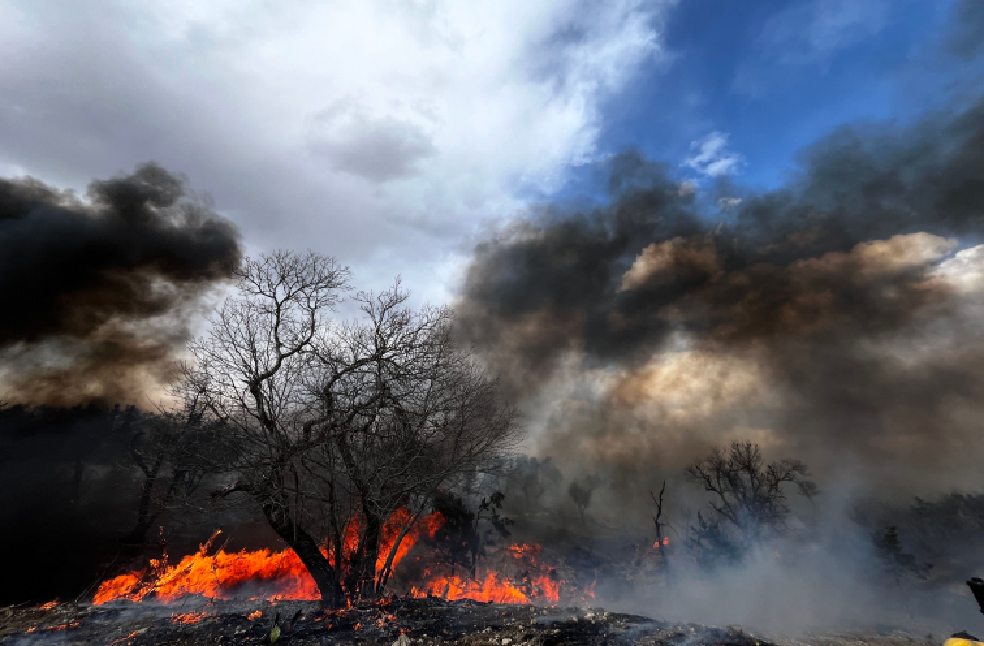
Geneva: The World Meteorological Organization (WMO) has warned that wildfire smoke is becoming a growing threat to global air quality as more intense fires and heat waves increase pollution risks.
In its annual report on air quality and climate, the WMO highlighted the close connection between air pollution and climate change. The agency also calls for coordinated policies that address both issues rather than treating them separately.
The report warns that meeting the World Health Organization’s air quality guidelines will become more difficult as extreme wildfires become more likely in a warming climate. Wildfires are emerging as an increasingly important source of harmful air pollution. This comes as regulations have helped reduce emissions from industry and transport across many developed countries.
Fine particulate matter known as PM2.5 and ground-level ozone have been identified as major concerns. Both pollutants were linked to respiratory and cardiovascular disease. The WMO also called for stronger monitoring of pollutants and aerosols such as black carbon and microplastics. The agency noted that these substances remain poorly tracked despite being widespread in the atmosphere.

The wildfire particulate matter is particularly harmful because smoke contains numerous toxic chemicals. Inhalation can trigger inflammation throughout the body and may contribute to pulmonary disease. The findings underline the growing challenge of protecting public health as climate-driven heat and wildfire activity place additional pressure on efforts to reduce air pollution.
Parts of Europe have experienced extreme heat and destructive wildfires this year. Spain, France and Greece were among the affected countries. The WMO previously warned that extreme heat is becoming more frequent. Heat events are also becoming more intense and lasting longer as global temperatures rise.
The latest report found that PM2.5 concentrations in 2025 were above long-term averages in northern Canada, parts of Russia and western-central Africa. Heightened fire activity was identified as a major factor. Northwestern Spain also emerged as a pollution hot spot after exceptional late-summer fires.
A study cited by the WMO found that extreme fire-smoke events have tripled globally since the 1990s. Such events may have contributed to nearly 100,000 additional deaths each year between 2010 and 2018. The findings highlight the growing public health risks linked to wildfire smoke and extreme fire activity.
POPULAR | Anak Krakatau eruption halts flights, disrupts local activities
