


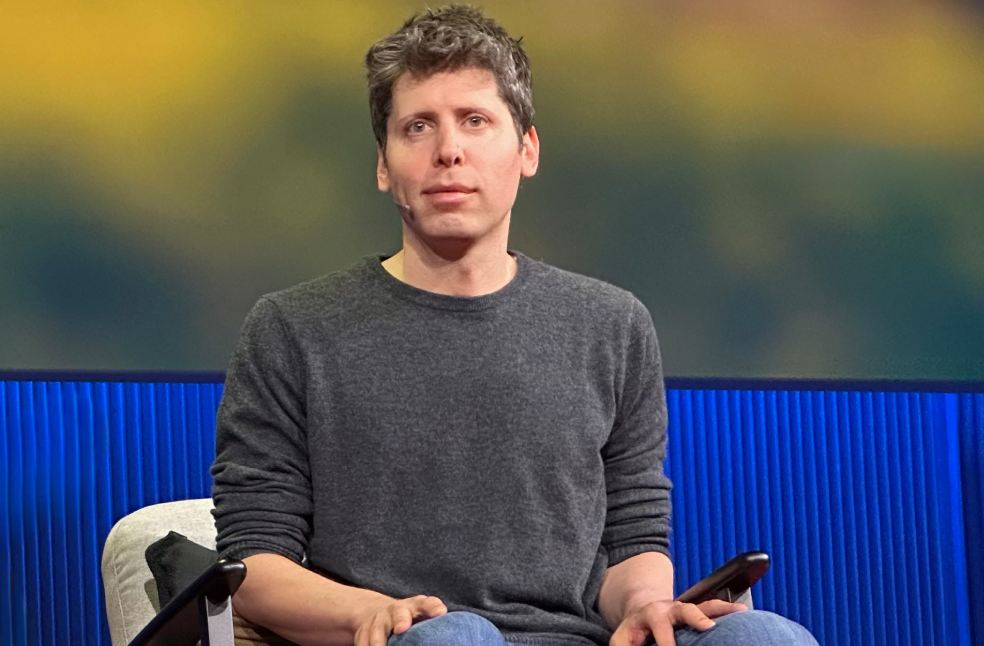
San Francisco: OpenAI CEO Sam Altman has called for greater public trust in artificial intelligence companies to manage the technology safely, while acknowledging that growing concerns over the rapid development of AI are justified.
Speaking at an annual conference hosted by Salesforce in San Francisco, Altman said AI companies understood the seriousness of the risks and should be trusted to act responsibly. Altman also acknowledged that the public had legitimate reasons to be concerned as AI systems continue to become more capable at a rapid pace.
Debate over AI regulation
Altman’s comments come with an ongoing debate over whether AI companies should be allowed to regulate themselves or face stronger government oversight. Critics argue that technology companies cannot be relied upon to establish and enforce their own safety standards.
US Senator Bernie Sanders has criticised the concentration of AI decision-making among wealthy technology leaders, while former Trump adviser Steve Bannon has also questioned whether major technology companies should regulate themselves.
US President Donald Trump has previously criticised calls for additional AI guardrails, describing concerns over AI safety as a ‘hoax’ and arguing that effective leadership is the main safeguard needed for the technology.
Altman said lawmakers have struggled to keep pace with the rapid development of AI. Altman also said policymakers faced the challenge of creating safeguards without unnecessarily slowing technological innovation.
AI leaders divided over government oversight
Nvidia CEO Jensen Huang, who also spoke at the Salesforce conference, said AI companies should have a central role in deciding whether new AI systems are ready for release.
Huang said there was no need for new laws or regulations, arguing that AI safety could be addressed as an engineering challenge. Huang also said companies should pause development or release of a product if they lose confidence in its safety.

Other technology leaders have called for stronger government involvement. Anthropic CEO Dario Amodei recently urged governments to regulate AI development and called for a slower pace of progress in frontier AI.
Concerns over long-term AI risks
The debate has intensified following warnings from researchers about the potential risks posed by increasingly powerful AI systems.
A researcher who recently left Anthropic claimed that AI could pose an extreme threat to humanity by the end of the decade if development continues without adequate safeguards. Several AI executives and experts subsequently said they shared concerns about severe risks, although the claims remain subject to debate over how such outcomes could occur.
Meta CEO Mark Zuckerberg also argued that AI companies have both the ability and incentive to take their own safety measures. He said companies that fail to focus on AI alignment could fall behind and face significant liability if their systems cause harm.
AI alignment refers to efforts to ensure that AI systems behave in ways consistent with human goals, values and safety requirements. Meanwhile, AI pioneer Yoshua Bengio has called for ambitious safety efforts outside the for-profit sector, arguing that independent initiatives are needed to address the most serious risks associated with advanced AI.
The contrasting views underline a growing divide within the technology industry over how AI safety should be managed, with some leaders advocating industry-led safeguards and others calling for stronger external oversight.
MOST READ | At least 12 killed as war-damaged building collapses in Gaza
