



Close Menu

    Get the latest news around the globe

    Editor's Pick

    Apple opens iPhones to alternative app stores in Japan

    ASA bans Zara ads featuring ‘unhealthily thin’ models

    Severe birth injuries twice as likely among Asian women in UK

    Facebook X (Twitter) Instagram
    Facebook X (Twitter) LinkedIn Instagram
    Britain HeraldBritain Herald
    Subscribe
    • Home
    • World Roundup
    • Business
    • Tech World
    • Entertainment & Events
    • Curious
    • More…
      • Spotlight
      • Knowledge
      • Lifestyle
      • Awareness
      • Women World
      • Sports
      • Travel
      • Notable
      • Contact Us
    Britain HeraldBritain Herald
    Home » NASA’s JWST detects deep-space waterworld
    World Roundup

    NASA’s JWST detects deep-space waterworld

    The discovery of a distant planet entirely covered in a deep ocean advances the search for habitable conditions beyond Earth.
    Trainee ReporterBy Trainee ReporterMarch 8, 2024
    Facebook Twitter LinkedIn WhatsApp
    NASA's James Webb Space Telescope
    Image courtesy: NASA's James Webb Space Telescope @ Facebook

    United States: The James Webb Space Telescope (JWST) has found water vapour as well as methane and carbon dioxide chemical signatures in an exoplanet about twice the size of Earth and about 70 light-years away.

    Scientists at the University of Cambridge believe that this chemical mix is consistent with a water world and a hydrogen-rich atmosphere covering the entire ocean’s surface. However, they do not envision a bammy, inviting ocean. Professor Nikku Madhusudhan, who led the analysis commented that, “The ocean could be upwards of 100 degrees Celsius or more. At high atmospheric pressure, an ocean this hot could still be liquid, but it’s not clear if it would be habitable.”

    This explanation is supported by a paper issued in the journal Astronomy and Astrophysics Letters. But this was refuted by a Canadian team who took a closer look at the same exoplanet, known as TOI-270 d. They found the exact atmospheric chemistry but determined that the planet would be too hot for liquid water, perhaps 4,000 Celsius, and would rather have a rocky surface with an extremely viscous atmosphere of hydrogen and water vapour.
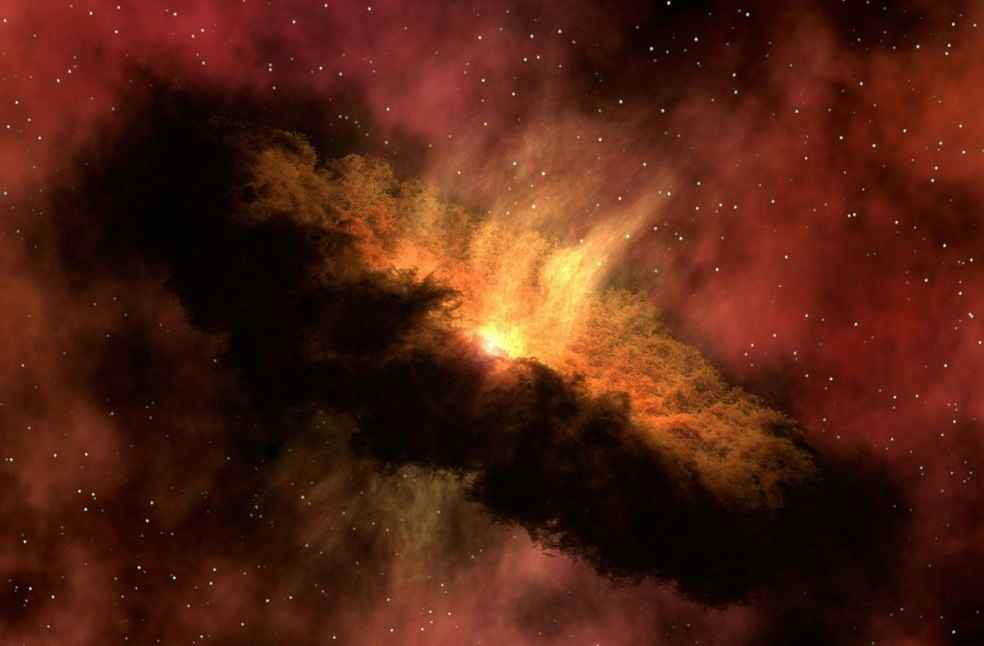
    Galaxy
    Rep. Image: Pixabay | Pexels

    These latest observations confirm James Webb’s amazing insights into planets beyond the solar system. Astronomers use telescopes to obtain a detailed study of the chemical elements in starlight filtered through a planet’s atmosphere. As a result, astronomers can get a picture of a planet’s surface and whether or not life exists there.

    The absence of ammonia in TOI-270 d’s ocean is consistent with the presence of hydrogen in its atmosphere. Basic chemistry predicts that hydrogen will occur naturally in an atmosphere rich in hydrogen. However, ammonia is very soluble in water, so if there were an ocean below, the atmosphere would be depleted.

    “One interpretation is that this is a so-called hycean world – with a water ocean under a hydrogen-rich atmosphere. The ocean would be extremely hot on the dayside. The night side could potentially host habitable conditions,” Madhusudhan said.

    There would be a lot of differences between the conditions on Earth and those in space. An extreme temperature contrast is created by TOI-270 d’s tidally locked polarity, resulting in one side facing its star forever and the other bathed in eternal darkness.
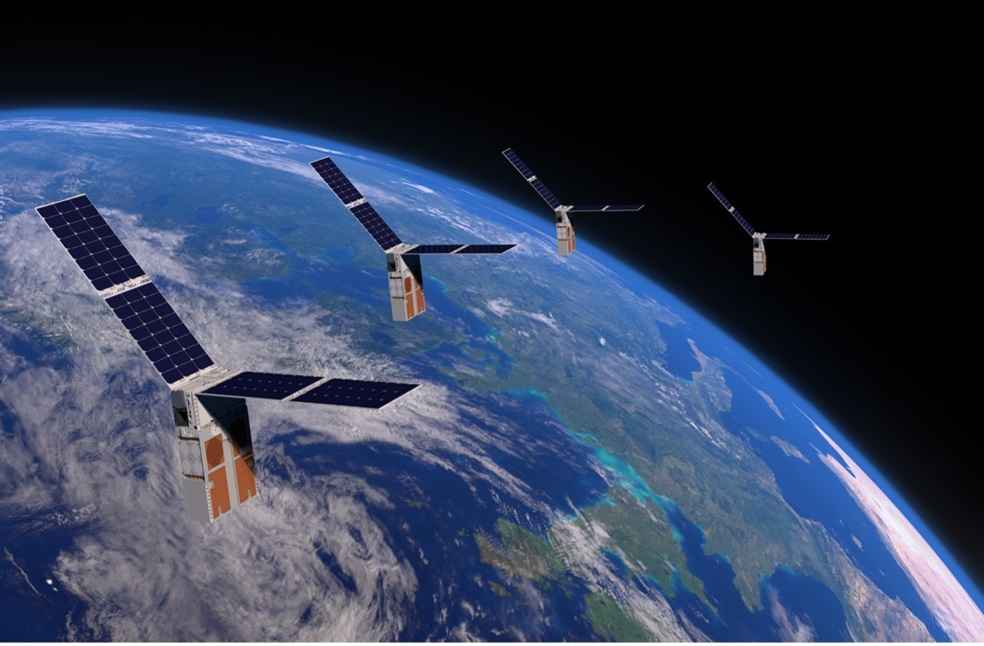
    NASA
    Image courtesy: NASA – National Aeronautics and Space Administration @ Facebook

    There would be an atmosphere of crushing pressure tens or hundreds of times greater than on Earth, as well as steam rising from the ocean. Under the water, there will likely be a high-pressure ice seabed and a rocky core, with depths of up to hundreds of kilometres.

    Dr. Jo Barstow, an astronomer at the Open University who was not involved in the latest work, remarked that, “Spectra of these small planets with JWST are really exciting because these are brand new environments for which we have no solar system equivalent.”

    Dr. Barstow stated that additional observations to define the quantity of water vapour in the atmosphere could help explain the probability of an ocean. “It’s really fascinating and really nice that two teams have looked at the same dataset and come up with the same chemical makeup,” the astronomer added.

    SCIENCE | NASA’s PACE satellite: creates a leap in climate research

    STAR OF SECTOR 2025
    Astronauts Study Deep-Space Waterworld Exoplanet TOI-270 d Exoplanets James Webb Space Telescope JWST NASA NASA'S JWST Space UK’s Cambridge University
    Share. Facebook Twitter LinkedIn WhatsApp
    Avatar
    Trainee Reporter

    The news/article published above has been sourced, compiled, and corroborated by a Trainee Reporter at Britain Herald. If you have any queries or complaints about the published material, please get in touch with us at BritainHerald@Gmail.Com

    Newly Updated

    Burnham arrives in Kyiv to reaffirm UK support for Ukraine

    August 24, 2026

    New Zealand proposes social media ban for children under 16

    August 24, 2026

    Trump waves green flag as Freedom 250 Grand Prix begins

    August 24, 2026
    STAR OF SECTOR 2025

    Business

    Tesla recalls nearly 3 million EVs in China over door risks

    Business August 22, 2026

    Beijing: Tesla is among several automakers recalling more than 4 million vehicles in China over…

    Panama Canal to cut daily ship transits from September

    August 21, 2026

    India’s Swiggy targets higher Instamart margins with model shift

    August 20, 2026

    US delays new tariffs on Canadian goods after trade deal

    August 19, 2026
    Stay In Touch
    • Facebook
    • Twitter
    • LinkedIn
    • Instagram

    Curious

    Giant Python successfully treated with human cancer therapy

    August 21, 2026

    Forgotten history of dining tables and how we eat

    August 16, 2026

    Earth to witness billions receiving sunlight together

    July 8, 2026

    Ever wonder why lightning sounds different? Here’s why

    July 3, 2026

    Get the latest news around the globe

    Knowledge

    Why migration is transforming cities around the world

    Knowledge August 19, 2026

    Migration is transforming modern cities by changing their populations, economies, cultures and urban landscapes. People…

    Forgotten history of dining tables and how we eat

    August 16, 2026

    30 Days of Tai Chi: A new way to move and slow down

    August 15, 2026

    10,000-steps rule: Where did that number actually come from?

    August 2, 2026
    18-EA-387-TryEngineeringSummerInst_BannerAd_300x250_Robot
    About Us
    About Us

    Britain Herald is a global news brand that plays a significant role in educating and informing the masses with informative content, the latest updates, and current affairs across the World.

    Operated and Managed by WellMade Network, the portal is a sister concern of GCC Business News and Emirati Times. For inquiries about Media Partnerships, Investment and other opportunities in line with our Editorial Policy, please contact us at;

    Email Us: News@BritainHerald.com
    Whatsapp: +971 5060 12456

    We Have

    Burnham arrives in Kyiv to reaffirm UK support for Ukraine

    August 24, 2026

    New Zealand proposes social media ban for children under 16

    August 24, 2026

    Trump waves green flag as Freedom 250 Grand Prix begins

    August 24, 2026

    Torrential rain shuts schools and offices across southern Taiwan

    August 24, 2026
    Facebook X (Twitter) LinkedIn Instagram
    • Home
    • Business
    • Tech World
    • Awareness
    • Contact Us
    Privacy & Cookies Policy | Terms & Conditions
    © 2002 BritainHerald.com, An Initiative by WellMade Network

    Type above and press Enter to search. Press Esc to cancel.