



Close Menu

    Get the latest news around the globe

    Editor's Pick

    Study finds increased suicide risk in women with premenstrual disorders

    US tariffs eased on Bangladeshi clothing under new trade deal

    Vegan diet helps to improve heart health; Study

    Facebook X (Twitter) Instagram LinkedIn
    Facebook X (Twitter) LinkedIn Instagram
    Britain HeraldBritain Herald
    Subscribe
    • Home
    • World Roundup
    • Business
    • Tech World
    • Entertainment & Events
    • Curious
    • More…
      • Spotlight
      • Knowledge
      • Lifestyle
      • Awareness
      • Women World
      • Sports
      • Travel
      • Notable
      • Contact Us
    Britain HeraldBritain Herald
    Home » Scientists develop contact lenses enabling human infrared vision
    Science

    Scientists develop contact lenses enabling human infrared vision

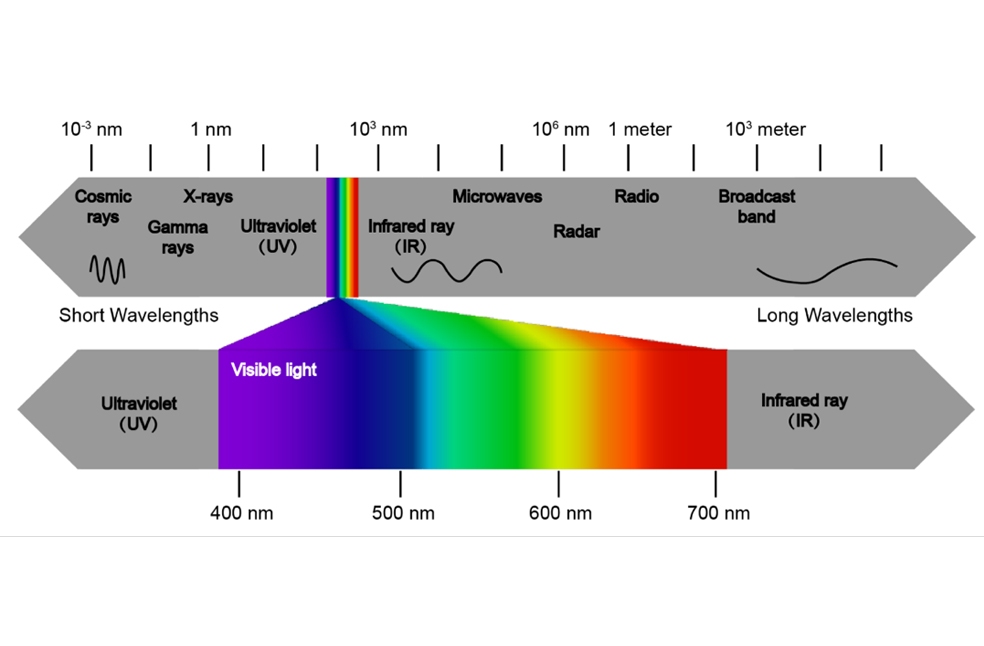
    Human vision covers less than one-hundredth of a percent of the electromagnetic spectrum, primarily wavelengths from 400 to 700 nanometers.
    News DeskBy News DeskMay 23, 2025
    Facebook Twitter LinkedIn WhatsApp
    Scientists develop contact lenses enabling human infrared vision_Image from_Freepik
    Image Via: Freepik | Cropped by BH

    Hefei, China: Researchers have developed innovative contact lenses that allow people to perceive infrared light, a portion of the electromagnetic spectrum normally invisible to the naked eye.

    Unlike night vision goggles, these lenses are transparent and require no external power source, enabling wearers to simultaneously see infrared light alongside the full range of visible colors.

    Professor Tian Xue, a neuroscientist at the University of Science and Technology of China (USTC), explained that this breakthrough paves the way for a variety of wearable devices, such as contact lenses and glasses that could grant humans ‘super-vision.’ Xue also noted the potential benefits for individuals with color blindness.

    Human vision covers less than one-hundredth of a percent of the electromagnetic spectrum, primarily wavelengths from 400 to 700 nanometers.

    Scientists develop contact lenses enabling human infrared vision_Image from_USTC
    Image Credits: University of Science and Technology of China | Cropped by BH

    However, many animals see beyond this range, birds, bees, reindeer, and mice can detect ultraviolet light, while some snakes and vampire bats sense far-infrared or thermal radiation to locate prey.

    Extended human vision

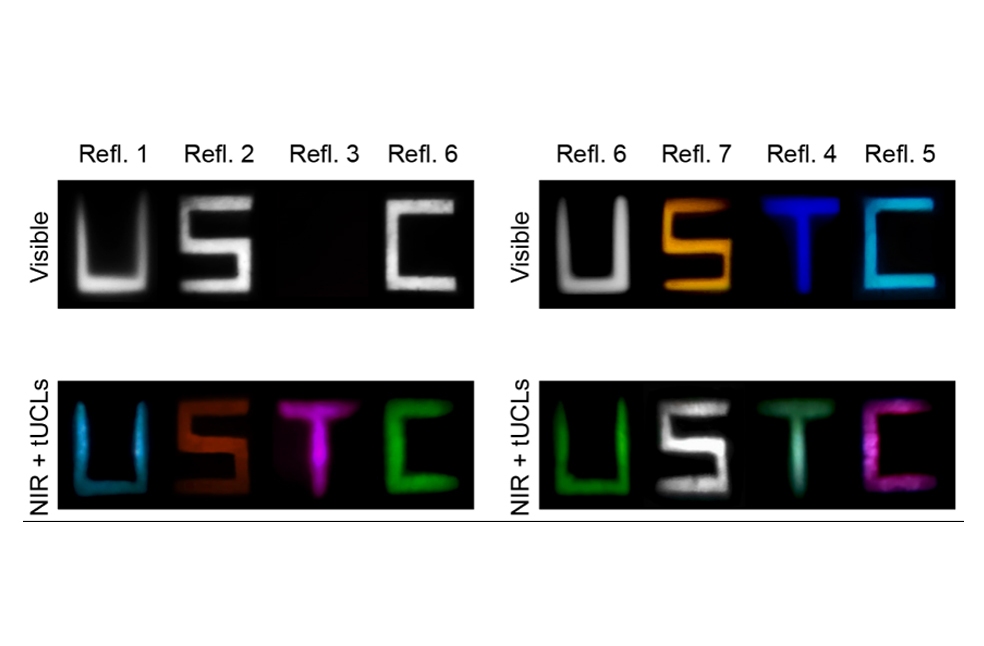
    To extend human sight, the researchers created upconversion nanoparticles that absorb infrared light and re-emit it as visible light. Their study focused on particles that convert near-infrared wavelengths, which are just beyond human perception, into visible red, green, or blue light.

    In earlier experiments, the team injected these nanoparticles under the retinas of mice, granting them near-infrared vision. Recognizing that this invasive method would likely be unacceptable for humans, they instead embedded the nanoparticles into soft contact lenses.

    When worn, these lenses allowed volunteers to detect Morse code-like signals from infrared LEDs and determine the direction of infrared light. Interestingly, their infrared vision improved when their eyes were closed, as eyelids block visible light more than infrared, reducing interference.
    Scientists develop contact lenses enabling human infrared vision_Image Via_USTC
    Image Credits: University of Science and Technology of China | Cropped by BH

    Currently, the lenses are not sensitive enough to detect natural low levels of infrared light or the far-infrared thermal radiation emitted by warm objects, so they do not provide thermal vision. The scientists aim to improve the lenses’ efficiency in future work, with Professor Xue suggesting that enhanced upconversion nanoparticles could eventually enable wearers to see ambient infrared light.

    Aid for color blindness

    Even in their current form, the lenses have promising applications. For instance, secret messages transmitted via infrared light could be visible only to people wearing these contact lenses. Additionally, this technology could assist those with color blindness by transforming wavelengths they cannot normally see into perceivable colors.

    Dr Yuqian Ma, a researcher on the project, said that, “Over half of the solar radiation energy, existing as infrared light, remains imperceptible to humans.”

    This breakthrough represents a significant step towards expanding human sensory capabilities, opening new possibilities for communication, accessibility, and enhanced perception of the world.

    MOST READ | Nike to raise prices on select items citing seasonal planning

    STAR OF SECTOR 2025
    Color Blindness Aid Contact Lenses Technology Human Spectrum Expansion Infrared Vision Near-Infrared Light Smart Contact Lenses Superhuman Sight Upconversion Nanoparticles USTC
    Share. Facebook Twitter LinkedIn WhatsApp
    Avatar
    News Desk

    The news/article published above has been sourced, compiled, and corroborated by a member of the Britain Herald News Desk Team. If you have any queries or complaints about the published material, please get in touch with us at BritainHerald@Gmail.Com

    Newly Updated

    NHS to offer free high-street cholesterol tests across England

    August 31, 2026

    Djokovic suffers shock US Open exit after emotional defeat

    August 31, 2026

    Thousands hit by delays as Kenya airport strike enters second day

    August 31, 2026
    STAR OF SECTOR 2025

    Business

    Europe’s gas storage drops to lowest level in 13 years

    Business August 29, 2026

    London: EU gas storage levels have fallen to their lowest point in 13 years ahead…

    Holiday Warning: 10 ways to spot misleading hotel reviews

    August 28, 2026

    Global tech firms urge action against rising AI threats

    August 28, 2026

    Nvidia revenue doubles to $96 billion as AI demand surges

    August 27, 2026
    Stay In Touch
    • Facebook
    • Twitter
    • LinkedIn
    • Instagram

    Curious

    Queensland woman gives birth to twins with different biological parents

    August 27, 2026

    Giant Python successfully treated with human cancer therapy

    August 21, 2026

    Forgotten history of dining tables and how we eat

    August 16, 2026

    Earth to witness billions receiving sunlight together

    July 8, 2026

    Get the latest news around the globe

    Knowledge

    Why migration is transforming cities around the world

    Knowledge August 19, 2026

    Migration is transforming modern cities by changing their populations, economies, cultures and urban landscapes. People…

    Forgotten history of dining tables and how we eat

    August 16, 2026

    30 Days of Tai Chi: A new way to move and slow down

    August 15, 2026

    10,000-steps rule: Where did that number actually come from?

    August 2, 2026
    18-EA-387-TryEngineeringSummerInst_BannerAd_300x250_Robot
    About Us
    About Us

    Britain Herald is a UK rooted, digital first media brand focused on business, diaspora, leadership, innovation and international affairs. Built for the emerging authority economy, it values credible expertise, trusted institutions and recognised voices.

    Operated and Managed by WellMade Network, the portal is a sister concern of GCC Business News and Emirati Times.

    Email Us: News@BritainHerald.com
    Whatsapp: +971 5060 12456

    We Have

    NHS to offer free high-street cholesterol tests across England

    August 31, 2026

    Djokovic suffers shock US Open exit after emotional defeat

    August 31, 2026

    Thousands hit by delays as Kenya airport strike enters second day

    August 31, 2026

    Studies explore link between inflammation and mental health

    August 31, 2026

    Russia, China leaders gather for SCO summit in Kyrgyzstan

    August 31, 2026
    Facebook X (Twitter) LinkedIn Instagram
    • Home
    • Business
    • Tech World
    • Awareness
    • Contact Us
    Privacy & Cookies Policy | Terms & Conditions
    © 2002 BritainHerald.com, An Initiative by WellMade Network

    Type above and press Enter to search. Press Esc to cancel.