


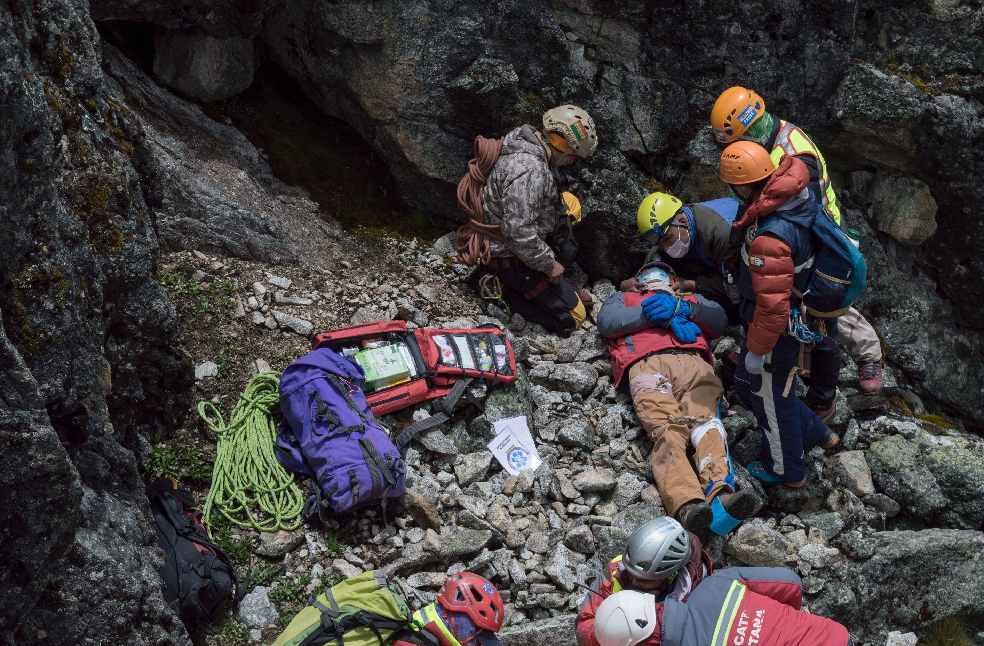
Gyirong: Rescue crews have continued search operations at the China-Nepal border after a tsunami-like mudslide destroyed the busy Gyirong crossing and left hundreds of people missing.
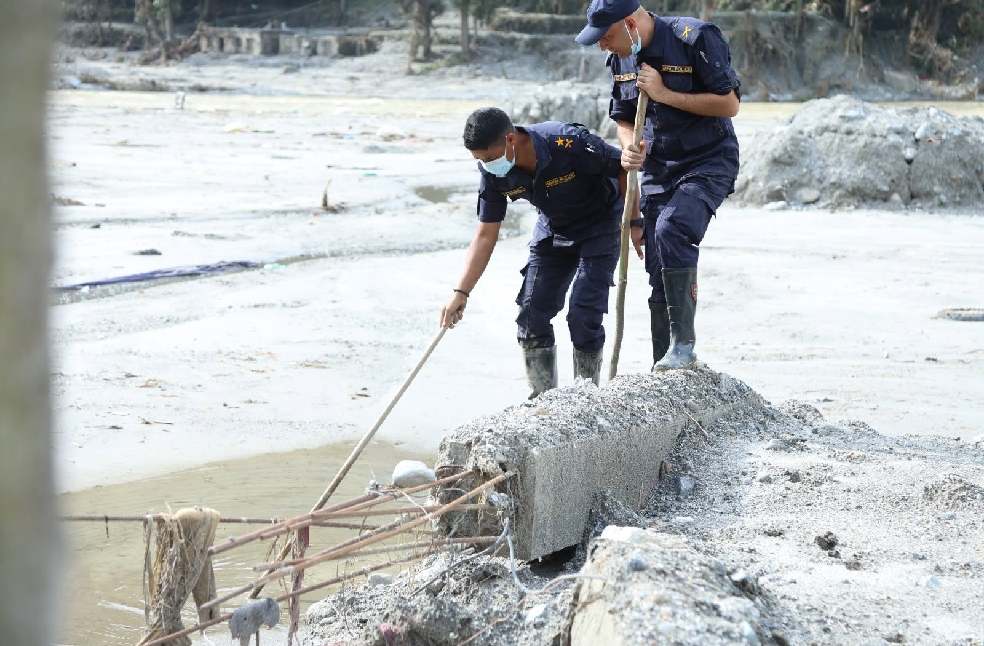
About 20 Chinese rescue workers have been using excavators, shovels and ground-penetrating radar detectors to search the disaster zone. The operation is focused on finding people who remain unaccounted for after the mudslide struck the border area following the collapse of a glacier on the Nepal side on August 26.
The disaster has destroyed almost all visible traces of the former border crossing. The 5-storey Chinese customs building has disappeared beneath the debris. A section of a nearby water tower remains among the few structures still visible. A Chinese flag has also been placed at the location where the border gate once stood.
Rescue workers divided the search area into 7 zones, with searches completed in 4 and 3 remaining. Crews have been working behind hazard signs as teams dig through the earth and excavators remain on standby.
The mudslide killed more than 1,300 people on both sides of the border, more than 5,000 people are still missing. On September 5, emergency crews in Nepal rescued a Chinese worker who was trapped inside a tunnel connected to a hydropower station. Two Nepali workers were also pulled out alive from the tunnel.
On the Chinese side, 31 deaths was confirmed by September 4 while 531 people remained missing. Among those unaccounted for are 261 foreign nationals from 23 countries. Chinese officials stated that 49 Indian citizens are among the missing.
Rescue and recovery operations have been complicated by landslide risks, poor weather and deep mud. Gyirong County has an average elevation of more than 4,000 metres. The border port itself sits at about 1,800 metres.
The only land route into Gyirong was restored by September 2 morning. The reopening allowed China to move heavy equipment into the area for recovery work and eventual reconstruction.
Gyirong becomes the main land crossing for trade and travellers between Nepal and Tibet since the 2015 Nepal earthquake damaged another crossing farther east. The port has handled Chinese goods including electric cars and also served thousands of Hindu pilgrims travelling through Nepal towards Mount Kailash in Tibet.
The port was also closed from July last year until January after an earlier glacial flood. Mount Kailash is revered by Hindus and Buddhists. Several foreign nationals missing in Tibet are believed to have been pilgrims travelling with extended family members in India.
RELATED POST | Heavy rain triggers deadly mudslide in Jiangxi Province
