


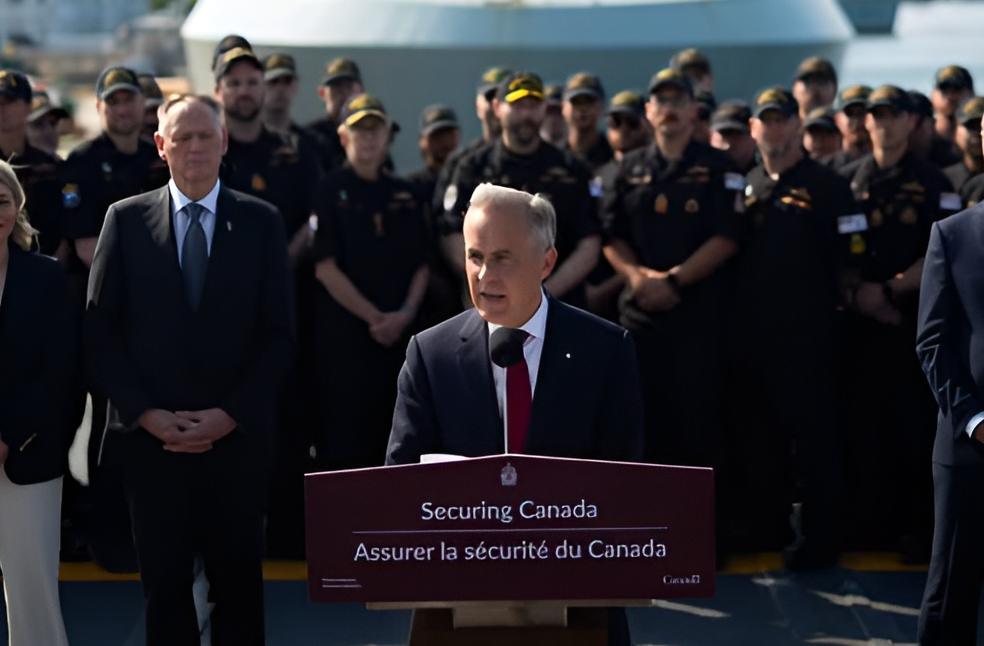
Nova Scotia: Canada has selected German defence manufacturer TKMS to build a new fleet of 12 conventionally powered submarines in what Prime Minister Mark Carney described as the largest military procurement deal in the country’s history.
Carney announced the decision in Halifax, Nova Scotia, confirming that the Canadian government will begin contract negotiations with TKMS, the world’s largest non-nuclear submarine manufacturer. The agreement is expected to take several months to finalise.
The new submarine fleet is a key part of Canada’s long-term defence modernisation strategy as the country seeks to strengthen maritime security, particularly in the Arctic, where climate change is opening new navigation routes and heightening strategic competition.
Carney remarked that, “In a more dangerous and divided world, Canada must be prepared to defend our interests, protect our citizens, build our economy, and secure our future.” Although the government has not disclosed the total value of the contract, officials described it as the biggest defence procurement initiative in Canadian history.
The submarines will replace Canada’s ageing Victoria-class fleet, acquired in 1998. According to the government, only one of the country’s four existing submarines is currently seaworthy, highlighting the urgent need for modernisation.
TKMS secured the contract after competing against South Korean shipbuilder Hanwha Ocean. The German company partnered with Norway for its proposal, offering a NATO-aligned solution that includes shared maintenance, logistics, training, repairs, and operational cooperation.
The new vessels will be conventionally powered and equipped with under-ice operational capabilities, enabling Canada to patrol and protect its vast Arctic waters more effectively. With the world’s longest coastline, Canada considers enhanced submarine capabilities essential for safeguarding its sovereignty and responding to emerging security challenges.
The announcement comes just ahead of Carney’s participation in the NATO summit, where member nations are expected to face renewed pressure to increase defence spending. Since taking office, Carney has raised Canada’s defence expenditure to 2 percent of GDP and pledged to increase it to 5 percent by 2035.
Defence experts say the procurement strengthens Canada’s credibility among NATO allies and reflects the government’s commitment to rapidly modernising its armed forces. David Perry, president of the Canadian Global Affairs Institute, said the accelerated timeline demonstrates the government’s determination to deliver on its defence commitments.
David Perry added that the expanded fleet would significantly improve Canada’s maritime capabilities, allowing multiple submarines to remain operational simultaneously and substantially enhancing national security.
The project also aligns with Carney’s broader strategy of strengthening Canada’s economic and security partnerships with Europe as the country navigates evolving geopolitical challenges and trade tensions with the United States.
POPULAR | Russian missile and drone barrage kills at least 10 in Kyiv
