


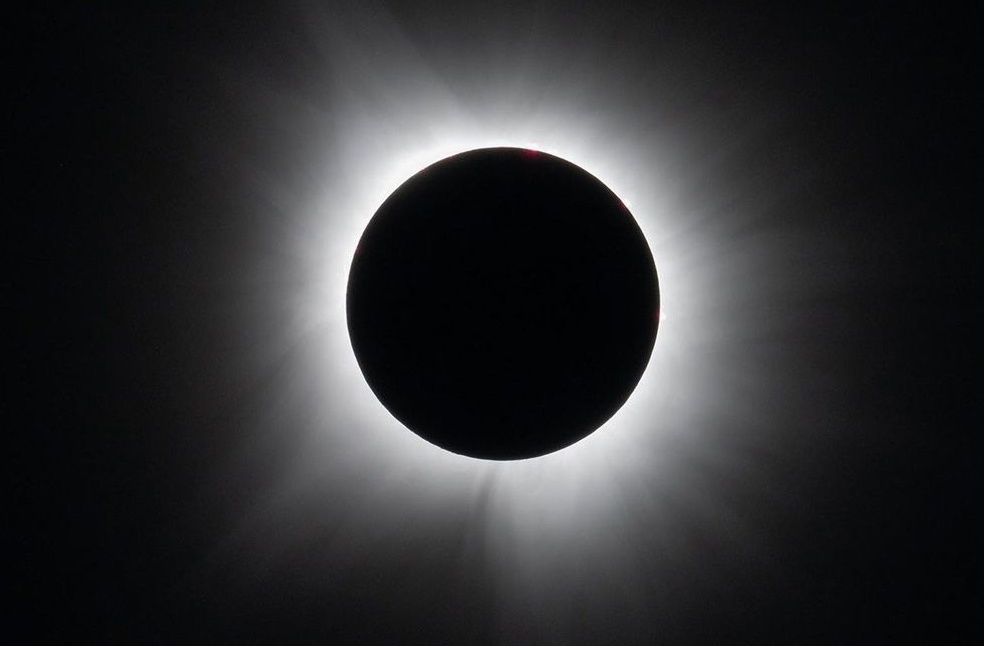
London: Millions across Europe are set to witness a rare celestial event on August 12, when a solar eclipse crosses parts of the continent.
A narrow stretch of northern and central Spain, along with a small part of Portugal, Greenland and Iceland, will experience a total eclipse, while much of western Europe, including the UK, France, Belgium, Switzerland and northern Italy, will see a partial eclipse.
What is a solar eclipse?
A solar eclipse occurs when the Moon moves directly between the Earth and the Sun, casting its shadow over parts of the Earth.
A total eclipse happens when the Moon completely blocks the Sun from view for people within the darkest part, or umbra, of its shadow. A partial eclipse occurs when only a portion of the Sun is covered, as seen from the lighter penumbra.
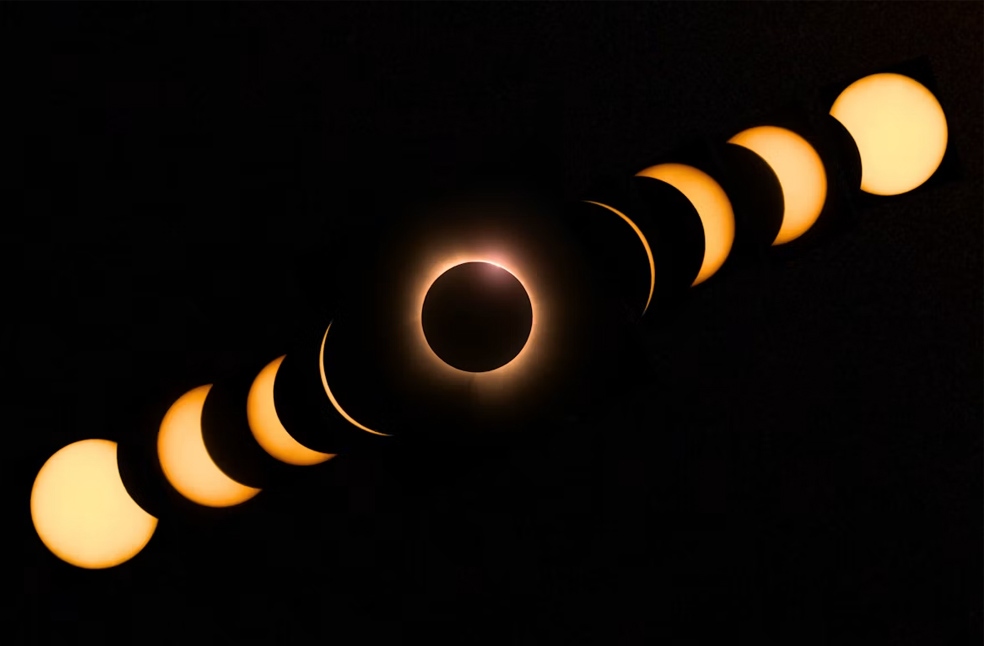
Astronomers explain that the Sun, Moon, and Earth must align very precisely for a total eclipse to occur. Because the Moon’s orbit is slightly tilted in relation to Earth’s orbit around the Sun, such an alignment does not happen every month.
What people see depends on where they are located. Only those within the relatively narrow path of the Moon’s umbra can experience totality.
How unusual is this eclipse?
The event will mark the first total solar eclipse visible from mainland Europe in 20 years. The last total eclipse visible from the UK occurred in 1999, when parts of Devon and Cornwall fell within the path of totality.
The UK will see only a partial eclipse this time, but astronomers say it will be particularly significant because of the high level of coverage. The next total solar eclipse visible from the UK is not expected until 2090, while another similarly deep partial eclipse will not be seen until later this century.
When can it be seen?
In areas of Spain located along the path of totality, the eclipse is expected to reach its peak between 8.26 pm and 8.33 pm local time, shortly before sunset. In London, the partial eclipse will begin at 6.17 pm BST, reach its maximum at 7.13 pm and finish at 8.06 pm.
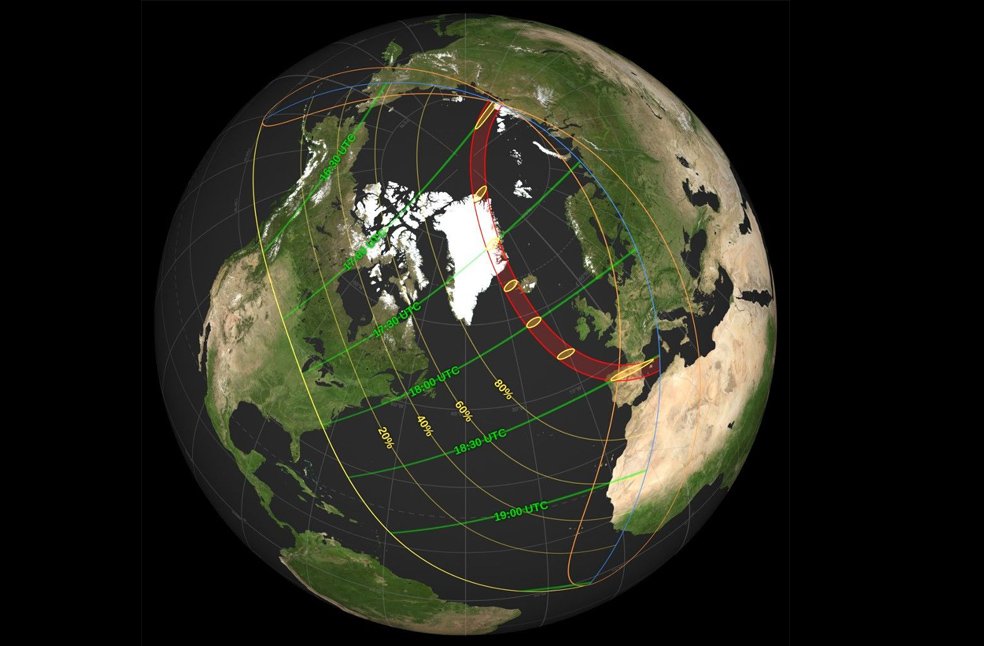
Coverage will vary across the UK. Cornwall is expected to see around 96 percent of the Sun covered, compared with about 93 percent in western Scotland and 92 percent in London. Astronomers advise viewers to find an unobstructed view towards the western horizon because the Sun will be relatively low in the sky during the eclipse.
How can you watch it safely?
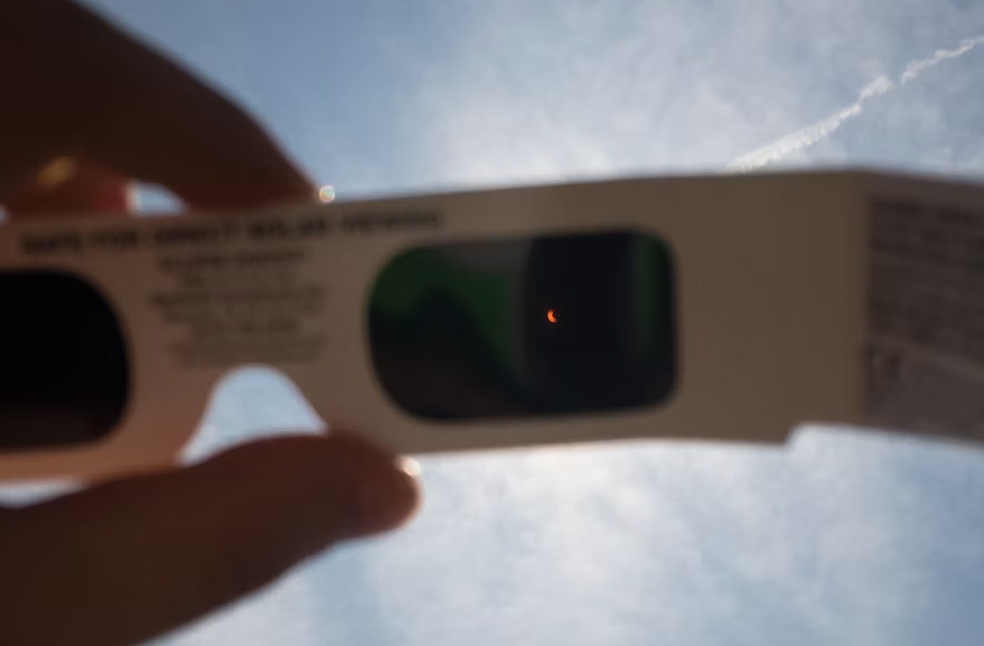
Experts strongly warn against looking directly at the Sun without proper protection. Ordinary sunglasses are not safe, and viewing the Sun with the naked eye can result in permanent eye damage. Special-purpose solar eclipse glasses are recommended for direct viewing.
Those without eclipse glasses can also watch the eclipse indirectly by creating a simple pinhole projector. A household colander can be used to project the Sun’s image onto a piece of card or paper. Viewers should never look directly at the Sun through the colander.
If skies remain clear, the eclipse will appear as though a growing section of the Sun is being gradually covered by the Moon. The bright disc will eventually become a thin crescent before the Sun slowly re-emerges as the Moon moves away.
Why is the eclipse important to scientists?
Solar eclipses provide researchers with an opportunity to study the Sun’s outer atmosphere, known as the solar corona. Observations can provide information about the chemistry of the Sun’s atmosphere and how it changes throughout the Sun’s roughly 11-year cycle of solar activity.
Eclipses have also played an important role in major scientific discoveries. During the 1919 solar eclipse, expeditions observed the positions of stars and planets near the Sun, helping scientists test and confirm predictions from Albert Einstein’s theory of general relativity.
The alignment responsible for a solar eclipse also explains why lunar eclipses occur around the same period. A partial lunar eclipse will be visible from the UK shortly after 5 am BST on August 28, when Earth moves between the Sun and Moon. The event could turn the Moon reddish, creating what is commonly known as a blood moon.
Adding to the celestial activity, the Perseid meteor shower is expected to reach its peak overnight from August 12 to 13. Those staying out after the eclipse may therefore have another opportunity to observe a major astronomical event.
MOST READ | China evacuates more than 1 million as Typhoon Dolphin hits
