



London: A rare global phenomenon will create a moment when 99 percent of people worldwide share sunlight or twilight simultaneously.
At about 11:10 GMT on July 8, nearly 8.2 billion people will experience daylight or twilight simultaneously. The overlap will last for about one minute. It will bring almost all major population centres under some level of sunlight.
Daylight will stretch across North and South America, Europe, Africa and most of Asia, covering the majority of the global population, while Australia, New Zealand, parts of Southeast Asia, Antarctica and surrounding oceans will remain in darkness.
Data shows that about 6.9 billion people, or 83 percent, will be in full daylight. Around 581 million people, or 7 percent, will experience civil twilight. This stage allows outdoor activity without artificial lighting. Another 498 million people, or 6 percent, will be in nautical twilight, where the horizon is still visible but the sky darkens.
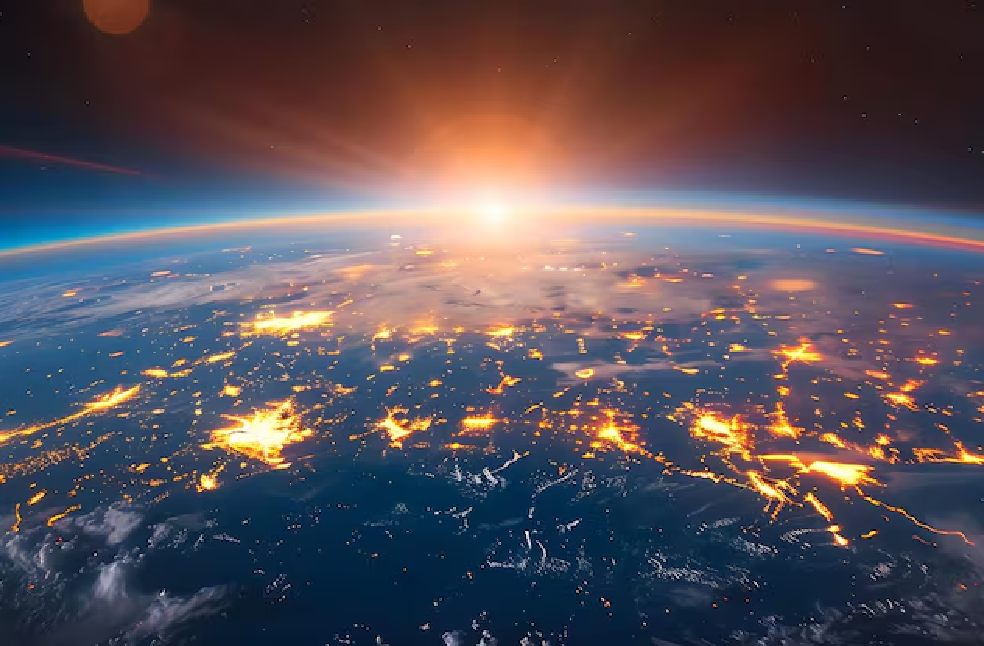
A further 249 million people, or 3 percent, will be in astronomical twilight. Only a faint glow will remain. About 83 million people, or 1 percent, will experience full night, where the Sun is more than 18 degrees below the horizon.
This rare global phenomenon is not limited to a single day. Similar overlaps have occurred daily for about 60 days each year between May 18 and July 17. During this period, Earth’s tilt and orbit maximise sunlight coverage across populated regions.
The timing differs from the June solstice, which marks the longest day in the Northern Hemisphere. After the solstice, the Sun shifts southward. This reduces daylight in sparsely populated northern regions. At the same time, it extends sunlight into densely populated areas such as Indonesia and the Philippines.
This shift brings around 10 million more people into daylight or twilight compared to the solstice. The result is a broader global spread of sunlight, even though the duration remains brief.
MOST READ | Microsoft cuts 4,800 jobs as Xbox faces major restructure
