


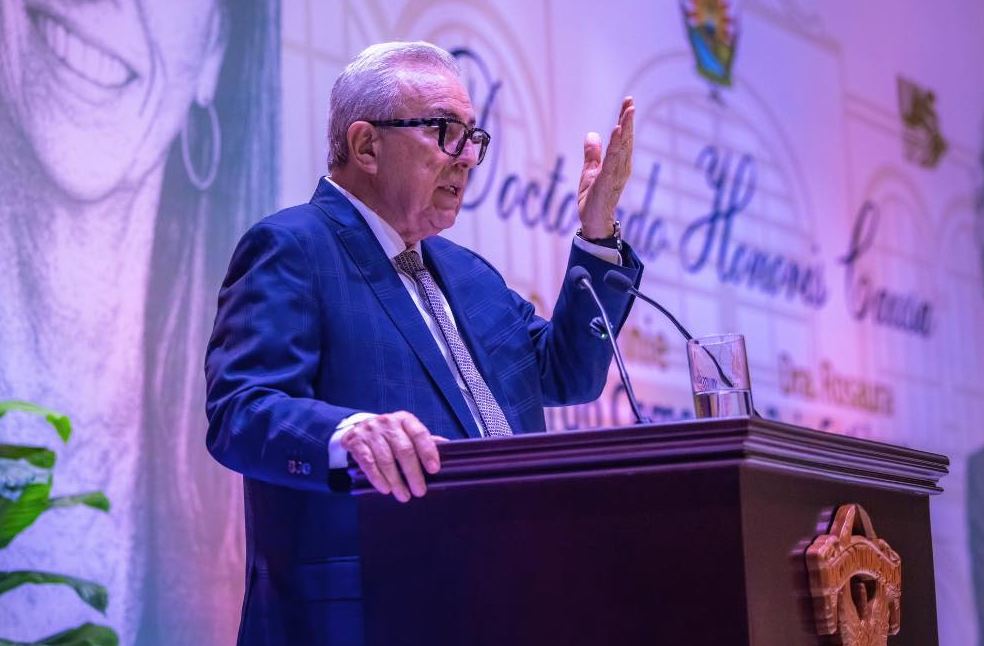
Mexico: United States prosecutors have charged Ruben Rocha Moya, the governor of Mexico’s Sinaloa state, along with nine current and former officials, over alleged links to the Sinaloa Cartel in a move that could strain relations between the two countries.
An indictment unsealed in New York alleges that Rocha Moya, 76, collaborated with cartel leaders to facilitate the movement of large quantities of narcotics into the US in exchange for political backing and bribes. Prosecutors claim the support extended to his 2021 gubernatorial campaign, when members of the cartel’s ‘Chapitos’ faction, associated with Joaquin ‘El Chapo’ Guzman, allegedly helped secure his electoral victory.
According to the indictment, cartel operatives kidnapped and threatened opposition candidates and tampered with ballots to favour Rocha Moya. Authorities further allege that Enrique Diaz Vega, who later served as the governor’s secretary of administration and finance, provided the cartel with sensitive information, including names and addresses of political opponents, to intimidate them into withdrawing.
“El gobernador de Sinaloa y otros acusados de narcotráfico y delitos relacionados con armas para ayudar al Cártel de Sinaloa,” dijo el fiscal federal Jay Clayton. “Los funcionarios extranjeros que envenenen a los estadounidenses enfrentarán la justicia.”https://t.co/jS1xbU000k
— US Attorney SDNY (@SDNYnews) April 29, 2026
The United States Department of Justice stated that most of the accused were aligned with the sons of Guzman, who is currently serving a life sentence in the United States.
Terrance Cole of the Drug Enforcement Administration remarked that, “The Sinaloa Cartel is not just trafficking deadly drugs, it is a designated terrorist organisation that relies on corruption and bribery.” He added that the indictment exposes efforts to undermine public institutions and protect cartel operations.
Rocha Moya has strongly denied the allegations, calling them baseless and politically motivated. In a public statement, Rocha Moya said the accusations were part of a broader attack not only against him but also against the ruling Morena movement. He vowed to challenge the claims and prove their lack of merit.
Mexico’s government also pushed back, saying that US extradition requests lacked sufficient supporting evidence. The country’s foreign ministry confirmed it had received arrest requests but noted that no substantive proof accompanied the documents.
Rare legal move signals strategic shift
Indictments against sitting senior Mexican officials are highly unusual and could signal a shift in Washington’s strategy toward tackling drug cartels by targeting alleged political connections.
Experts say the move represents a significant escalation. Analysts at the Brookings Institution described it as a ‘major step’ that could lead to further indictments as US authorities widen their focus on the intersection between organised crime and governance.
The case places additional pressure on Mexican President Claudia Sheinbaum, given Rocha Moya’s ties to her administration and his close political alignment with former president Andres Manuel Lopez Obrador.
Analysts warn that the situation presents a difficult balancing act. Taking action against Rocha Moya could strain internal political stability, while failing to act may risk diplomatic fallout with Washington, particularly amid ongoing negotiations linked to the United States-Mexico-Canada Agreement.
Political and security implications
The indictment comes as Mexico intensifies efforts to combat organised crime, including recent operations targeting cartel leadership. Among them was action against Nemesio ‘El Mencho’ Oseguera of the Jalisco New Generation Cartel.
Observers suggest the case could mark a turning point in US-Mexico cooperation on security, potentially expanding legal actions beyond cartel figures to include alleged enablers within political systems.
As the situation develops, the response from both governments is expected to shape not only bilateral relations but also the broader fight against transnational organised crime.
TRENDING | US to issue Trump-themed passports for 250th anniversary
