


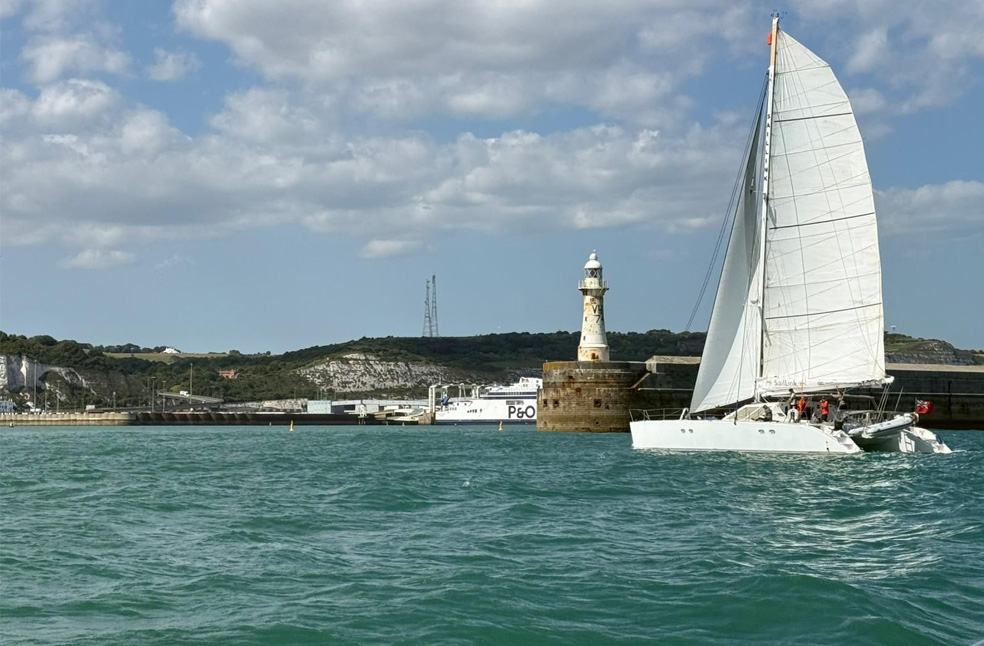
English Channel: As governments and travellers look for ways to reduce transport-related emissions, a UK-based startup, SailLink, is offering a low-carbon alternative for crossing the English Channel, by sail.
The company operates a 17-metre catamaran carrying up to 12 passengers between Dover and Boulogne-sur-Mer, relying mainly on wind and tidal energy instead of fossil fuels. The journey typically takes four to five hours, depending on weather conditions.
Now entering its second full season, SailLink’s founder and skipper, Andrew Simons, said that the growing demand could demonstrate that wind-powered passenger transport is both environmentally and commercially viable. Simons explained that the service makes use of natural forces such as wind and tides to power the journey.
During crossings with lighter winds, the vessel may briefly use its engines when leaving the harbour or moving through calm waters. However, the company reports that nearly 70% of its trips in its first season were powered entirely by wind.
Compared to conventional ferries and short-haul flights, which are among the most carbon-intensive modes of transport per passenger, SailLink presents a more sustainable option. Ticket prices are around £85 ($110) for a one-way adult journey, with discounted fares for children and young adults, and an additional £10 ($13.50) fee for carrying a bicycle.
Launched commercially in April 2025 after several years of trials, the service carried 465 passengers and 135 bicycles in its first season. This year, SailLink has expanded its schedule and recorded hundreds of bookings within days of reopening.
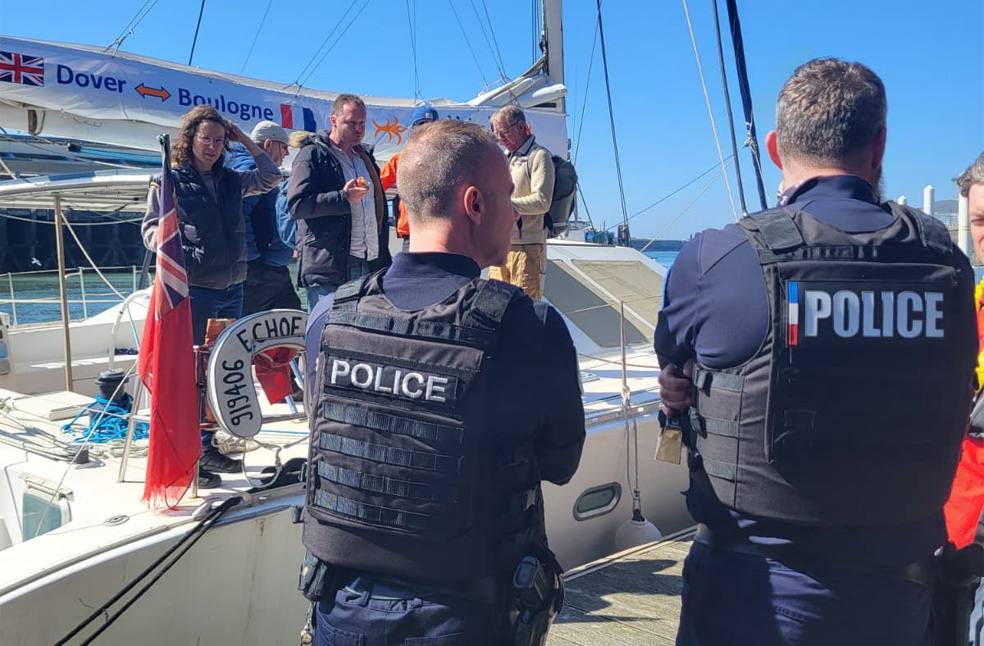
The service also differs from traditional ferry operations by avoiding large industrial ports. Instead, passengers board at town-centre marinas, with passport checks conducted on board, allowing the company to operate with a smaller vessel and crew.
In addition to its environmental benefits, the experience offers a slower and more engaging way to travel. Passengers can even take part in sailing during the journey. One traveller, Douglas Atfield, described the trip as relaxed and stress-free, with no queues or check-ins, and highlighted the unique experience of being close to nature.
MOST READ | Sabastian Sawe wins London Marathon in sub-two-hour record
