


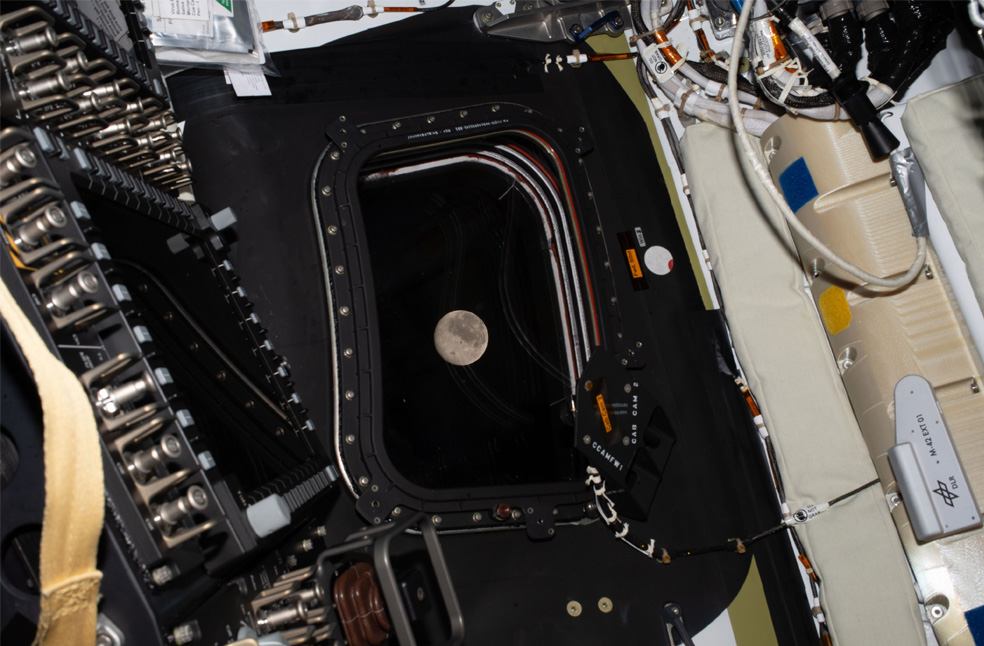
Washington: Astronauts aboard Artemis II are en route back to Earth after completing a historic lunar fly-by, during which they also witnessed a total solar eclipse from their spacecraft, an experience never before seen by humans in space.
Commander Reid Wiseman described the mission as extraordinary, noting that the crew had witnessed sights no human has ever seen. Pilot Victor Glover echoed the sentiment, saying there were no words sufficient to describe the experience.
During the mission, the Orion spacecraft reached its maximum distance from Earth at 252,756 miles (406,771 km) during the lunar fly-by, surpassing the previous record for the farthest distance humans have travelled into space.
Coming up next, our @NASAArtemis astronauts and @NASAAdmin answer questions from social media. Stay tuned: https://t.co/do2p0Gvxdu
— NASA (@NASA) April 7, 2026
As the spacecraft moved behind the Moon, communication with NASA was temporarily lost for approximately 40 minutes, a planned outage due to the Moon blocking signals. Contact was successfully re-established afterward, with Artemis II mission specialist Christina Koch expressing relief, saying it was great to hear from Earth again after the silence.
Following the mission’s milestone achievements, Donald Trump congratulated the crew, stating they had made history and made the United States proud. Trump also extended an invitation for the astronauts to visit the White House.
The crew is now preparing for the final phase of the mission, with splashdown scheduled in the Pacific Ocean off the west coast of the United States at 20:07 Eastern Time on April 10 (01:07 BST Saturday).
It is hoped that the Artemis II mission will help usher in a new era of space travel, paving the way for deeper human exploration of the Moon and future missions to Mars.
MOST READ | Bangladesh launches emergency measles vaccination campaign
