


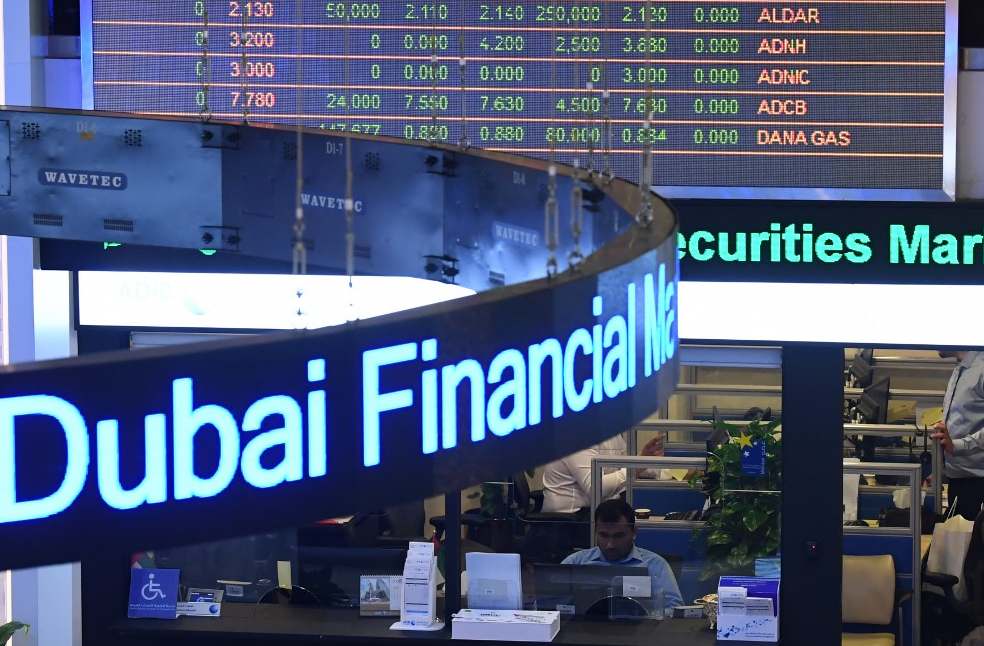
Dubai: The UAE stock markets have lost around $120 billion (£95 billion) in value since the start of the US-Israel war on Iran, placing them among the most affected financial markets globally. Dubai and Abu Dhabi have both seen notable declines as geopolitical tensions continue to influence investor confidence.
Dubai’s benchmark index has fallen by about 16 percent, while Abu Dhabi’s index has dropped roughly 9 percent since the conflict began on February 28. In terms of market capitalisation, the Dubai Financial Market has lost approximately $45 billion (£35.6 billion), while the Abu Dhabi Securities Exchange has shed around $75 billion (£59.3 billion).
Other Gulf markets have shown mixed performance, with Qatar and Bahrain experiencing declines, while Saudi Arabia and Oman have recorded gains. Globally, the S&P 500 in the United States has also declined by around 7 percent during the same period, reflecting broader market uncertainty linked to the ongoing conflict.

Although the UAE has been less directly impacted by disruptions in global energy supply, particularly due to the Strait of Hormuz tensions, the war has affected its position as a major travel hub. Thousands of flights have been cancelled, especially routes connected to Dubai International Airport, which has contributed to weaker sentiment in tourism-related sectors.
Tourism and travel have remained key contributors to the UAE economy, generating around $70 billion (£55.4 billion) last year and accounting for 13 percent of gross domestic product. Any disruption to this sector has therefore had wider implications for economic performance and investor outlook.
Despite the recent losses, analysts have suggested that the downturn may be temporary. Experts have pointed out that the UAE’s strong regulatory framework, financial infrastructure and diversification strategies continue to support long-term growth, with expectations that markets could rebound once geopolitical tensions ease.
TOP PICKS | Oil prices climb as global supply fears deepen
