


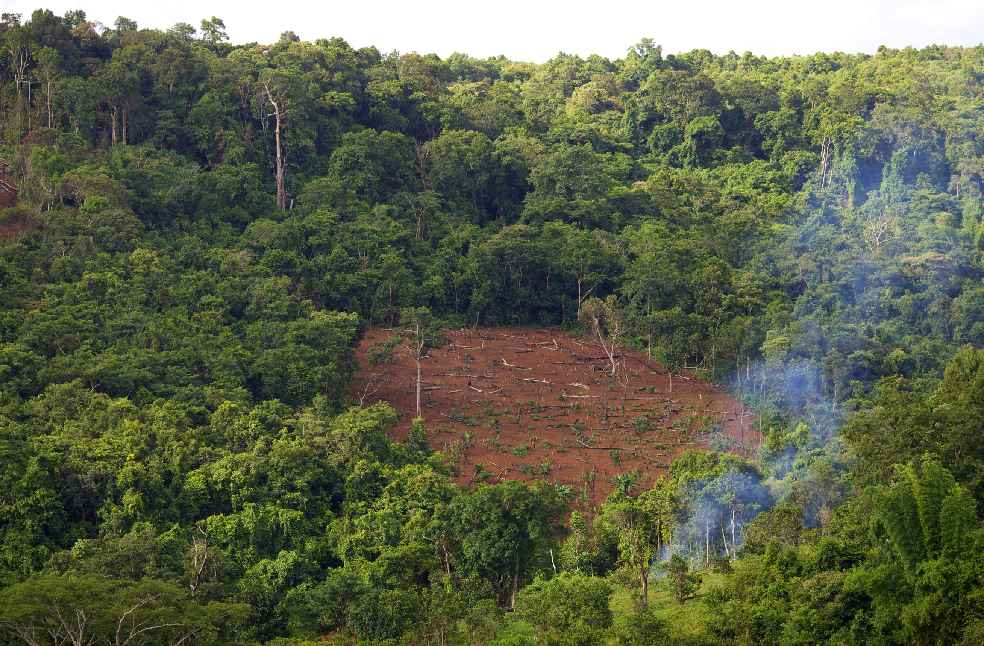
Rome: The United Nations has warned that the window to restore the world’s forests is narrowing as rising environmental pressures threaten ecosystems, food security and livelihoods.
More than 489 million hectares (1.2 billion acres) of forest was cleared since 1990. The United Nations Food and Agriculture Organization (FAO) called on governments to make forest and landscape restoration a national priority.
The latest State of the World’s Forests report recognises progress in forest protection and tree planting. However, FAO noted that the efforts have not kept pace with existing commitments.
FAO added that restoration efforts remain uneven and are insufficient to meet growing global needs. Forests cover 4.14 billion hectares, representing about a third of the Earth’s land surface. These ecosystems store 714 gigatonnes of carbon and support as much as 80 percent of global terrestrial biodiversity.
FQu Dongyu , FAO Director-General, stated that, “the report makes clear that forest and landscape restoration is more than an environmental priority – it is a strategic investment in resilient agrifood systems and rural development.”

“The window for action is narrowing, and delayed or poorly designed restoration will increase long-term costs, exacerbate inequalities and risk locking landscapes into unsustainable trajectories,” FAO chief added.
Over the past 2 decades, national, regional and global initiatives pledged to restore more than 1 billion hectares of land. Only about a fifth of that area is currently being restored.
Forests also help regulate rainfall and contribute to food security. Nearly a third of the world’s population depends on forests for livelihoods. Their role is facing greater pressure as environmental and economic demands continue to grow.
About 127 million hectares of forest are affected by fires every year. Insects, diseases and severe weather events add further damage. These pressures are occurring alongside agricultural expansion, the climate crisis, pollution and the extraction of fossil fuels and other natural resources.
FAO warned that the growing gap between demand and sustainable forest resources is creating risks for ecosystems and forest-based economies. Restoration of 1 billion hectares of degraded land in the forest could generate an estimated $1.8 trillion in benefits each year while supporting people, food security and economic activity.
ALSO READ | India strengthens food safety controls and labelling rules
