


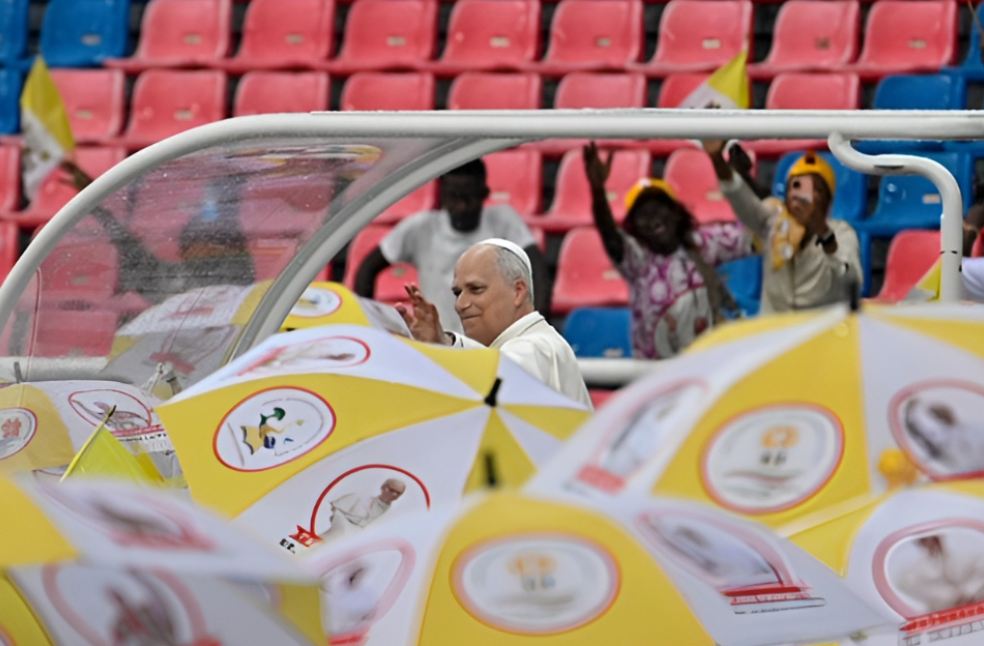
Equatorial Guinea: Pope Leo has urged authorities in Equatorial Guinea to ensure that justice systems focus not only on punishment but also on protecting society and restoring lives, as he raised concerns over the treatment of prisoners.
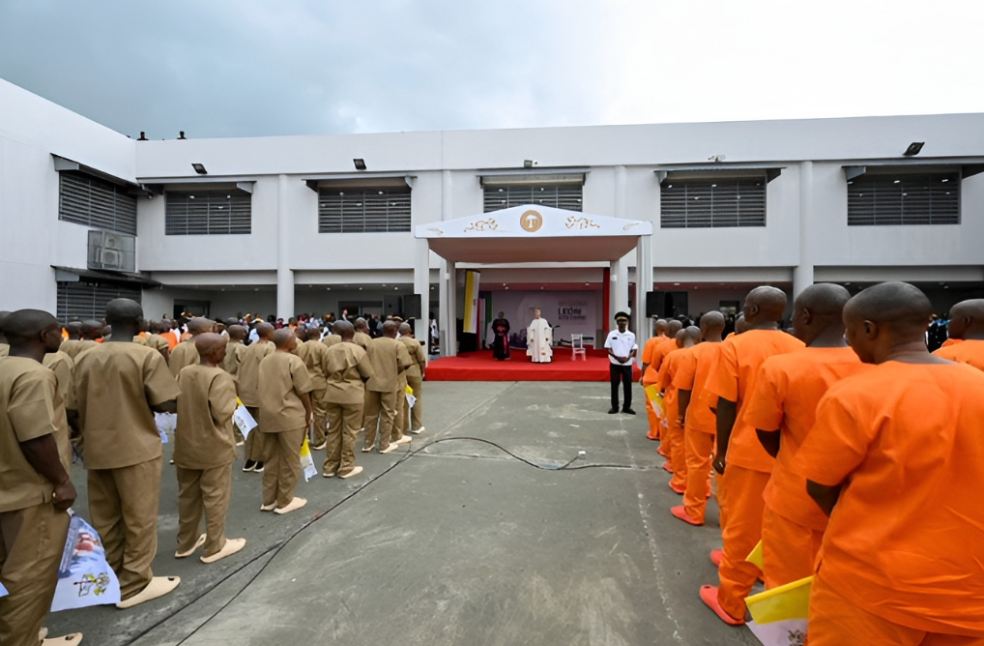
Speaking during a visit to a prison in Bata, the Pope emphasised that true justice should aim to rebuild the lives of victims, offenders and communities, while upholding human dignity. Addressing inmates gathered in the courtyard, he encouraged them not to lose hope, reminding them that they are not forgotten.
The visit comes with longstanding criticism of the country’s human rights record. Amnesty International has alleged that detainees in the prison are routinely beaten and that some prisoners have disappeared without a trace, leaving families uncertain about their fate.
“The light of charity…can change the world!”
Despite the rain, Pope Leo challenged the hundreds of young people gathered in Bata Stadium to make a resolute commitment to “become witnesses to the love that Jesus has given us and taught us.”https://t.co/6yeYheWx8B pic.twitter.com/lzQsimWbvX
— Vatican News (@VaticanNews) April 22, 2026
Authorities, however, have denied these claims, with Justice Minister Reginaldo Biyogo Ndong stating that detainees are treated fairly and that the government remains committed to human rights protections. During his address, the Pope reassured prisoners, saying their families continue to love and pray for them. As he departed, inmates reportedly shouted freedom despite standing in heavy rain.
The pontiff also visited a memorial for victims of the Bata military base explosion 2021, which killed more than 100 people and injured hundreds. Later, he addressed crowds at a stadium in Bata, calling for respect for the rights of all citizens and greater social inclusion.
Earlier in the day, Pope Leo celebrated Mass attended by tens of thousands, including President Teodoro Obiang Nguema Mbasogo, one of the world’s longest-serving leaders. Nguema Mbasogo urged the nation’s leadership to prioritise the common good, bridge inequality, and ensure the country’s natural wealth benefits all citizens rather than a privileged few.
The oil-rich nation has faced repeated allegations of corruption and inequality. Transparency International ranks it among the world’s most corrupt countries, while the World Bank estimates that more than half of the population lives in poverty.
The Pope also called for greater political openness, urging respect for freedom and dignity, as opposition voices in the country remain tightly restricted. Equatorial Guinea marks the final leg of the Pope’s four-nation African tour, which also included visits to Algeria, Cameroon and Angola.
Throughout the trip, he has spoken out strongly on global issues, criticising authoritarian leadership, conflict spending and the exploitation of Africa’s natural resources. The Pope is scheduled to conclude his visit with a Mass in the capital, Malabo, reinforcing his message of justice, equality and human dignity.
RELATED | Pope Leo begins historic Monaco visit after 488 years gap
