


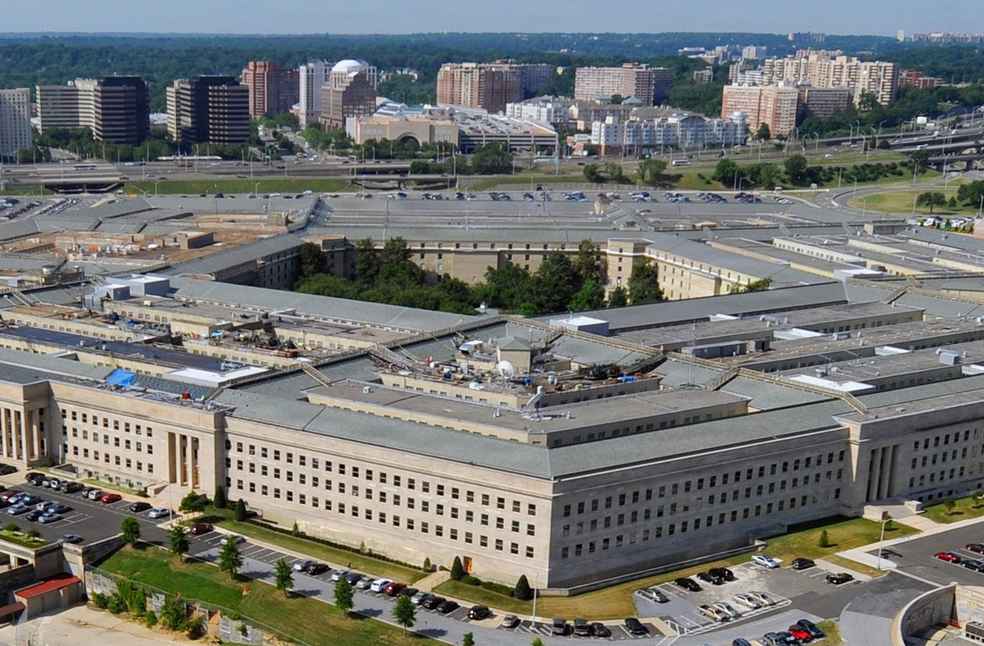
Washington: The US Department of Defense has announced that it is introducing new restrictions on journalists after a federal court blocked an earlier press access policy.
As part of the revised measures, the Pentagon will close its long-standing indoor press workspace and replace it with a new media area located outside the main Pentagon building.
Press freedom advocates have criticized the Trump administration’s handling of media access at the Pentagon, arguing that recent policy changes limit journalists’ ability to report freely and weaken freedom of speech protections.
On March 20, 2026, a U.S. District Court judge vacated key security provisions of the Pentagon's October 2025 media access policy. The court removed every provision that allowed the Department to screen press credential holders for security risks and every provision that allowed…
— Sean Parnell (@SeanParnellASW) March 23, 2026
The announcement follows a ruling issued by a federal judge, who blocked press access restrictions introduced by the Pentagon last year. The earlier policy allowed journalists to be labeled security risks if they sought information that had not been approved for public release.
Pentagon spokesperson Sean Parnell stated in a statement that the department always complies with court orders but disagrees with the ruling and is moving forward with an appeal. He added that the revised restrictions would take effect immediately.
Under the updated rules, all journalists will now be required to be escorted by authorized Defense Department personnel whenever they access the Pentagon. In addition, the long-standing ‘Correspondents’ Corridor,’ where journalists have worked for many years, will be closed with immediate effect.
The Defense Department stated that a new press workspace will be created on the grounds outside the main building and will be made available once it is ready. The Pentagon Press Association strongly criticized the announcement, saying the move clearly violates both the letter and the spirit of last week’s federal court ruling.
The court order followed a lawsuit filed by The New York Times, which argued that the policy changes introduced by the Defense Department in October 2025 gave the Pentagon excessive authority to block reporters and news organizations because of coverage it did not approve of.

The lawsuit noted that the measures violated constitutional protections for free speech and due process. Government officials, however, have defended the policy, saying the restrictions are reasonable and necessary for national security.
The changes introduced last year under Defense Secretary Pete Hegseth allowed journalists to be classified as security risks and have their press badges revoked if they attempted to persuade military personnel to share classified information. In some cases, the policy also applied to the release of certain unclassified information.
According to the lawsuit filed by The New York Times, only one of the 56 news organizations that are members of the Pentagon Press Association agreed to sign an acknowledgment of the previous policy. Reporters who refused to sign were required to surrender their press passes.
Following the announcement, The New York Times said the newly revised policy still does not comply with the judge’s ruling and continues to impose unconstitutional restrictions on journalists. The newspaper added that it plans to return to court to challenge the latest measures.
ALSO READ | Air Canada flight strikes vehicle; LaGuardia shuts down
