


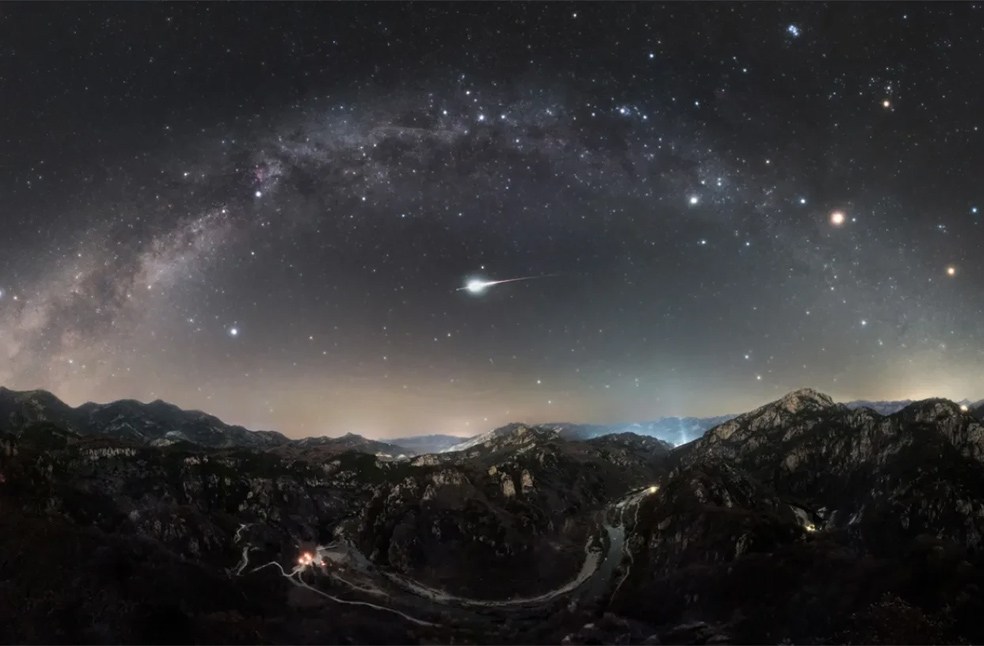
London: The annual Orionid meteor shower is expected to reach its peak this week, giving skywatchers an opportunity to see bright streaks produced by dust from Halley’s comet as it enters Earth’s atmosphere.
The shower occurs every October when Earth travels through a trail of debris left by the famous comet. The tiny particles enter the atmosphere at speeds of around 66 kilometres per second, heating the surrounding air and creating the brief flashes of light known as meteors.
This year, the Orionids are forecast to peak overnight on October 21–22. Under ideal viewing conditions, observers could spot between 10 and 20 meteors per hour. However, a bright waxing gibbous Moon is expected to make viewing more difficult by outshining many of the fainter meteors.
How to watch?
Skywatchers may have a better chance of seeing the shower in the early morning hours. The Moon is expected to set at around 3 am British Summer Time, creating a window of darker skies before dawn as the constellation Orion rises higher.
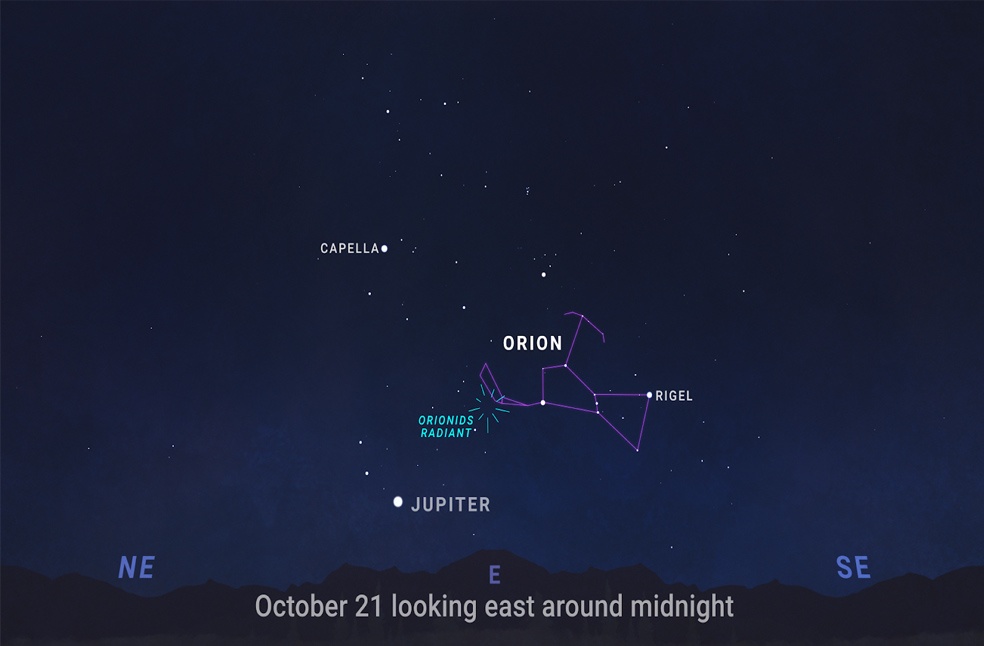
For the best experience, observers should choose a safe location with a broad, unobstructed view of the sky. No special equipment is needed, as the meteors can be watched with the naked eye.
The Orionids appear to radiate from a point near the constellation Orion, which gives the meteor shower its name. Although the meteors may seem to originate from this area, they can appear across different parts of the night sky.
Although moonlight may limit visibility this year, skywatchers can improve their chances by heading outdoors after the Moon sets in the early hours of October 22. With clear skies and an unobstructed view, observers may catch Orionid meteors streaking across the sky without the need for telescopes or binoculars.
The Draconid meteor shower also makes a brief appearance in October. This short shower is caused by the comet 21P/Giacobini-Zinner, which was discovered by the astronomer Michel Giacobini. In fact, the Draconids are sometimes called the Giacobinids in his honour.
MOST READ | NHS braces for winter pressure after summer heatwaves