


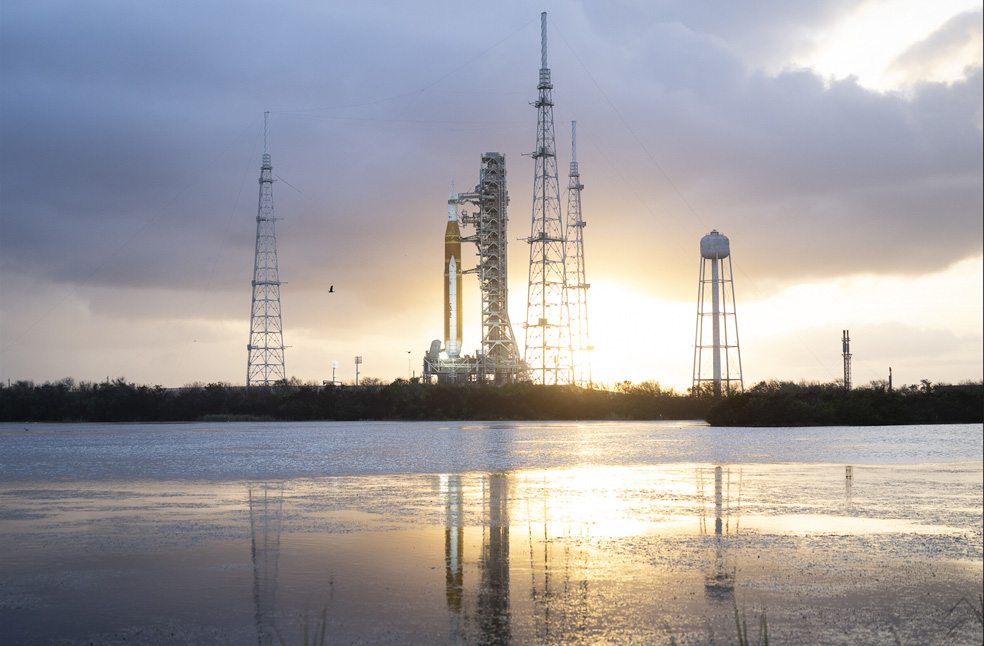
Florida: More than 50 years after humans last ventured beyond low Earth orbit, NASA is preparing to launch its historic Artemis II mission, a fully crewed journey around the Moon that is set to captivate hundreds of thousands of spectators along Florida’s Space Coast.
Up to 400,000 people are expected to gather across beaches and causeways near Florida ahead of the scheduled 6:24 pm ET launch from the Kennedy Space Center.
If successful, the mission will mark the first time since Apollo 17 in December 1972 that humans have travelled beyond low Earth orbit. The Artemis II crew, three Americans and one Canadian, arrived at the Kennedy Space Center over the weekend and entered quarantine ahead of their 10-day test flight.
Tomorrow, we launch.
At sunset tonight, Artemis II waits on the pad, ready to carry astronauts potentially farther than any humans have traveled in more than half a century.
The next era of exploration begins. pic.twitter.com/vdABkjRrnf
— NASA Administrator Jared Isaacman (@NASAAdmin) April 1, 2026
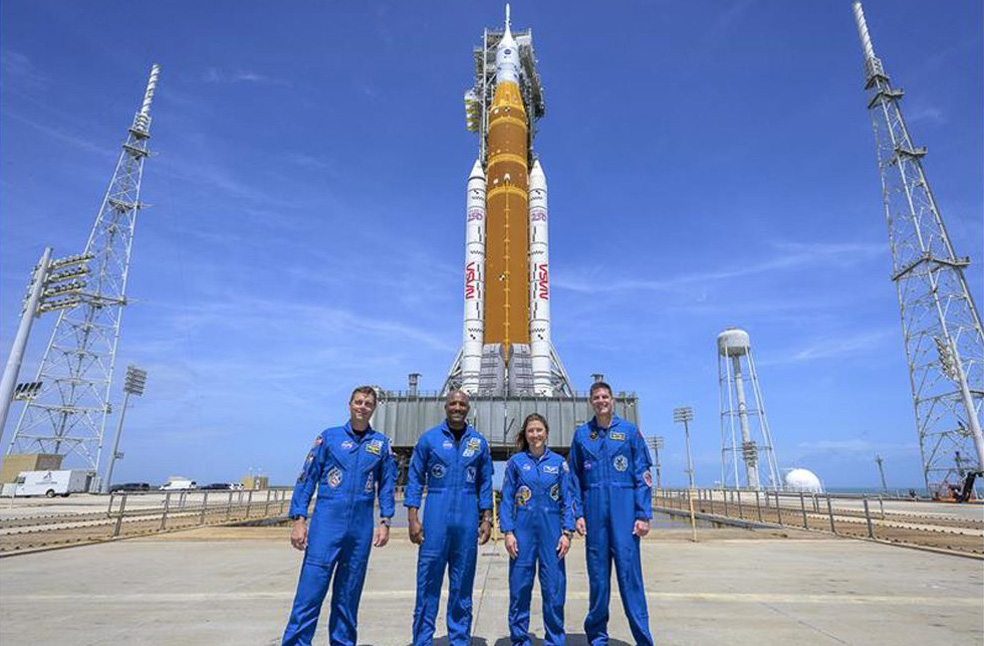
The mission will not include a lunar landing but will take astronauts into cislunar space, the region between Earth’s orbit and the Moon. The crew is led by Reid Wiseman, alongside Christina Koch, Victor Glover, and Jeremy Hansen of the Canadian Space Agency.
Koch is set to become the first woman, and Glover the first person of colour, to travel into cislunar space, while Hansen will be the first non-American to do so. If launched as planned, the Orion spacecraft could carry the astronauts farther from Earth than any humans in history.
On the sixth day of the mission, they are expected to travel more than 4,600 miles (7,400 km) beyond the Moon’s far side and reach nearly 253,000 miles from Earth, surpassing the record of 248,655 miles set by Apollo 13 in April 1970.
Despite the significance of these milestones, crew members have downplayed the importance of individual “firsts.” Koch emphasised that the mission represents equal opportunity for anyone with ambition, while Glover expressed hope that future achievements will be viewed simply as part of human history rather than defined by race or gender.
The Artemis II mission comes during a shifting political context. Before Donald Trump’s return to office, NASA had highlighted the diversity of its Artemis crews. However, such references were removed following an executive order directing federal agencies to eliminate diversity, equity, and inclusion (DEI) language and practices.
Beyond symbolism, NASA views Artemis II as a crucial step in its long-term lunar ambitions. Jared Isaacman, the agency’s newly confirmed administrator, recently outlined plans for a $20 billion (£15 billion) lunar base by the end of the decade.
A key objective of the mission is to photograph regions near the Moon’s south pole from altitudes of 4,000 to 6,000 miles, areas targeted for future human landings and the eventual establishment of a lunar base.
The extended journey will also allow astronauts to test essential systems, including life-support technology and spacecraft hardware, that will be critical for upcoming missions such as Artemis IV, scheduled for 2028, which aims to return humans to the Moon’s surface.
Throughout the mission, astronauts will be closely monitored for health impacts, including exposure to increased radiation and the effects of microgravity.
Living conditions inside the Orion capsule will be confined, with a diameter of just five metres and an interior space comparable to a small camper van, requiring the crew to remain together for the full duration of their 685,000-mile journey until splashdown in the Pacific Ocean.
Commander Wiseman acknowledged the challenges of living in close quarters, noting that even minor habits can become frustrating over time. However, he expressed confidence in the crew’s ability to manage these challenges through strong communication and teamwork.
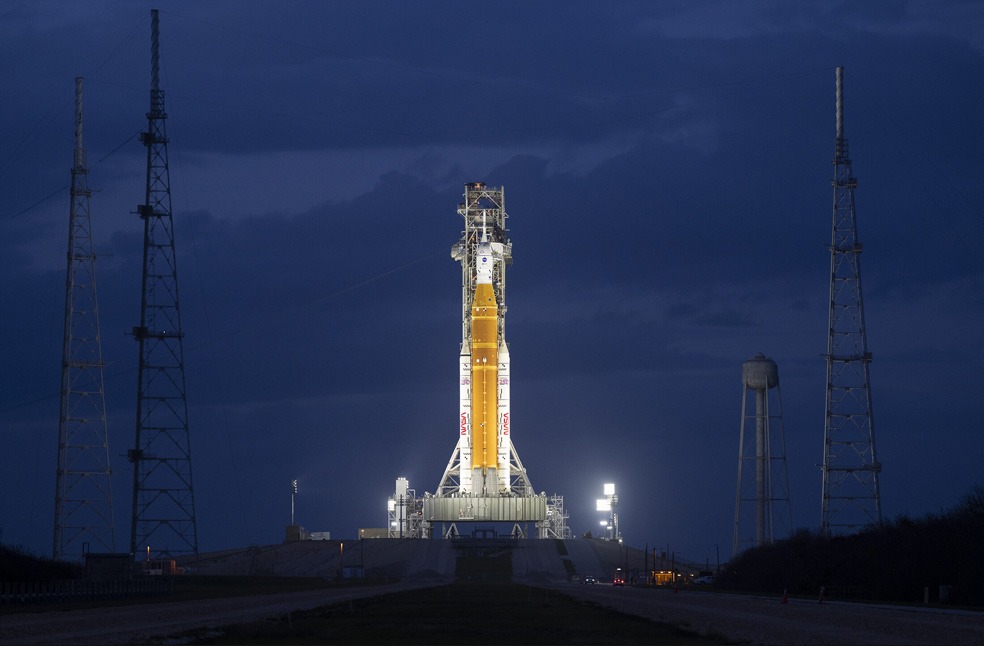
The mission will launch aboard NASA’s Space Launch System (SLS) rocket, which stands 322 feet (98 metres) tall. The rocket and Orion capsule will separate into stages during ascent.
NASA officials have said that earlier technical issues, including a heat shield concern during Artemis I and a helium leak that forced Artemis II back to the assembly building in February, have been resolved. The leak had delayed the mission and pushed the launch window to April.
Weather forecasts have given the launch an 80 percent chance of favourable conditions. If postponed, NASA has additional launch opportunities over the following five days. Excitement is building across the Space Coast, including Cape Canaveral and Cocoa Beach, where crowds are swelling, and accommodations are becoming scarce due to high demand during the spring break period.
Inside NASA, the mission represents years of planning and a major step forward despite delays and budget overruns. Originally intended to return humans to the Moon earlier in the decade, the Artemis programme has faced setbacks but remains central to the agency’s future.
As Isaacman stated, NASA was founded to pursue bold and ambitious goals, and Artemis II is a critical milestone toward establishing a sustained human presence on the Moon. He emphasised that lessons from this mission will help enable future landings and ensure that when humans return to the Moon, they are there to stay.
MOST READ | Premier League fans voice strong opposition to VAR use
