


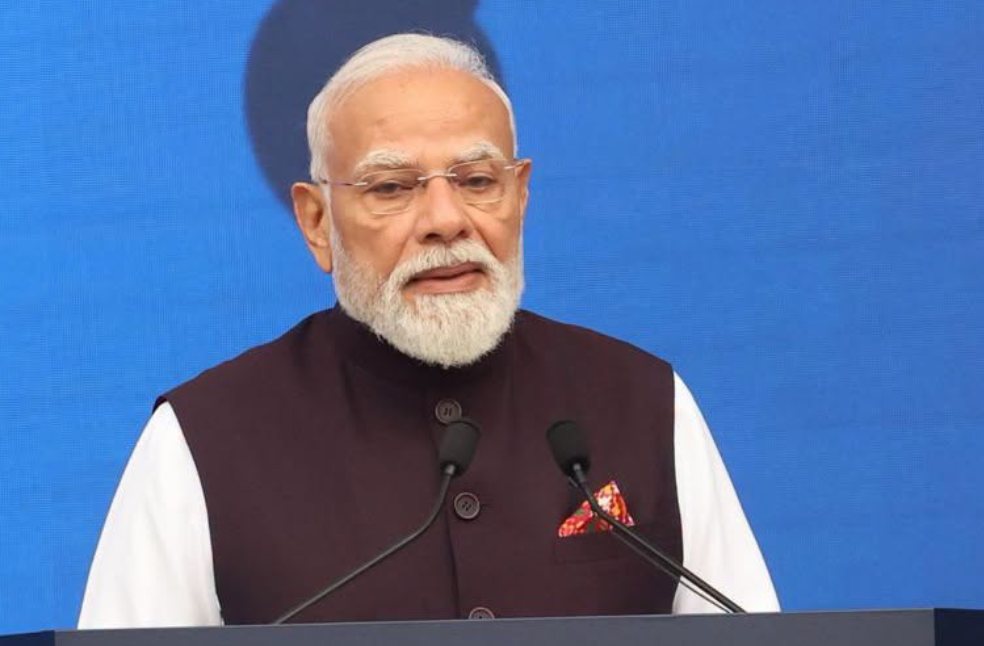
New Delhi: Indian Prime Minister Narendra Modi has announced plans to establish fast-track courts to ensure swift punishment for those involved in examination paper leaks, marking his first public response to the nationwide protests led by students and youth groups over alleged irregularities in competitive examinations.
The announcement comes as demonstrations continue across New Delhi, with thousands of protesters occupying Parliament Street for the third consecutive day. Security measures have been intensified after clashes between protesters and police earlier this week.
In a post on X, Modi said the government was committed to protecting the interests of young people. Modi stated that, “Nothing is more important than the welfare and future of our youth. We have decided to set up fast-track courts to ensure swift and stringent punishment for those involved in paper leaks. Those who try to harm the future of our youth will not be spared.”
Nothing is more important than the welfare and future of our youth!
We have decided to set up fast-track courts to ensure swift and stringent punishment for those involved in paper leaks. Have directed the concerned authorities and officials to take all necessary steps in this…
— Narendra Modi (@narendramodi) July 23, 2026
The protests are being spearheaded by the Cockroach Janta Party (CJP), a satirical online movement launched in May that has evolved into a nationwide campaign demanding reforms in India’s examination system. The group is also calling for the resignation of Education Minister Dharmendra Pradhan, holding him responsible for repeated examination controversies.
CJP spokesperson Ashutosh Ranka also rejected the government’s proposal, saying fast-track courts would not solve the deeper issues affecting the country’s examination system. Ashutosh Ranka remarked that, “The announcement of fast-track courts is merely a distraction. Paper leaks are happening because of administrative failures, not because India lacked fast-track courts.”
The organisation has demanded the immediate resignation of Dharmendra Pradhan, withdrawal of cases filed against peaceful protesters, and financial compensation of $1,03,572 (₹10 million) for each family of students who reportedly died by suicide following recent examination cancellations.
The demonstrations have continued despite heightened security across the capital. Authorities have reportedly closed several metro stations near the protest venue after police used tear gas and batons to disperse protesters attempting to march towards Parliament earlier this week.
The movement has also spread beyond the capital, with solidarity protests taking place in cities including Mumbai, Bengaluru and Patna. The growing protests reflect increasing frustration among India’s youth over recurring examination paper leaks, unemployment concerns and demands for greater transparency in the country’s competitive examination system. Opposition parties have also used the issue to intensify criticism of the Modi government ahead of upcoming political contests.
POPULAR | US, Saudi Arabia sign landmark civilian nuclear cooperation deal
