


London: The UK and parts of Europe have witnessed one of the most dramatic solar eclipses in decades, with millions of people expected to have watched the rare astronomical event.
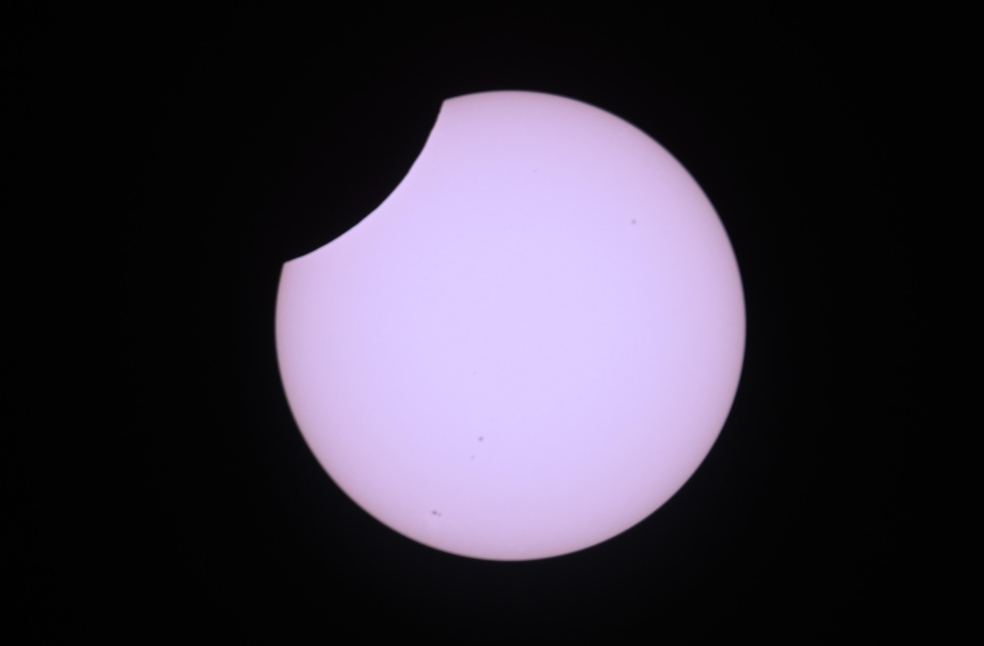
Skywatchers across the UK experienced a partial solar eclipse that peaked shortly after 19:00 BST. In most parts of the country, more than 90 percent of the Sun was covered by the Moon, while coverage reached as high as 95 percent in Cornwall.
Parts of Greenland, Iceland, and Spain experienced the full spectacle of a total solar eclipse, as the Moon completely blocked the Sun and temporarily plunged areas along the eclipse path into darkness.
We're lucky enough to experience the eclipse again, as we reach totality in León, Spain. pic.twitter.com/jzH66vYdkA
— NASA (@NASA) August 12, 2026
Dramatic solar eclipse
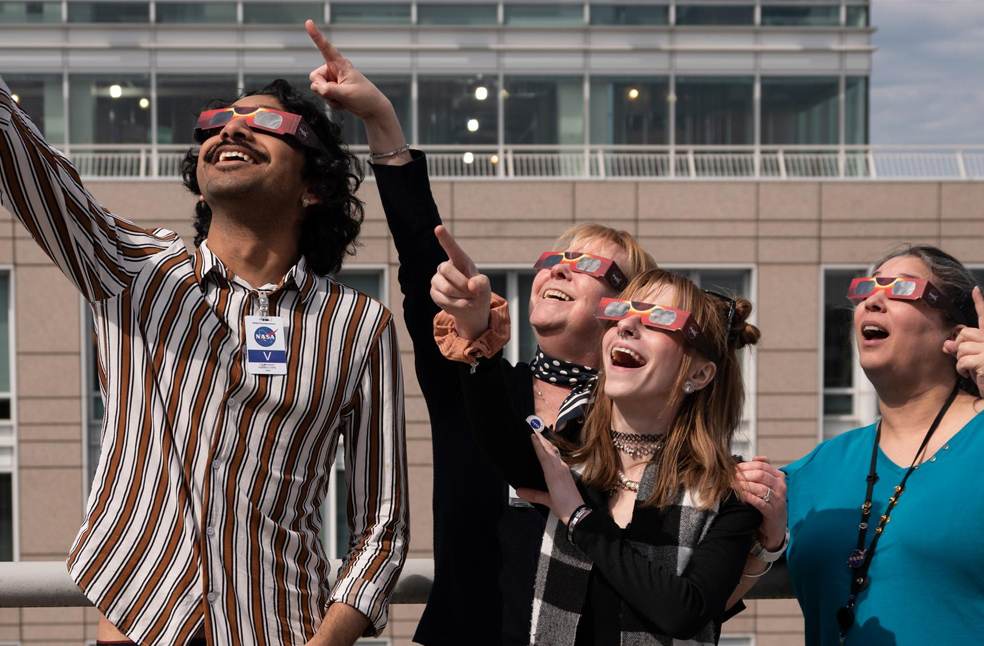
Large crowds gathered at viewing locations across the UK and Europe, responding with cheers and gasps as the eclipse reached its most dramatic stages. Astronomy enthusiasts described the experience as a reminder of the extraordinary scale and beauty of the universe.
The eclipse began its path at the northern tip of Siberia in Russia, away from major crowds and observation sites. It then moved across the Arctic Ocean before reaching Iceland in the early evening and continuing south towards Spain.
In the UK, the partial phase began at around 18:00 BST in northern Scotland and shortly before 18:20 on the south coast of England. The eclipse was barely noticeable at first, but as the Moon gradually moved across the Sun, observers with clear skies could see the solar disc slowly disappearing.
Much of central and southern England and Wales benefited from clear weather, providing favourable conditions to watch the Moon cross the Sun over roughly an hour. Northern England, Scotland, and Northern Ireland experienced more cloud cover, although this did not prevent people from gathering at well-known landmarks to catch a glimpse.
Solar eclipse glasses
The event also triggered strong demand for certified solar eclipse glasses. Supplies became difficult to find before the eclipse, with opticians, hardware stores and even bakeries reportedly selling out. Some people turned to safe projection methods using everyday objects such as colanders, cereal boxes and pieces of paper to observe the partial eclipse without looking directly at the Sun.
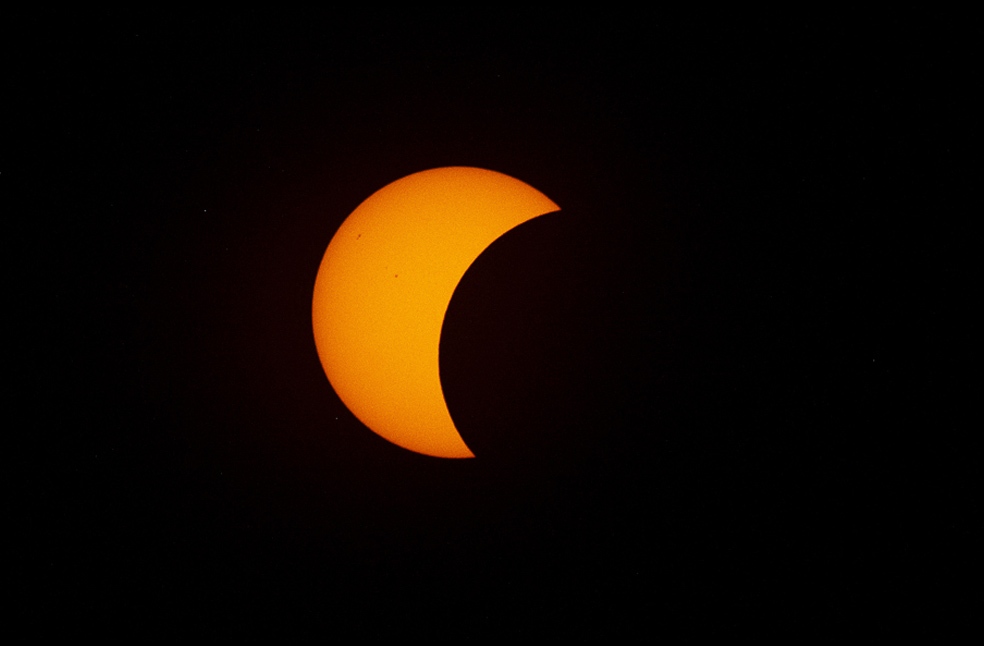
A solar eclipse occurs when the Moon moves between the Sun and Earth, blocking some or all of the Sun’s light and casting its shadow on Earth. During a partial eclipse, the three bodies are not perfectly aligned, leaving only part of the Sun covered.
From most of the UK, the Moon covered about 90 percent of the Sun, making it Britain’s most dramatic eclipse since 1999. Cornwall recorded coverage of up to 95 percent. Spain experienced an even rarer spectacle. At approximately 19:30 BST, or 20:30 local time, the Sun, Moon and Earth aligned closely enough for a total eclipse to occur.
One of the international visitors who travelled to witness the event was Chilean scientist Yasmin Catricheo, who journeyed thousands of miles to A Coruña in north-west Spain.

Catricheo described the moment of totality as an extraordinary shared experience, saying that crowds cheered and shared their excitement as the darkness arrived, adding that the universe was ‘amazing.’
Sun’s corona
The total eclipse also offered observers a view of the Sun’s corona, the superheated outer atmosphere that becomes visible when the Sun’s bright surface is completely obscured. Some viewers could also see prominences, small loops of pinkish gas extending from the Sun and following its turbulent magnetic field.
The total phase lasted for less than two minutes before the Moon began moving away and sunlight gradually returned. Despite its short duration, the experience was unforgettable for many spectators who had gathered along the eclipse’s path.
Total solar eclipses occur somewhere on Earth approximately every 18 months, but they are far less common at any individual location. A particular place may experience a total eclipse only once every roughly 400 years.
The ability to see a total eclipse is also linked to an extraordinary coincidence in the apparent sizes of the Sun and Moon. The Sun is approximately 150 million kilometres, or 93 million miles, from Earth and is about 400 times farther away than the Moon.
At the same time, the Moon’s diameter is roughly 400 times smaller than the Sun’s, causing the two bodies to appear almost the same size in Earth’s sky. If the Moon were slightly smaller or its orbit were farther from Earth, a total solar eclipse would never occur.
Golden age
The latest event was part of what astronomers describe as a ‘golden age’ for total solar eclipses between 2026 and 2028. However, none of those total eclipses will be visible from the UK. Britain’s next notable opportunity will be a partial eclipse in 2027, when some regions could experience around 45 percent solar coverage.
The UK will have to wait considerably longer for another eclipse approaching the scale of the latest event. In 2081, up to 99 percent of the Sun is expected to be covered from parts of the country. Britain’s next total solar eclipse is not expected until 2090, making the latest event a particularly significant moment for UK skywatchers.
RELATED POST | Rare solar eclipse set to dazzle Europe on August 12
