


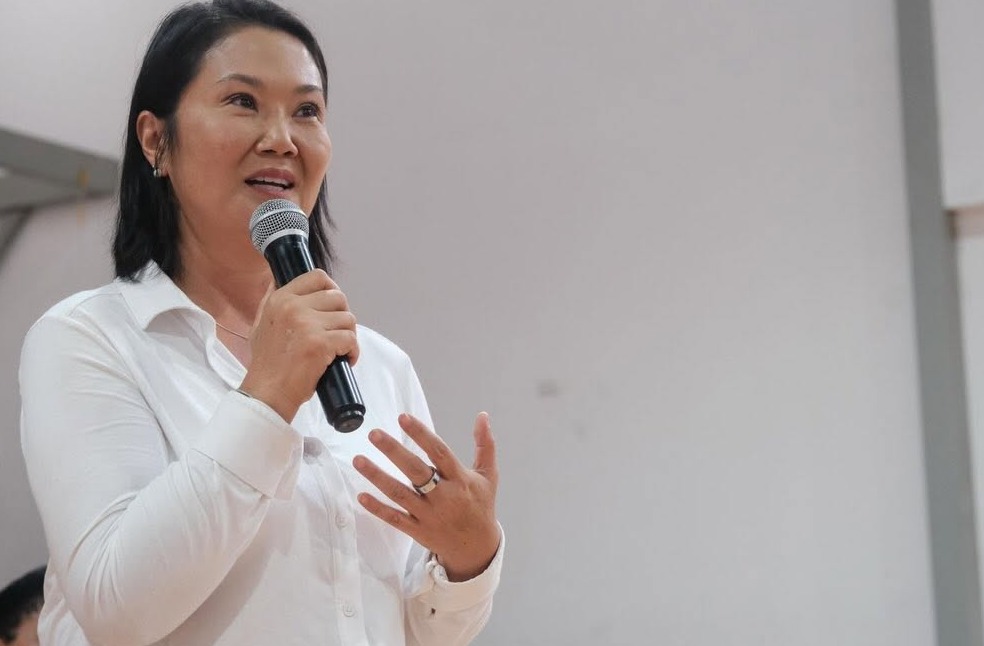
Lima: Keiko Fujimori was sworn in as Peru’s new president after narrowly winning a fiercely contested presidential run-off, marking the return of one of the country’s most influential and controversial political families to power.
The 51-year-old conservative leader defeated left-wing candidate Roberto Sanchez by fewer than 50,000 votes in the June election, securing the presidency after three unsuccessful attempts in previous elections. Fujimori now becomes Peru’s ninth president in just 10 years, taking office with years of political instability, economic uncertainty and rising public concern over crime.
During the inauguration ceremony in Congress, Fujimori took the presidential oath, pledging to faithfully carry out the responsibilities of the office and restore stability to the South American nation.
Her party, Fuerza Popular, emerged as the largest bloc in Congress and, together with its main right-wing ally, controls half the seats in the newly established Senate. While this strengthens her position against possible impeachment efforts, the coalition still lacks the majority required to pass major legislative reforms without broader political support.
Crime and public security dominated Fujimori’s election campaign as Peru grapples with its worst security crisis in decades. The country has witnessed a sharp increase in extortion, contract killings and organised crime linked to domestic and foreign criminal gangs.
Fujimori has pledged to confront criminal organisations with what she described as an ‘iron fist.’ Her proposals include building a high-security mega prison inspired by El Salvador’s Cecot facility, introducing anonymous judges for organised crime cases, deporting undocumented migrants involved in criminal activities and requiring inmates to work to cover the cost of their imprisonment.
Her election also revives debate over the legacy of her father, former President Alberto Fujimori, who governed Peru during the 1990s. Supporters credit him with defeating the Maoist Shining Path insurgency and stabilising Peru’s economy through sweeping market reforms. However, he was later convicted of corruption and crimes against humanity related to human rights abuses committed during his administration’s fight against armed groups, serving 16 years in prison.
Keiko Fujimori entered public life at the age of 19 when she assumed the role of first lady following a public split between her parents. Keiko Fujimori has remained a central figure in Peruvian politics for more than three decades.
Her presidency has sparked mixed reactions across Peru. Supporters believe her leadership will restore order and strengthen security, while critics fear her administration could weaken democratic institutions and civil liberties. Human rights groups and relatives of victims of state violence staged protests in Lima ahead of her inauguration, calling for justice over abuses committed during her father’s rule and urging the new government to continue investigations into the deaths of protesters during demonstrations in 2022 and 2023.
As Fujimori begins her five-year term, she faces the challenge of uniting a deeply divided nation while addressing crime, political instability and economic concerns that have dominated Peru’s recent history.
POPULAR | Trump and Zelenskyy hold crucial talks as Russia sanctions loom
