


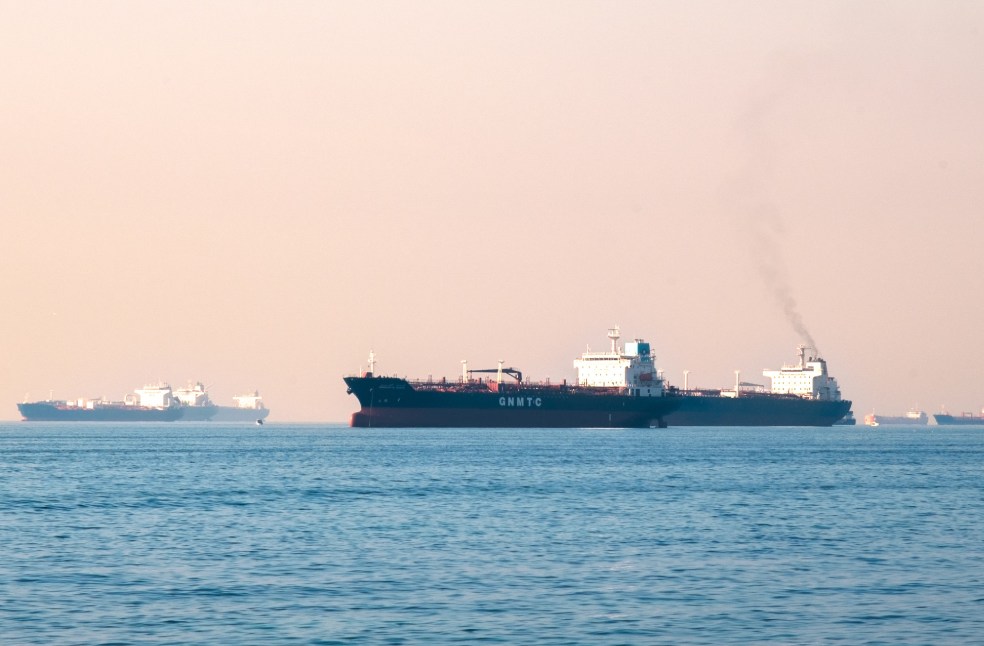
Tehran: Iran’s military command has announced that it will target any vessel transiting the Strait of Hormuz, claiming the strategic waterway has been closed to all maritime traffic following renewed US military strikes and rising tensions in the region.
According to Iran’s Khatam al-Anbiya Central Headquarters, any ship attempting to pass through the Strait of Hormuz will be considered a legitimate target. The command stated that the strait is now completely closed to all types of vessels, warning ships in the Arabian Gulf and the Sea of Oman not to leave their anchorages.
Iran’s Revolutionary Guards Navy said two vessels attempting to transit the strait were struck after allegedly violating the closure order. The force claimed the action came in response to what it described as repeated breaches of a ceasefire by the United States.
🚫 CLAIM: Iran’s Islamic Revolutionary Guard Corps claims that the Strait of Hormuz is closed.
✅ TRUTH: Commercial ships are continuing to transit in and out of the Strait of Hormuz tonight. pic.twitter.com/yphkl2Lmji
— U.S. Central Command (@CENTCOM) June 10, 2026
Iranian state media remarked that, “We warn that no vessel should leave its anchorage in the Gulf and the Sea of Oman. Approaching the Strait of Hormuz will be considered cooperation with the enemy.” The latest escalation follows a fresh wave of US attacks on Iranian targets. US President Donald Trump vowed to hit them hard, accusing Tehran’s negotiators of playing us for suckers as diplomatic efforts to end the conflict appeared to stall.
Iranian media also reported explosions across southern parts of the country near the Strait of Hormuz, where US forces had previously targeted air defence systems, radar installations and other military sites.
Despite Iran’s claims, the United States has disputed reports that its naval vessels were struck in the area. US Central Command said no American warships had been hit and maintained that commercial shipping continued to transit through the Strait of Hormuz.
The strait, one of the world’s most critical energy chokepoints, handles a significant portion of global oil and gas shipments. Any disruption to navigation through the narrow waterway could have major implications for international energy markets and global trade.
The conflicting claims from Tehran and Washington have added to the uncertainty in an already volatile situation, raising concerns about the potential for broader regional instability and disruptions to international shipping routes.
POPULAR | Canada proposes social media ban for under-16s
