


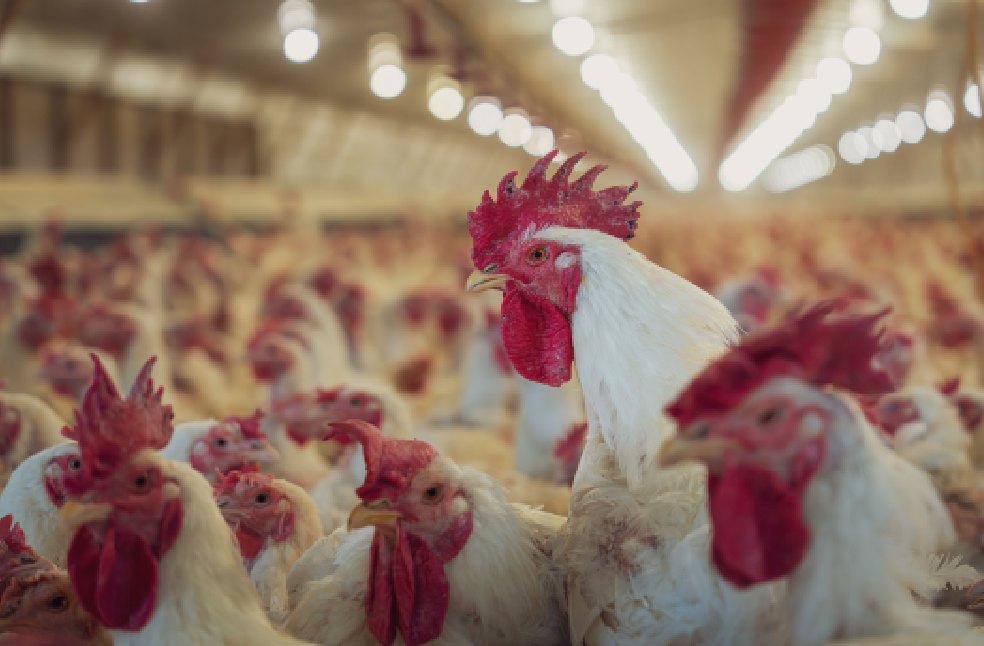
England: Industrial poultry farming is driving more than 100-fold increase in the spread of campylobacter, a leading food poisoning bacteria, according to new research.
Campylobacter remains the most common bacterial cause of diarrhoea worldwide. In the UK, the bacterium accounts for 3.5 times more cases of stomach illness each year than all other monitored foodborne bacteria combined.
The study by the University of Oxford examines how large-scale poultry production reshapes the evolution of the bacteria. Rapid growth in global chicken farming creates dense environments that favour transmission. This enables bacteria to circulate more widely and adapt more quickly.
Global chicken numbers expanded seven-fold since the 1960s, reaching around 31 billion birds. This increase allowed bacteria originating in wild bird populations to move into poultry systems. Once established, the bacteria spreads efficiently within farms.

Researchers analysed nearly 2,800 bacterial genomes collected from chickens and wild birds across 30 countries. The dataset spans from 1979 to 2024 and includes samples from the UK and the USA. Genomic analysis reveals clear genetic changes linked to shifts in farming environments.
The findings show that campylobacter develops traits that improve survival in modern poultry systems, including genes linked to antimicrobial resistance that weaken treatment effectiveness. Intensive farming conditions also accelerate bacterial evolution, as close contact among large bird populations increases transmission.
Researchers note that antimicrobial resistance remains a growing public health concern. The spread of resistant bacteria from poultry to humans can complicate treatment. This adds pressure on healthcare systems and food safety controls.
The findings highlight the need for improved monitoring of bacterial evolution in food production, particularly in poultry farming where large-scale operations accelerate transmission. Stronger biosecurity measures and responsible antibiotic use across poultry farming systems may help limit further spread.
MOST READ | Oil prices decline after US-Iran agree to pause strikes
