


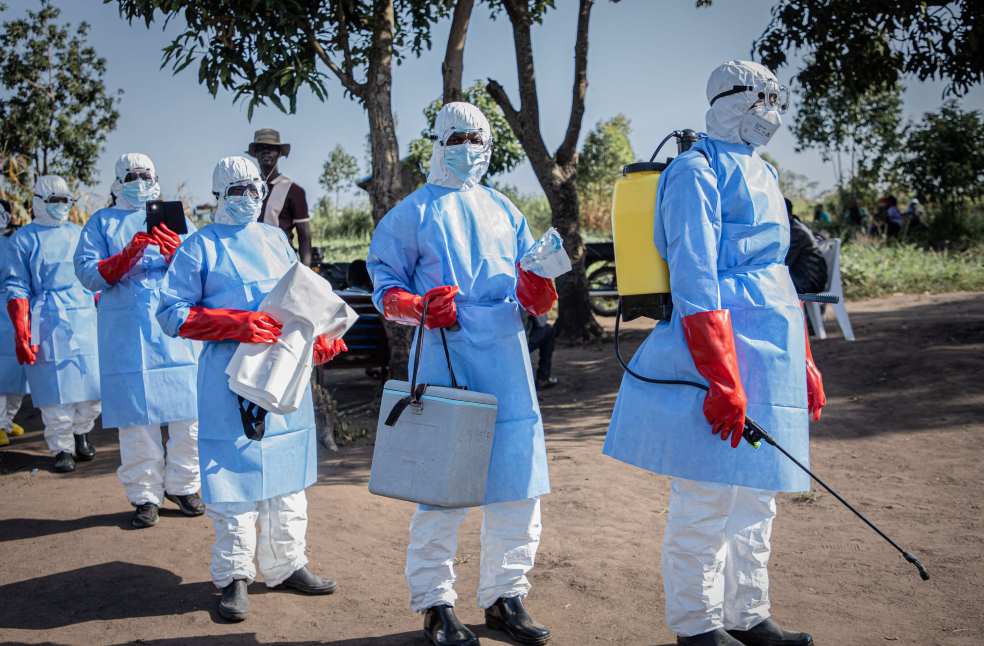
Kinshasa: Health officials are investigating whether the Ebola virus behind a rapidly expanding outbreak in the Democratic Republic of the Congo could be mutating, as confirmed infections have surpassed 4,000 and authorities prepare to significantly scale up containment efforts.
The outbreak involves the Bundibugyo strain of Ebola and was officially reported on May 15, although health authorities suspect transmission may have begun as early as January.
DRC’s national public health institute recorded 3,973 cases and 1,801 deaths as of August 4. Africa Centres for Disease Control and Prevention (Africa CDC) Director-General Jean Kaseya subsequently said the number of cases had crossed 4,000.
The outbreak has become the second-largest Ebola outbreak on record. At the same stage, it has recorded significantly more cases and deaths than the 2014-2018 West Africa Ebola epidemic, which eventually infected more than 28,000 people and killed at least 11,000.
Kaseya said Africa CDC and the World Health Organization plan to conduct studies to determine whether additional factors, including possible changes in the virus, could explain the unusual severity of the outbreak.
Health officials are particularly concerned about widespread transmission that is not being detected through existing surveillance systems. More than two-thirds of Ebola deaths are occurring in communities rather than treatment centres.
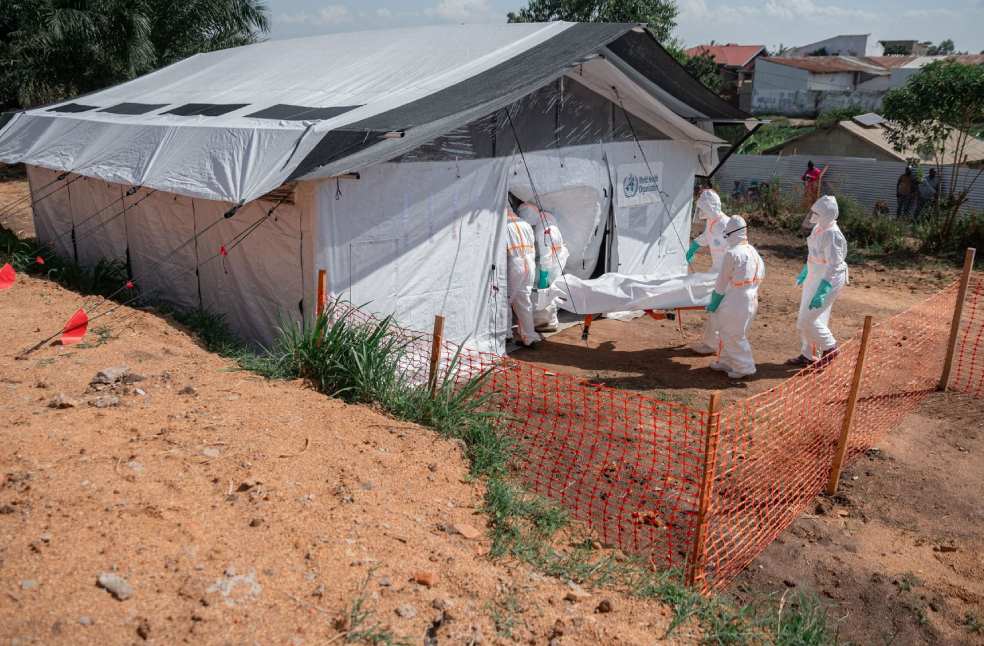
At an Médecins Sans Frontières treatment centre in Bunia, the capital of Ituri province, around 90 percent of admitted patients were not listed as contacts of previously identified Ebola cases, highlighting gaps in contact tracing. Africa CDC said only about 10 contacts are currently being identified for each Ebola patient, compared with around 40 that would normally be expected.
Authorities are now shifting from conventional contact tracing towards an active case search. Community health workers will go door to door to identify households where people may be experiencing Ebola symptoms. The response will also focus more heavily on individual villages, digital surveillance tools and camps housing people displaced by conflict.
The outbreak remains centred in conflict-affected Ituri province but has spread to North Kivu, South Kivu, Haut-Uele and Tshopo. Uganda previously recorded 20 cases linked to the outbreak before bringing its outbreak under control.
Officials also plan to begin using the antiviral drug remdesivir on a compassionate-use basis for some patients. Researchers are examining whether Ervebo, a vaccine approved for a different Ebola strain, could provide protection against Bundibugyo Ebola.
DRC authorities are separately investigating a suspected Ebola death involving a passenger travelling by boat towards Kinshasa from the country’s northeast. Other passengers are expected to undergo quarantine and testing.
The outbreak is also disrupting routine healthcare. UNICEF has warned that fear of infection and interruptions to medical services are keeping families away from clinics. In Mongbwalu, an area at the centre of the outbreak, the proportion of children receiving their first measles vaccine dose has fallen sharply.
MOST READ | Toronto home sales rise for fifth straight month in July
