


Sydney: Australia recorded its second-hottest September on record in 2026 as rising global temperatures and a strengthening El Niño combined to produce unusually high temperatures across much of the country.
Data from the Bureau of Meteorology showed that Australia’s average temperatures in September were 2.71C above the long-term average for the 1961-1990 reference period. Minimum night-time temperatures were also the highest recorded for any September since national records began in 1910, reaching 2.52C above the long-term average.
Temperatures ranked among the five warmest Septembers on record in every state, while the Northern Territory recorded its sixth-hottest September. In New South Wales, 45 locations experienced their warmest September on record.
Climate scientist Dr Linden Ashcroft of the University of Melbourne described the conditions as a clear example of the effects of climate change and a shift toward earlier springs. “This is also a clear example of seasonal creep where winter is ending earlier and spring is starting sooner,” Ashcroft stated.
Australia has not recorded a September with below-average mean temperatures since 2004, according to Bureau of Meteorology data. The country has also warmed by more than 1.5C since nationwide temperature records began in 1910.
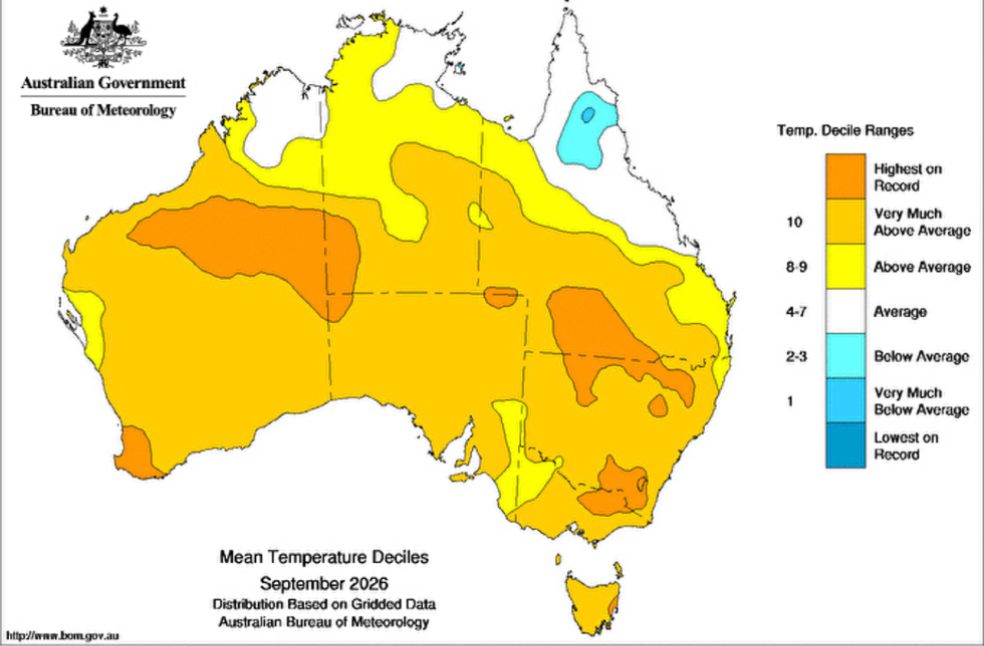
The unusual warmth extended into alpine regions, where several temperature records were broken. In Kosciuszko National Park, snow depth fell to zero during September for the first time since monitoring began in 1954, highlighting the impact of warmer conditions on Australia’s alpine environment.
Rainfall patterns were also unusual. All states and territories recorded below-average rainfall for September except Western Australia, which experienced its second-wettest September on record and its wettest September since 1904.
The Bureau of Meteorology data comes as El Niño strengthens, adding to the broader climate factors influencing Australia’s weather patterns. Scientists have increasingly warned that rising global temperatures are changing seasonal conditions, contributing to more frequent and intense heat events.
The latest figures also highlight how Australia’s warming trend is affecting both daytime and overnight temperatures. Persistently warmer nights can reduce the body’s ability to recover from daytime heat and add pressure to ecosystems, agriculture and energy systems.
With September marking the beginning of spring in Australia, the record warmth has renewed attention on the country’s changing seasonal patterns and the growing influence of long-term climate change on extreme temperatures.
MOST READ | Magnitude 4.8 earthquake hits Victoria, aftershock follows
