


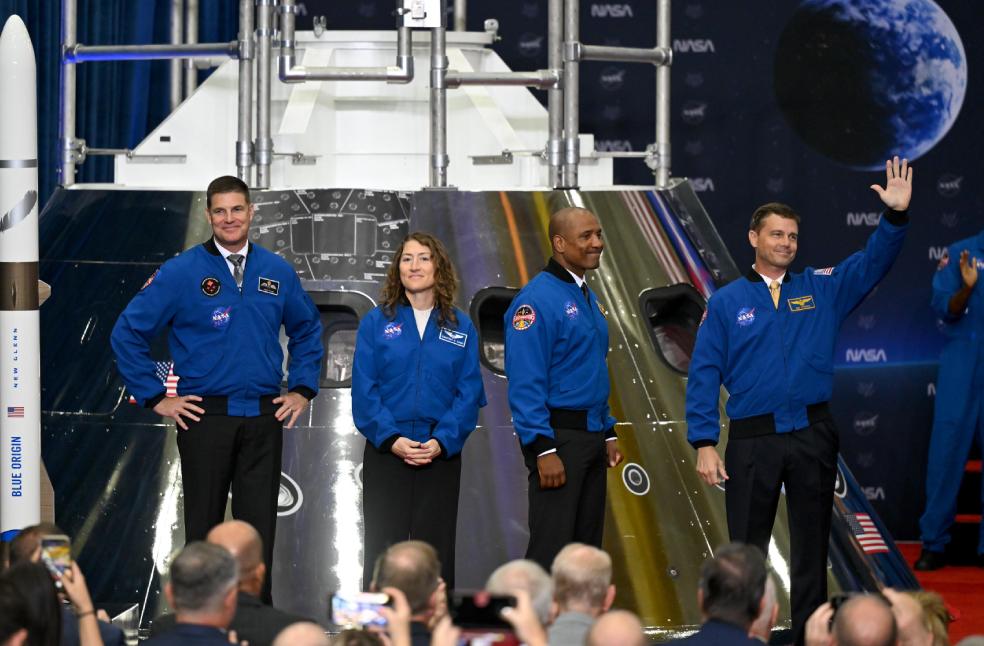
United States: The four Artemis II astronauts have received the Congressional Space Medal of Honor, the United States’ highest space honor, following their historic journey around the moon in April.
US President Donald Trump presented the award to Commander Reid Wiseman, pilot Victor Glover, mission specialist Christina Koch and Canadian mission specialist Jeremy Hansen during a ceremony at NASA’s Johnson Space Center in Houston.
The Artemis II crew became the first astronauts to travel to the moon in more than half a century. During the lunar flyby, the crew came within 4,067 miles (6,545 kilometers) of the moon while testing NASA’s new Orion spacecraft and setting a new distance record for human spaceflight.
The mission was also the first crewed launch aboard NASA’s new moon rocket, the Space Launch System, which had previously flown only once without astronauts.
Although Artemis II did not land on the moon, the mission was designed to test key systems and prepare NASA for future crewed lunar missions. The flight is expected to support preparations for Artemis III, which will include a planned docking rehearsal in Earth orbit.
NASA is aiming to return astronauts to the moon’s surface through the Artemis program, with a future landing planned near the lunar south pole. Artemis IV could potentially follow with a lunar landing as early as 2028.
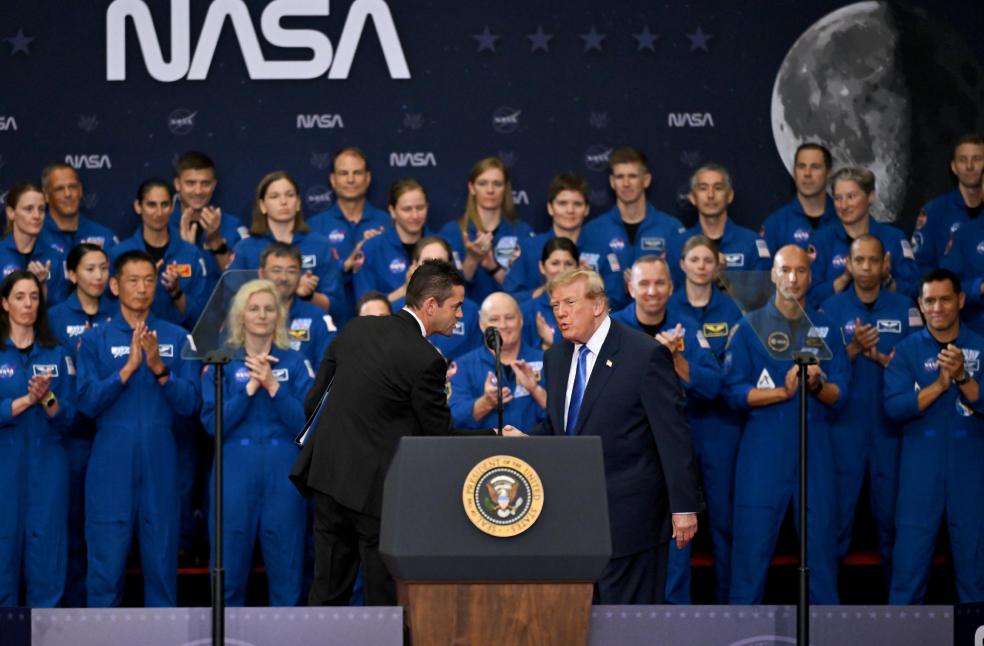
The award places the Artemis II astronauts alongside some of the most celebrated figures in US space exploration. Only 30 astronauts had previously received the Congressional Space Medal of Honor, including Apollo 11 commander Neil Armstrong, the first person to walk on the moon.
Other recipients include Alan Shepard, the first American in space, and John Glenn, the first American to orbit Earth. Apollo 8 commander Frank Borman was also among the astronauts honored with the medal.
The most recent recipients were Doug Hurley and Bob Behnken, who were honored for their historic 2020 SpaceX mission that restored the US capability to launch astronauts into orbit from American soil following the end of the space shuttle program.
The ceremony also highlighted NASA’s plans for sustained lunar exploration. The agency is developing plans for a permanent moon base supported by astronauts and robots near the lunar south pole, where permanently shadowed craters are believed to contain large amounts of frozen water.
The region is also a target for China, adding to growing competition between the two countries in space exploration. NASA officials have described the renewed competition as a second space race.
The Artemis II crew’s recognition comes as NASA prepares for the next stages of its lunar exploration program and the United States seeks to establish a long-term human presence on the moon.
ALSO READ | Argentina’s beef exports to US face test from Trump’s new proposal
